
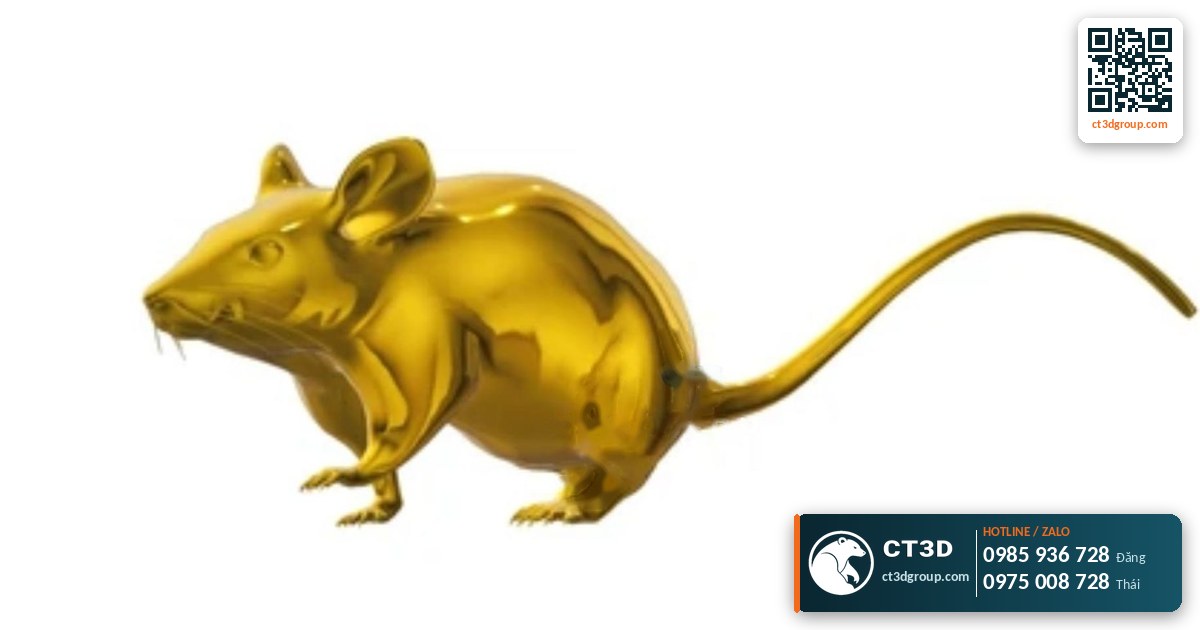
Quick answer: A composite is a material made of two parts: a resin matrix (usually polyester or epoxy) and a reinforcement (glass fiber, carbon fiber or stone powder). Once cured, the two combine into a material that is lightweight, rigid, and highly resistant to water and sunlight. In decor, composite is used for statues, mascots, brand characters, planters and event stage props. A good composite product usually goes through four steps: make the pattern (3D printing or CNC foam) → make the mold → lay up the composite → paint and finish.
Many customers call CT3D and ask: “I want a 2 m tall mascot to stand outdoors – what should it be made of?” The answer is usually composite. This article is a beginner’s overview: what composite material is, what types exist, and how it differs from polyresin and polystone. If you already have a specific product in mind, go straight to our in-depth guides on making mascots with CNC foam and composite and 3D printing religious statues for detailed processes and specifications.
What is composite material? A simple definition for beginners
Think of reinforced concrete. Concrete handles compression well but cracks easily under tension. Steel handles tension well. Combine the two and you get a material stronger than either one alone. Composite works the same way, only much lighter.
A composite material always has two main components:
- Matrix: the liquid resin that hardens once a hardener is mixed in. The matrix holds the fibers in place and gives the product its shape. The most common resin in decor is unsaturated polyester; more demanding engineering applications use epoxy or vinyl ester.
- Reinforcement: the “skeleton”. This can be chopped strand mat or woven glass fiber, carbon fiber, or mineral fillers such as stone or calcium powder.
When the laminator brushes resin onto layers of glass fiber in the mold, the resin soaks into the fibers and cures. The result is a thin but very rigid shell. That is why a 2 m tall composite mascot can be carried by just two people, whereas a concrete or cast-stone version would need a crane.
In Vietnam, people in the trade often call composite “fiberglass plastic” or FRP (Fiber Reinforced Plastic). In the decor field, these three names usually refer to the same thing.
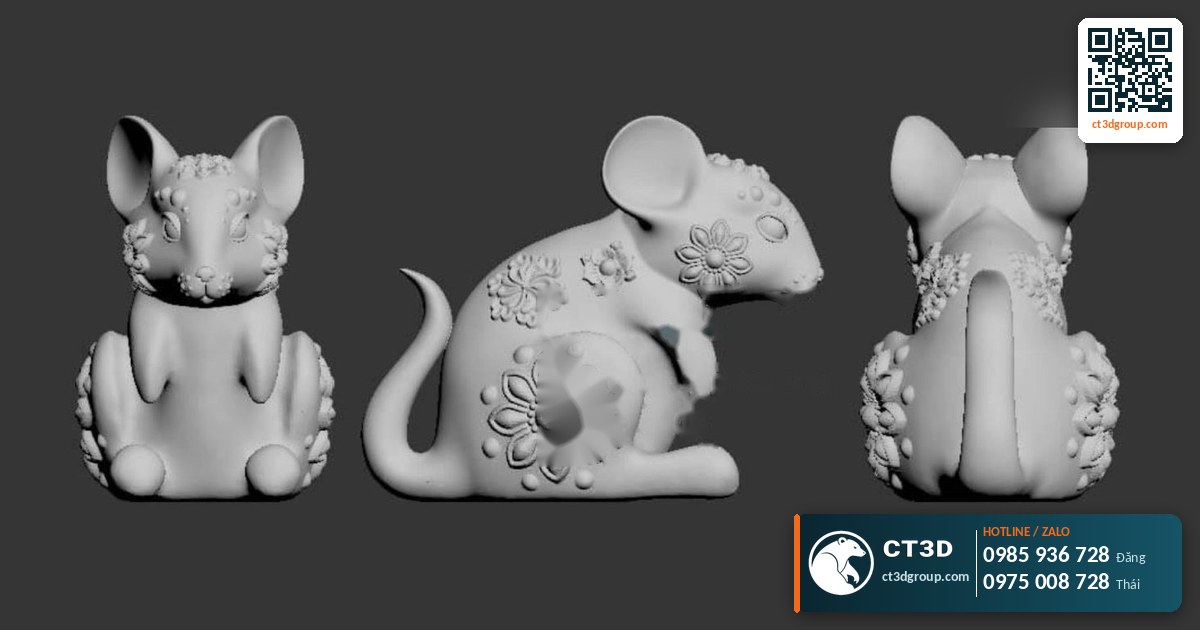
Composite terms beginners often hear
When working with a workshop, you will hear a lot of technical terms. The table below explains them briefly so you can communicate more easily.
| Term | Plain meaning | Everyday analogy |
|---|---|---|
| Resin (matrix) | The liquid that cures into the hard part of the composite | Like the “cement” in concrete |
| Glass fiber (mat, roving) | The reinforcing layer that makes the product rigid rather than brittle | Like the “rebar” |
| Hardener | The catalyst mixed into the resin to make it cure | Like yeast that makes dough rise |
| Gelcoat | The outermost resin layer, giving a smooth, UV-resistant surface | Like the product’s “skin” |
| Mold | The negative shell the composite is laid into to get the desired shape | Like a cake tin |
| Master pattern | The positive model used to take the mold | Usually 3D printed or CNC-cut foam |
| Polyresin | Solid-cast polyester resin, possibly with filler, giving crisp detail | Small statues, gifts |
| Polystone | Resin with a high stone-powder content, heavy and cool to the touch like stone | Faux-stone statues, planters |
Source: compiled from CT3D production experience.
Types of composite used in decor manufacturing
In the decor, statue and event industries, CT3D groups composites into three easy-to-remember families.
1. Fiberglass composite (hollow shell)
This is the most common type for large products: mascots, brand characters, outdoor statues, event gates and large-format display models. The product is a shell a few millimeters thick, hollow inside or with a steel frame. Its advantages are low weight, durability, and resistance to rain and sun when properly painted and coated.
2. Polyresin (solid cast)
Polyresin is polyester resin cast solid into a silicone mold. It gives a smooth surface and crisp detail, suitable for small and medium statues, gifts, trophies and indoor display statues. Read more in what is polyresin.
3. Polystone (resin with stone powder)
Polystone contains a high proportion of stone powder, so it feels heavy and much like real stone. It suits faux-stone statues, medium garden statues and premium planters. See what is polystone for details.
| Criterion | Fiberglass composite | Polyresin | Polystone |
|---|---|---|---|
| Structure | Hollow shell, multiple fiber layers | Solid or thick cast | Solid cast, high stone-powder content |
| Weight | Lightest | Medium | Heavy |
| Suitable size | Large to very large | Small to medium | Small to medium |
| Detail sharpness | Fairly good | Excellent | Good |
| Outdoor use | Good (needs UV topcoat) | Best indoors or under cover | Fairly good |
| Typical applications | Mascots, brand characters, large statues, stages | Small statues, gifts, trophies | Faux-stone statues, planters, garden decor |
Source: qualitative comparison based on CT3D workshop experience, not laboratory data.
Why is composite so widely used for decor, statues and mascots?
Composite is neither the “cheapest” nor the “most beautiful” material. It is chosen because it balances many factors at once:
- Lightweight: easy to transport and install on stages, rooftops and display counters, reducing crane and labor costs.
- Durable: it does not rot like wood or rust like iron. With the right gelcoat and topcoat, products withstand sun and rain for many years.
- Free-form shaping: with a mold, almost any shape is possible – from human faces and animals to 3D block logos.
- Easy to finish: it accepts many paint effects such as faux bronze, faux wood, faux stone, gold metallic and automotive gloss.
- Reproducible: one mold set can produce many identical products, ideal for store chains or multi-location advertising campaigns.
There are drawbacks too. Composite gives off a resin odor during fabrication and needs a well-ventilated workshop. The surface can fade if the topcoat is poor. Thin shells can crack under hard impact at sharp points. That is why the frame design and laminate thickness must be planned from the start.
How is a composite product made? A 5-step overview
This section is only a high-level overview. The detailed process for each stage, laminate thickness, frame construction and mold splitting are covered in CT3D’s article on making mascots with CNC foam and composite.
- 3D design: engineers build a 3D model from photos, drawings or scan data. If you already have a physical sample, CT3D can 3D scan it to digitize it.
- Master pattern: small and medium patterns are usually 3D printed (FDM or resin). Large patterns are usually CNC-machined from foam, then filled and sanded smooth. This step determines how good the final product looks.
- Mold making: a silicone mold (for small, detailed patterns) or a rigid composite mold (for large patterns). See also making silicone molds from 3D prints.
- Composite lay-up or casting: apply gelcoat, lay up resin-impregnated glass fiber layers, or pour polyresin/polystone into the mold. Wait for it to cure, demold, and join the pieces.
- Finishing: grinding seams, filling, priming, color painting and a protective topcoat. Bases, frames and lighting are fitted if required.
For one-off products, the mold step can often be skipped: a CNC foam core is made and composite is laminated directly over it. This is faster and more economical, but it cannot be reproduced.
How 3D printing and CNC foam help composite products
In the past, master patterns were hand-sculpted in clay or plaster. That depended on the artisan’s skill, was hard to modify, and made it difficult to keep proportions accurate. Today, CT3D uses digital technology to make master patterns:
- 3D printing for small and medium patterns and for faces, hands and ornamental details. SLA resin printing uses 25–100 micron layers with features down to 0.05 mm, so master patterns are very sharp. Large statues can be printed in sections and assembled.
- CNC foam cutting for large volumes such as mascot bodies or statues several meters tall. Foam is light and fast to cut, and is then laminated with composite or used to make a mold.
- Combining both: the large body is CNC-cut from foam while the face and small details are 3D printed, then everything is assembled. This is CT3D’s go-to approach for mascots and display statues.
The biggest benefit is approving the design on screen first. You review the 3D model and comment on proportions, facial features and pose before production. Fixing a file is far cheaper than fixing a physical pattern. For religious statue projects that require accurate proportions and expressive faces, this digital workflow is even more important – see 3D printing religious statues.
Several of CT3D’s published projects use this digital workflow: the restoration of the Our Lady of La Vang statue, a large reclining Buddha, a 1 m tall Catholic statue printed in SLA, and the Ca Mau shrimp model.
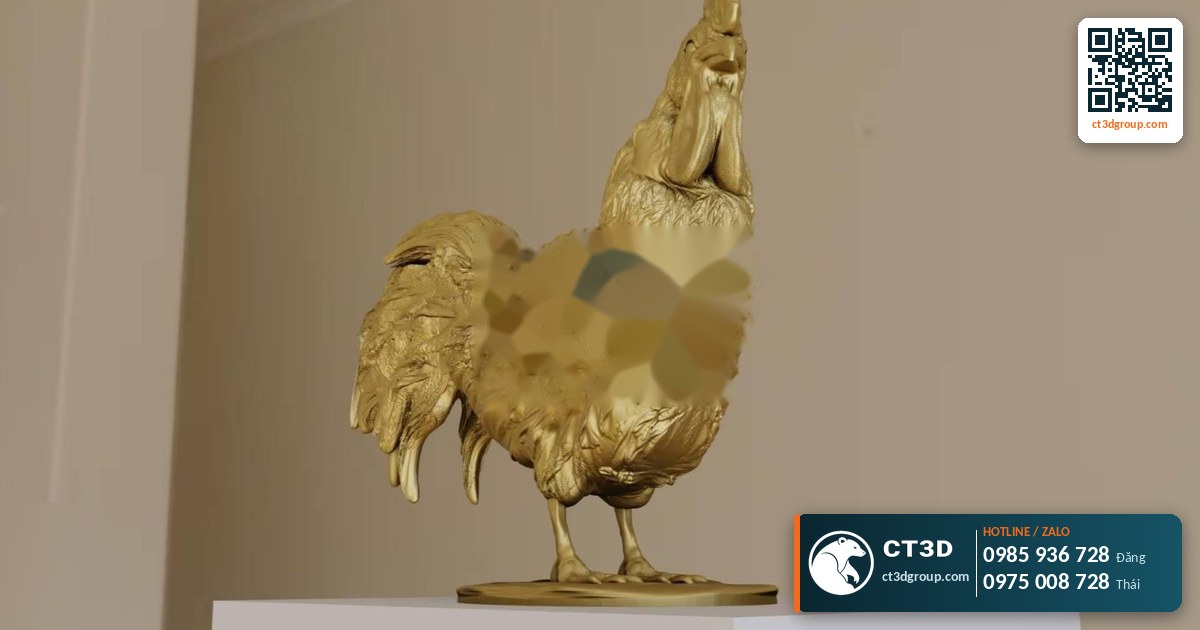
Composite applications in everyday life and business
You may come across composite products in many places without noticing:
- Mascots and brand characters: in front of stores, showrooms, amusement parks and product launch events.
- Decorative and religious statues: Buddha and Virgin Mary statues, garden statues, portrait statues.
- Event and stage props: 3D block logos, raised lettering, welcome gates, film props.
- Architecture and interiors: reliefs, decorative columns, large planters, decorative cladding.
- Display and tourism models: local landmarks and oversized regional specialties such as the shrimp model.
- Industry: machine housings, covers, tanks and panels – an engineering segment with its own material requirements.
Common misconceptions about composite
“Composite is plastic, so it’s cheap and fragile”
Not really. Properly made fiberglass composite is very rigid and durable. The cost of a composite product lies mostly in design, master pattern, mold making and finishing labor, not in the resin.
“Any composite can go outdoors”
It needs a suitable gelcoat and UV-resistant topcoat. Solid-cast polyresin is best kept indoors. If the piece will be placed outdoors, tell the workshop in advance so it can choose the right material and coating.
“Without a 3D file, it can’t be done”
You only need photos, a sketch or a physical sample. CT3D offers 3D modeling, 3D scanning and reverse engineering to create the file from scratch.
“Even a single piece needs a mold”
Not necessarily. For one-off products, composite can be laminated directly over a CNC foam core. A mold is only needed for reproduction or when a highly consistent surface is required.
What determines the cost of a composite product?
Composite products vary widely in size and complexity, so CT3D quotes based on your file or drawing rather than a fixed price per meter or per kilogram. The main factors are:
- Size and number of assembled sections.
- Level of detail (faces, ornaments, small lettering) – which decides between 3D printing and CNC foam for the master.
- Whether a mold is needed for reproduction, and the quantity.
- Material type: fiberglass composite, polyresin or polystone.
- Finish: single color, multicolor, faux bronze, gold metallic, outdoor topcoat.
- Internal frame, base, transport and on-site installation.
Checklist for sending a composite project request to CT3D
- Reference photos or a 3D file (STL, STEP, OBJ, 3MF) – send via our website, Zalo, email or our contact form.
- Desired dimensions (height, width) and quantity.
- Placement: indoors or outdoors, covered or not.
- Color and paint-effect requirements.
- Required delivery date and delivery location.
CT3D’s workflow has 6 steps: send your file → state technical requirements → engineering review → quote with lead time → confirmation and production → door-to-door delivery or workshop pickup. Nationwide delivery across Vietnam. If you are ready to make a mascot or brand character, read our guide on making mascots with CNC foam and composite before sending your request. See more of our production capabilities on the composite statue production page.
Frequently asked questions
What is composite, in short?
Composite is a material made of a resin matrix and a reinforcement such as glass fiber or stone powder. It is lightweight, rigid, water-resistant, and easy to shape and finish.
How does composite differ from polyresin and polystone?
Fiberglass composite is usually a lightweight hollow shell used for large products. Polyresin is solid-cast resin with crisp detail, suited to small statues. Polystone contains a lot of stone powder, so it is heavy and stone-like.
Can composite products be placed outdoors?
Yes, with a suitable gelcoat and UV-resistant topcoat. Let the workshop know the placement so it can choose the right material and coating.
Do I need a 3D file to make a composite mascot?
No. CT3D can create a 3D model from photos, sketches or a scan of a physical sample, then 3D print or CNC-cut foam for the master pattern.
How much does a composite product cost?
CT3D quotes based on your file and specific requirements, because the price depends on size, detail, molds, quantity and paint finish.
Real footage from the CT3D workshop
Watch the video Crafting a 4-meter Buddha statue pattern – 3D printing and CNC machining by CT3D to get a clearer picture of the process and product quality. More videos on the Che Tao Vlog – CT3D channel.
Contact CT3D – send your files, get a fast quote
Whether you have a 3D file, a 2D drawing, photos or just an idea, you can send it to CT3D. Our engineers will review the file, recommend the right technology and material, and send you a quote with a lead time.
- Email: [email protected] – [email protected]
- Hotline / Zalo: +84 975 008 728 (Mr. Thai) – +84 985 936 728 (Mr. Dang), or use our contact form
- Head office: Binh Duong.
- Workshops in Ho Chi Minh City: Linh Trung (Thu Duc), Tam Binh (Thu Duc), former District 6.
- Other workshops and drop-off points: Can Tho, Da Nang, Bien Hoa, Ba Ria – Vung Tau, Hanoi, Hai Duong, Hai Phong. Nationwide delivery across Vietnam.
- Website: ct3dgroup.com – in3d.edu.vn
CT3D – 3D design & prototyping: 3D printing, 3D scanning, reverse engineering, silicone mold making, painting and finishing, CNC machining, composite fabrication, and supply of 3D printers and 3D printing materials.
Danh sách cửa hàng:
CT3D là đơn vị cung cấp trọn gói các dịch vụ thiết kế và sản xuất theo yêu cầu tại TP.HCM và khu vực lân cận (Bình Dương, Đồng Nai, Long An…). Với năng lực khép kín từ thiết kế 3D, in 3D (FDM, resin/SLA, SLS, in 3D kim loại), scan 3D – thiết kế ngược, làm khuôn, đúc composite – poly resin – poly stone đến gia công CNC và sơn màu hoàn thiện, CT3D đồng hành cùng khách hàng qua toàn bộ quy trình – từ ý tưởng, bản vẽ hay sản phẩm mẫu đến thành phẩm hoàn chỉnh. Dù bạn cần tạo mẫu nhanh, sản xuất số lượng, chế tác tượng – mô hình – quà tặng hay linh kiện kỹ thuật, đội ngũ CT3D sẽ tư vấn công nghệ và vật liệu phù hợp, đảm bảo sản phẩm sắc nét, đúng yêu cầu và tối ưu chi phí. Khách hàng tại TP.HCM và vùng lân cận có thể trao đổi trực tiếp, gửi file online và nhận sản phẩm thuận tiện, hỗ trợ cả đơn gấp lẫn dự án số lượng.
CT3D cung cấp trọn gói các dịch vụ thiết kế và sản xuất theo yêu cầu, phục vụ khách hàng tại Hà Nội và các tỉnh lân cận (Bắc Ninh, Hưng Yên, Hải Phòng, Vĩnh Phúc…). Với năng lực khép kín từ thiết kế 3D, in 3D (FDM, resin/SLA, SLS, in 3D kim loại), scan 3D – thiết kế ngược, làm khuôn, đúc composite – poly resin – poly stone đến gia công CNC và sơn màu hoàn thiện, CT3D đồng hành cùng khách hàng qua toàn bộ quy trình – từ ý tưởng, bản vẽ hay sản phẩm mẫu đến thành phẩm hoàn chỉnh. Quy trình làm việc thuận tiện: bạn gửi file 3D hoặc mô tả ý tưởng qua online, đội ngũ CT3D tư vấn công nghệ – vật liệu, báo giá nhanh và giao hàng tận nơi tại Hà Nội. Dù bạn cần tạo mẫu nhanh, sản xuất số lượng, chế tác tượng – mô hình – quà tặng hay linh kiện kỹ thuật, CT3D đều đáp ứng với sản phẩm sắc nét, đúng yêu cầu và tối ưu chi phí.

