
CNC Foam Cutting Vietnam – EPS/XPS Mascots, Props, Cores
Quick answer: CT3D’s CNC foam cutting service in Vietnam cuts and sculpts EPS and XPS foam from your 3D file or drawing: mascots, brand characters, 3D letters, event props, terrain and architectural models, oversized product replicas and cores for composite (FRP) fabrication. We use a 5-axis CNC foam machine for large volumes and complex curved forms, combine it with 3D printing for small details, then fill, coat with composite and paint. Quotes are based on your drawing and include lead time; delivery across Vietnam takes 1–3 days after completion, and international shipping can be arranged.
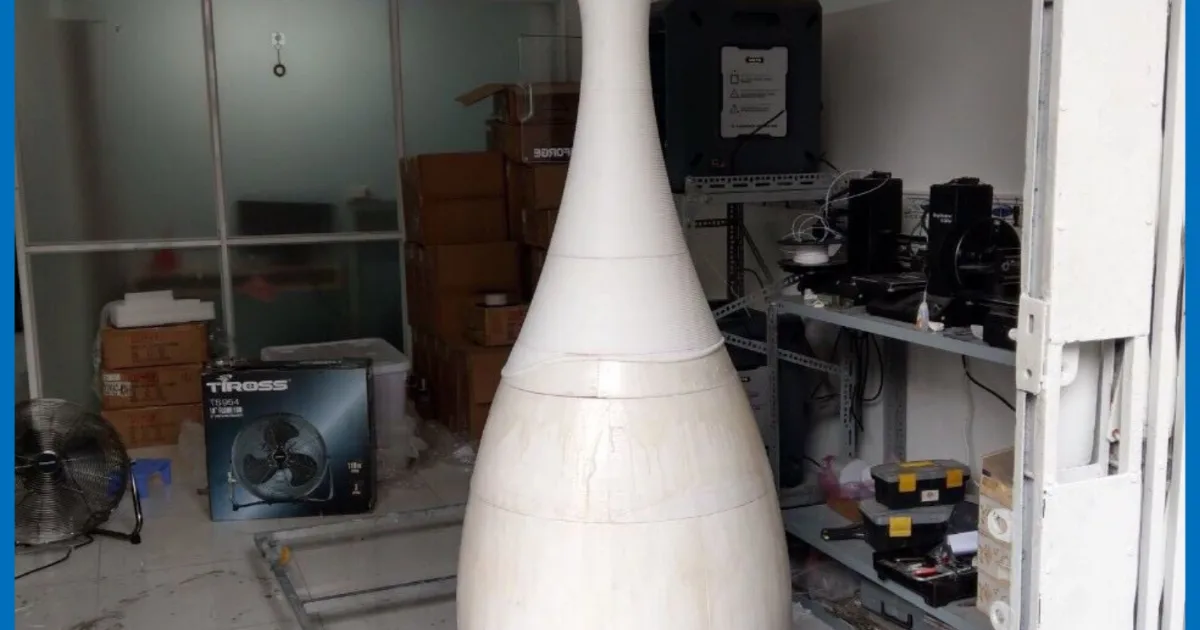
When you need something very large but very light – a mascot several meters tall at an event entrance, a giant bottle for a product launch, or a development site model – foam is almost the default choice. The problem is that hand-carving foam is slow and hard to keep in proportion. A CNC foam machine reads the 3D file and carves the exact shape in a short time. This page is part of CT3D’s CNC machining services. Our complete mascot workflow is covered in detail in our article on making mascots with CNC foam and composite.
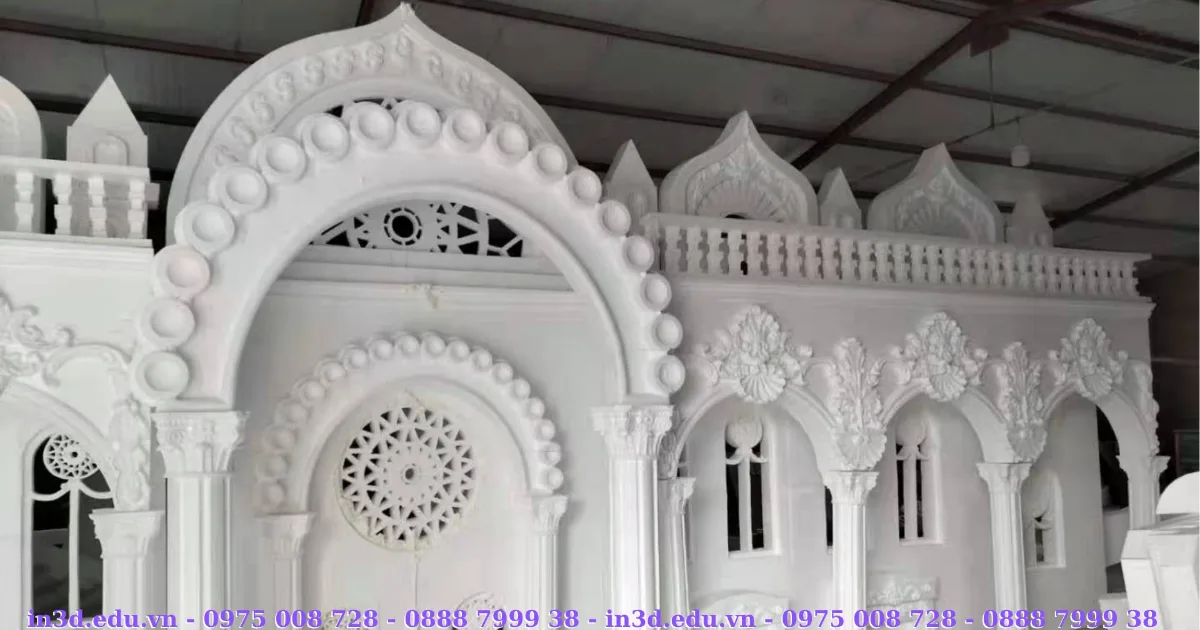
CNC Foam Cutting at a Glance
| Item | What CT3D offers |
|---|---|
| Machine | 5-axis CNC foam machine for large volumes and complex curved forms |
| Foams | EPS (bead foam) and XPS (extruded foam) |
| Accepted input | STL, OBJ, STEP, 3MF, IGES – or photos, sketches and 2D character artwork |
| Large pieces | Split into blocks according to stock size and transport route, with an internal frame where needed |
| Finish levels | Raw foam, filled and painted, hard-coated, composite-encapsulated |
| Price and lead time | Quoted against your drawing and finish level |
| Delivery | Across Vietnam within 1–3 days of completion; installation as agreed; international shipping on request |
What Is CNC Foam Cutting? 5-Axis vs. 3-Axis Foam Machines
CNC foam cutting uses a computer-controlled machine to mill or cut a foam block into the shape defined in a 3D file. There are two common methods:
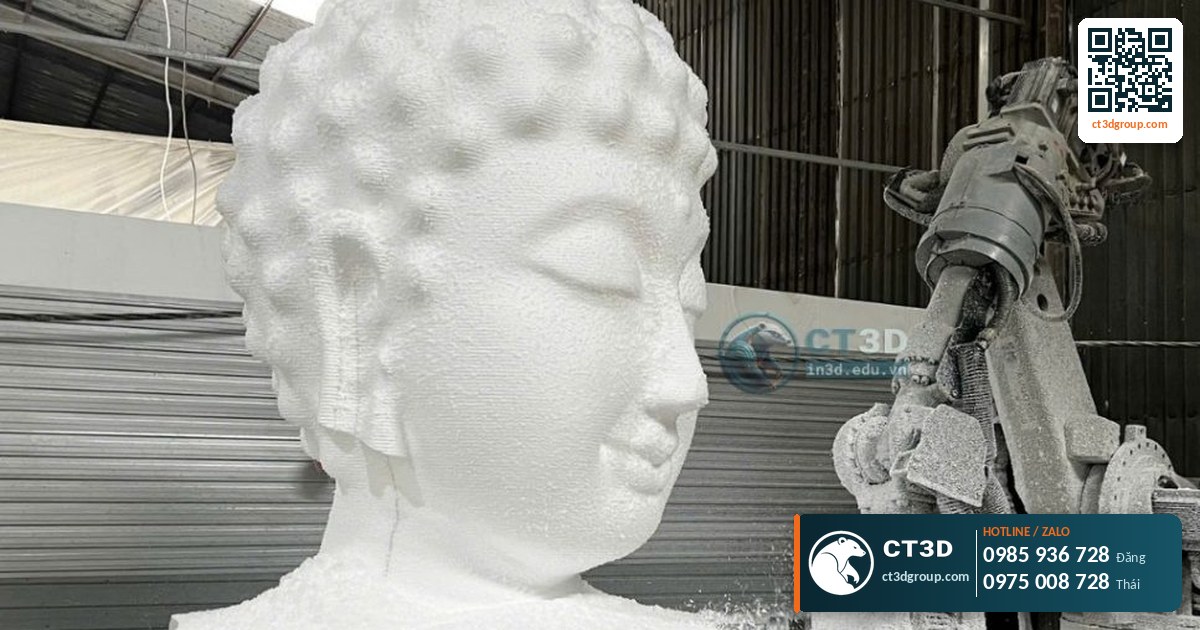
- Milling with a cutter: a rotating tool gradually removes material to create freeform 3D surfaces. This is how mascots, sculptures and product models are made.
- Hot-wire cutting: a heated metal wire cuts through the foam block along a profile. Ideal for thick letters, straight-sided shapes and sliced layers.
On axis count: a 3-axis machine only moves the tool along X, Y and Z, with the tool always vertical. A fully rounded form requires flipping the block several times. A 5-axis CNC foam machine adds two rotary axes, so the tool can tilt to reach side faces, deep pockets and undercuts. The result is less flipping, fewer joints and smoother continuous curves – which matters a great deal for mascots and large sculptures.
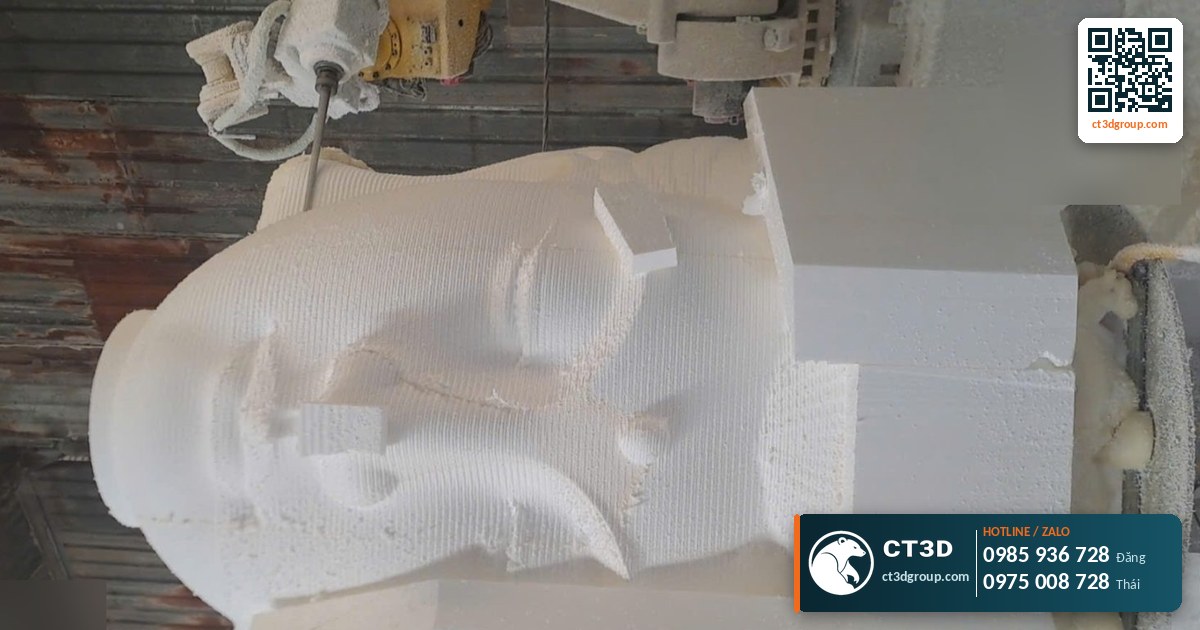
EPS vs. XPS Foam: Which Should You Choose?
| Criterion | EPS foam (white bead foam) | XPS foam (extruded foam) |
|---|---|---|
| Structure | Expanded beads fused together | Closed-cell, uniform |
| Surface after cutting | Beaded texture, needs filling/coating | Smoother, crisper edges |
| Hardness | Softer, dents easily | Harder, better impact resistance |
| Large blocks | Very suitable, low material cost | Usually supplied as sheets, laminated into blocks |
| Applications | Mascots, characters, 3D letters, composite cores | Architectural models, terrain models, crisp-edged details |
Source: CT3D project experience; material properties based on general engineering knowledge.
In short: for large, low-cost volumes choose EPS; for a smooth surface and sharp edges on models viewed up close choose XPS. For outdoor or long-term pieces, foam should only be the core and must be encapsulated in composite.
Design Tips for CNC Foam Projects
These are general guidelines for carved foam pieces. The right values depend on size, foam type and finish, so our engineers confirm them during the file review.
| Topic | Recommendation |
|---|---|
| Small details | Eyes, lettering and fingers are limited by the cutter size. Plan crisp small parts as 3D-printed inserts that are bonded on later. |
| Thin, protruding parts | Ears, tails and thin edges break easily in foam. Thicken them or reinforce them with an internal rod or the composite skin. |
| Block seams | Place joints in hidden or low-curvature areas and use locating features so blocks line up. |
| Coating thickness | Filler, hard-coat and composite add material on the surface; on tight-fitting parts, allow for it in the model. |
| Outdoor pieces | Use foam only as a core, encapsulate it in composite and plan a heavy base and anchored frame against wind. |
| Transport | Split the piece so each section fits the vehicle and doorways on the way to site. |
Applications of CNC Foam Cutting
Mascots and Characters
Lunar New Year mascots, brand mascots and enlarged cartoon characters. The foam is carved from the 3D file, then filled, sanded, coated or encapsulated in composite and painted. One example CT3D has produced is a giant shrimp model for Ca Mau province.
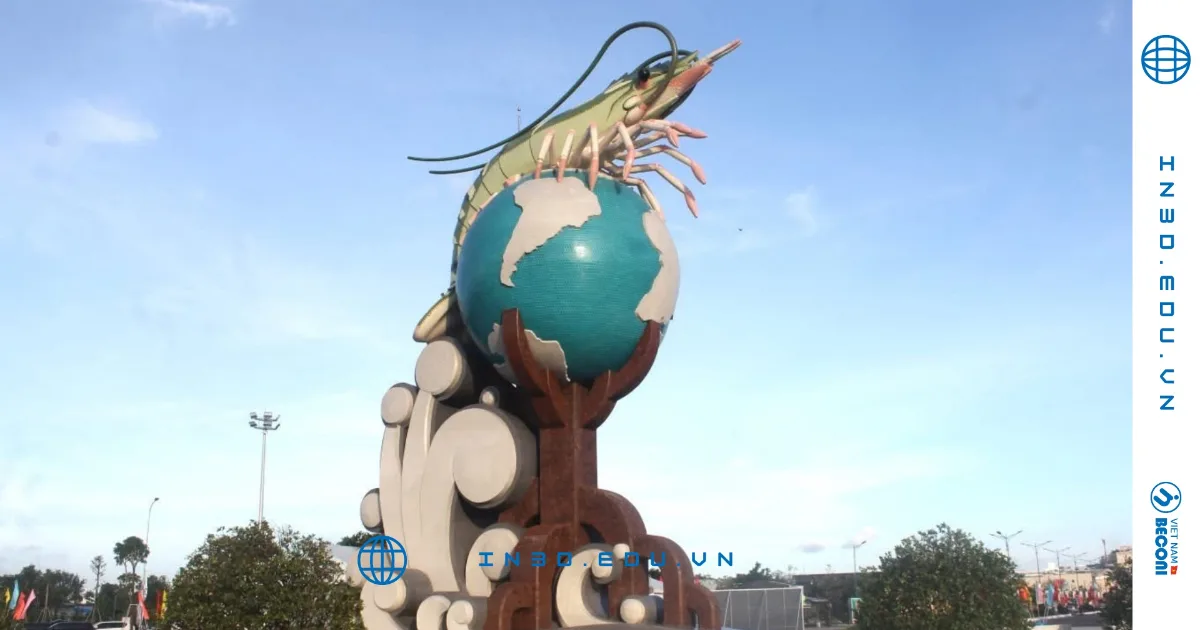
Event and Advertising Props
Giant product replicas (bottles, boxes, cans), 3D letters, 3D logos, entrance arches and backdrops with depth. Foam is light, so it is easy to transport and quick to install.
Terrain and Architectural Models
Hills and mountains, building masses and landscapes. CNC carves terrain accurately to the contour lines instead of stacking layers by hand.
Cores for Composite Fabrication
Composite statues, planters, landscape features and architectural elements often use a CNC-cut foam core. An accurate core keeps the composite skin thin and even, saving material and weight.
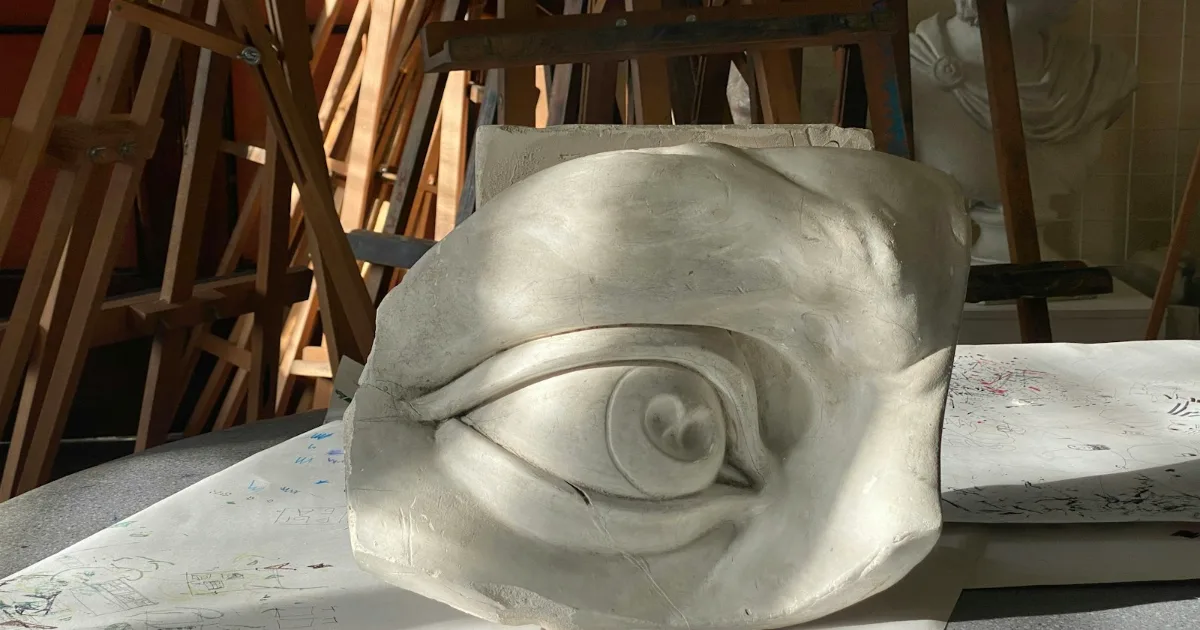
Master Patterns for Mold Making
The foam pattern is hard-coated and polished, then used to make a composite or silicone mold for replication. See our silicone mold service.
Stage, Film Sets and Decoration
Props, columns, faux stone and faux wood reliefs, and temporary interior decoration for exhibitions.
CNC Foam Cutting vs. 3D Printing vs. Hand Carving
| Criterion | CNC foam cutting | 3D printing | Hand-carved foam |
|---|---|---|---|
| Large size (several meters) | Very suitable | Must be split into many pieces, high cost | Possible but slow |
| Accuracy to the file | High, follows the 3D file | High | Depends on the carver’s skill |
| Small details (eyes, letters, fingers) | Limited by tool size | Excellent | Difficult, inconsistent |
| Weight | Very light | Heavier, depending on plastic volume | Very light |
| Remaking and replication | Easy, just rerun the file | Easy | Hard to keep identical |
Source: CT3D technical summary.
CT3D’s typical approach: the large body is CNC-cut in foam, small details that need to be crisp are 3D printed, then everything is assembled and finished together. For a deeper look at how the two technologies differ, see our article comparing CNC machining and 3D printing.
CNC Foam Cutting and Finishing Process at CT3D
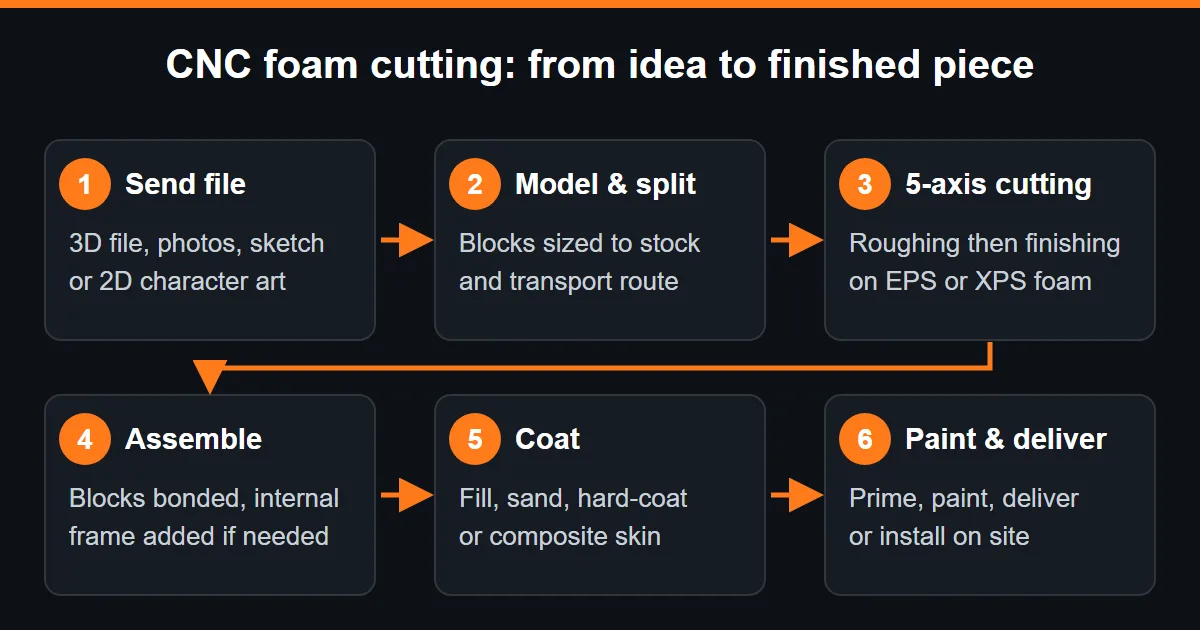
- Send your file or idea: a 3D file (STL, OBJ, STEP, 3MF) or photos, sketches or 2D character artwork. Send it via our website, Zalo, email or the contact form.
- Technical requirements: height, indoor or outdoor use, service life, whether transport and installation are needed, and colors.
- Engineering file review: we check and optimize the model, split it into blocks according to stock size and transport route, design an internal frame if needed and calculate foam volume.
- Quotation with lead time: CNC foam cutting is quoted against your drawing and finish level.
- Production: roughing and finishing on the 5-axis CNC foam machine; block assembly; filling and sanding; hard-coating or composite encapsulation; priming and painting.
- Delivery: door-to-door delivery, pickup at our workshop, or installation as agreed. Delivery across Vietnam takes 1–3 days after completion; international shipping on request.
Common Finish Levels
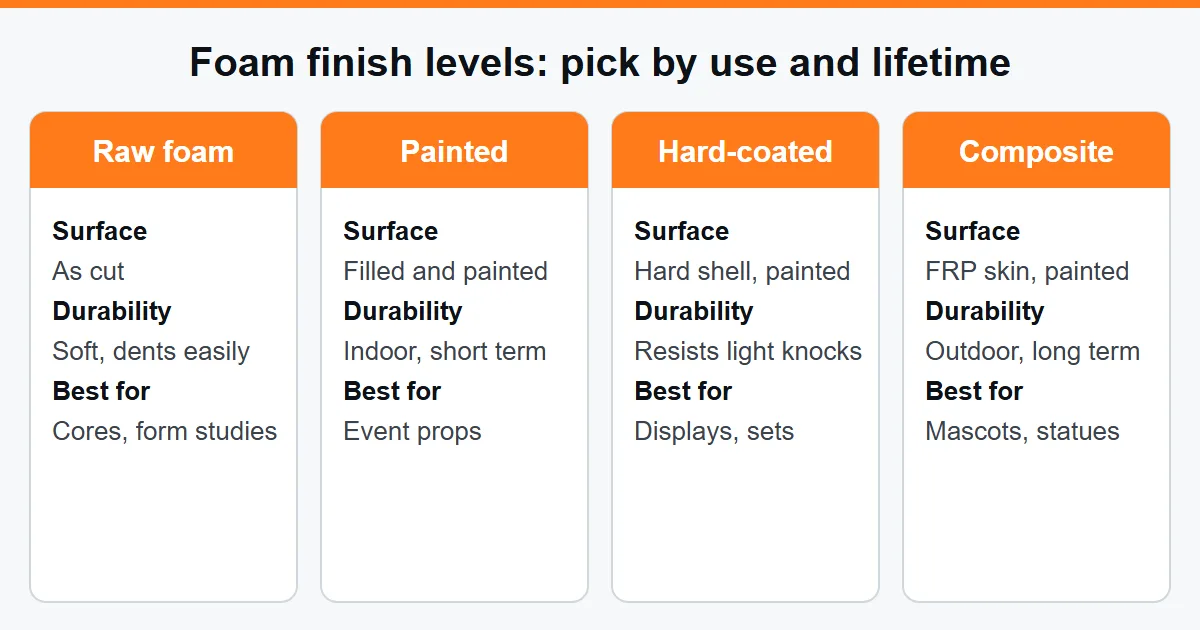
- Raw CNC-cut foam: used as a core or for form studies.
- Filled and painted directly: for indoor, short-term models such as event props.
- Hard-coated and painted: a harder surface that withstands light impacts.
- Composite-encapsulated and painted: for outdoor, long-term use with better resistance to sun and rain.
Quality Control
- Model approval: when we build the 3D model from photos or sketches, you approve it before any foam is cut.
- Engineering review: the model is checked and optimized, split into blocks and, if needed, given an internal frame.
- Proportion check: the cut pieces follow the 3D file, so proportions match the approved model rather than a carver’s eye.
- Seam and surface check: block seams are bonded and filled flush; the surface is filled and sanded before coating.
- Paint protection: a protective primer is applied so solvent-based paint cannot attack the foam.
What Determines the Cost of CNC Foam Cutting?
CT3D quotes against your drawing. The main cost drivers:
- Size and block volume: determine foam usage and milling time.
- Shape complexity: many pockets, curved faces and small details increase machine time and manual touch-up.
- Foam type: EPS or XPS, and foam density.
- Finish level: raw foam, filled and painted, hard-coated or composite-encapsulated vary greatly in cost.
- Internal frame and installation: large models need an internal steel frame, base, transport and installation.
- 3D modeling and schedule: building a 3D file from photos or rush orders are charged extra.
Common Problems with Foam Models and How CT3D Solves Them
- Beaded, rough foam surface: inherent to EPS. Solution: multiple rounds of filling and sanding, or hard-coating before painting.
- Paint melting the foam: some solvent-based paints attack foam. Solution: apply a protective primer before painting.
- Dents and breakage in transit: foam is soft. Solution: composite encapsulation, frame reinforcement and splitting into blocks with locating joints.
- Visible block seams: caused by poor block splitting. Solution: place seams in hidden areas, bond securely and fill flush.
- Tipping over when displayed outdoors: the model is too light and catches wind. Solution: design a heavy base and an anchored frame.
Checklist for Your CNC Foam Cutting Request
- A 3D file or reference photos from several angles.
- Overall dimensions (height, width, depth).
- Location: indoor or outdoor; expected service life.
- Desired finish level and colors.
- Whether you need a frame, base, transport or installation.
- Required delivery date and delivery location.
If your product needs wood rather than foam, see our CNC wood machining service.
Why Choose CT3D for CNC Foam Cutting
- 5-axis foam machining: fewer flips and joints, smoother continuous curves on mascots and sculptures.
- Foam plus 3D printing: large bodies are cut in foam, crisp details are 3D printed, and everything is finished together.
- Complete finishing chain: filling, hard-coating, composite encapsulation, priming and painting.
- No file needed to start: we model from photos, sketches or 2D artwork and send it for your approval.
- Free file review with every quote, NDA on request and engineering support in English.
- Delivery and installation: 1–3 days across Vietnam after completion, installation as agreed, international shipping on request.
Frequently Asked Questions
How much does CNC foam cutting cost?
CT3D quotes against your drawing. Price depends on size, complexity, foam type and finish level (raw foam, filled and painted, hard-coated or composite-encapsulated).
Can a foam mascot be displayed outdoors?
Yes, provided the foam is only the core and it is encapsulated in composite, finished with weather-resistant paint and mounted on a secure frame and anchored base. Directly painted foam should only be used indoors or short-term.
What are the benefits of a 5-axis CNC foam machine?
The tool can tilt to reach side faces and deep pockets, so there is less flipping, fewer joints and smoother continuous curves than on a 3-axis machine.
Can you work without a 3D file?
Yes. CT3D builds the 3D model from photos, sketches or 2D character artwork and sends it to you for approval before cutting.
Should I choose EPS or XPS foam?
EPS suits large, low-cost volumes such as mascots, 3D letters and composite cores. XPS is smoother and harder, suiting architectural models and details that need crisp edges.
Which files and information should I send?
A 3D file (STL, OBJ, STEP or 3MF) is ideal. Otherwise send photos from several angles, sketches or 2D artwork, plus the overall size, indoor or outdoor use, finish level and colors.
How are very large foam pieces made and transported?
The model is split into blocks according to foam stock size and the transport route, cut separately and bonded together. Large pieces get an internal frame and base, and can be delivered in sections and assembled on site.
Can you combine foam with 3D-printed parts?
Yes. This is CT3D’s usual approach: the large body is CNC-cut in foam, small details that must be crisp – such as faces, eyes or logos – are 3D printed, then everything is assembled and finished together.
Shop-Floor Video from CT3D
Watch the video 5-Axis CNC Foam Machining from CT3D to get a clearer picture of our process and output quality. More videos are available on our YouTube channel Chế Tạo Vlog – CT3D (in Vietnamese).
Contact CT3D – Send Your File for a Fast Quote
Whether you have a 3D model, a 2D drawing, photos or just an idea, you can send it to CT3D online (STL, STEP, IGES, OBJ and more). Our engineers will review the file, advise on process and materials, and send a quotation with lead time.
- Email: [email protected] – [email protected]
- Hotline / Zalo: +84 975 008 728 (Mr. Thai) – +84 985 936 728 (Mr. Dang) – or use our contact form
- Head office: Binh Duong, Vietnam.
- Workshops: Ho Chi Minh City, Vietnam.
- Other workshops and drop-off points: Can Tho, Da Nang, Bien Hoa, Ba Ria – Vung Tau, Hanoi, Hai Duong and Hai Phong. Nationwide delivery across Vietnam; international shipping on request.
- Website: ct3dgroup.com – in3d.edu.vn
CT3D – 3D design & prototyping: 3D printing, 3D scanning, reverse engineering, silicone mold making, painting and finishing, CNC machining, composite fabrication, and supply of 3D printers and 3D printing resins.
Ready to Start Your Foam Project?
Send your 3D file, photos or artwork with the size you need, and get a fast quote with a free file review.