
FRP Composite Molds – CNC Plugs, Gel Coat, Multi-Piece
Technical summary: CT3D builds custom FRP composite molds (fiber-reinforced plastic) in Vietnam, from master plugs CNC-milled in foam or wood or 3D printed, to two-piece and multi-piece molds with flanges and reinforcing frames. Our molds are used for hand lay-up composite parts, polyresin statue casting, mascots, architectural elements and equipment enclosures. Key techniques include tooling gel coat application, fiberglass lay-up, and careful control of draft angles and mold release so each mold delivers many production cycles.
A good FRP composite mold is the difference between parts that come out glossy and true to shape every time, and parts that need hours of filling and sanding. This page explains how CT3D builds composite molds, which mold type suits which product, the design rules that make a mold last, and how to get a fast quote. Because we make the master plug in-house – by CNC foam or wood milling or by 3D printing – one team is responsible for the result from the first CAD line to the first cast part.
Key Facts at a Glance
| Parameter | CT3D capability |
|---|---|
| Master plug | CNC-milled EPS/XPS foam or MDF, or 3D printed; filled, primed and polished |
| Mold types | Open (single-sided), two-piece, multi-piece, silicone soft mold with FRP mother mold |
| Mold materials | Tooling gel coat, polyester / vinylester resin, fiberglass mat and roving |
| Reinforcement | Frames in wood, steel box section or composite tube |
| Accepted input | Concepts, photos, drawings, 3D files (STL, STEP, IGES, OBJ) or a physical sample to 3D scan |
| Additional services | First-article trial casting; low-volume production of parts from the mold |
| Delivery | Mold or finished parts; shipping throughout Vietnam and internationally, or workshop pickup |
FRP Composite Molds: Construction and Working Principle
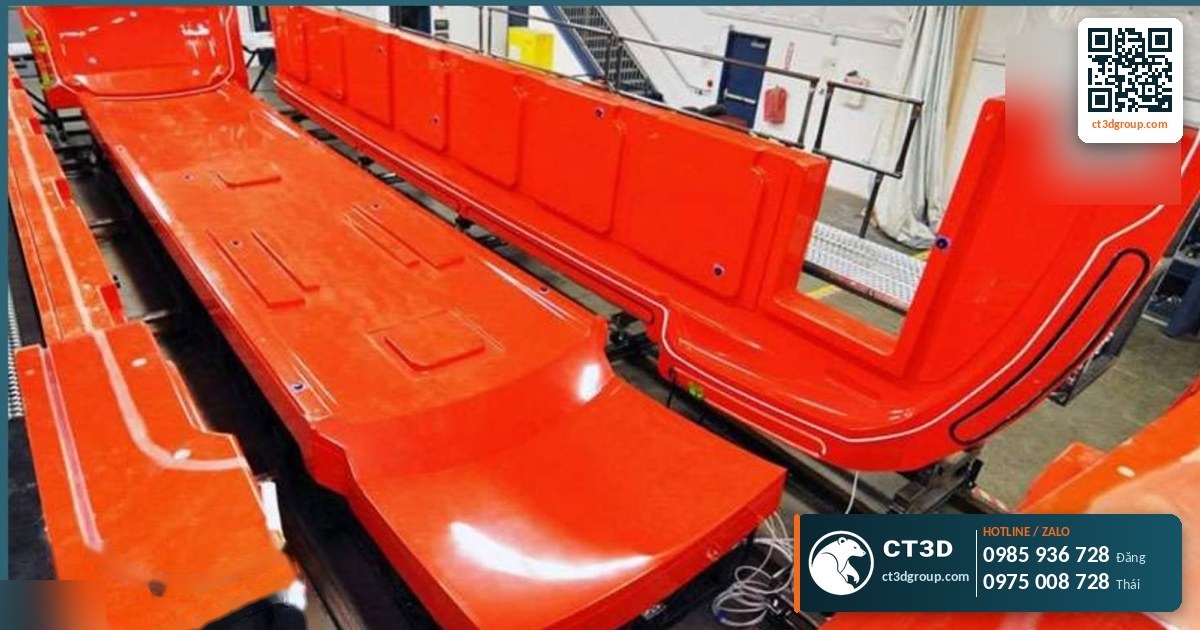
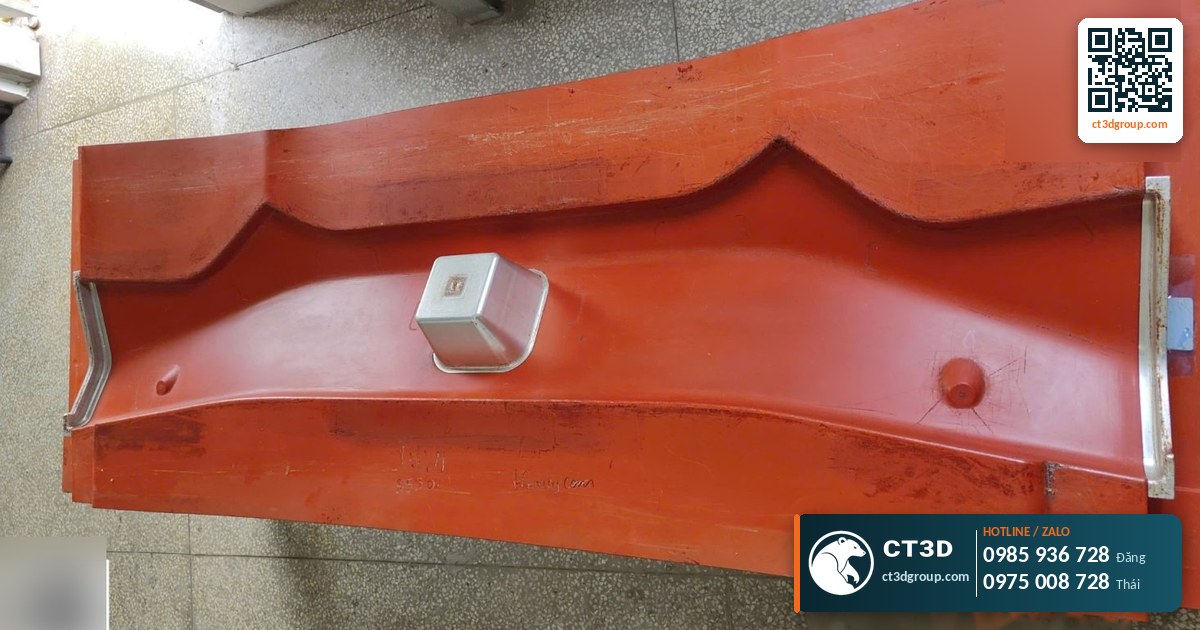
A typical composite mold consists of three functional layers. The innermost layer is the tooling gel coat – a hard, high-gloss resin layer that determines the surface quality of the finished part. The middle layer is the resin-impregnated fiberglass lay-up that provides stiffness. The outer layer is a reinforcing frame of wood, steel box section or composite tube that keeps the mold in shape during demolding, assembly and transport.
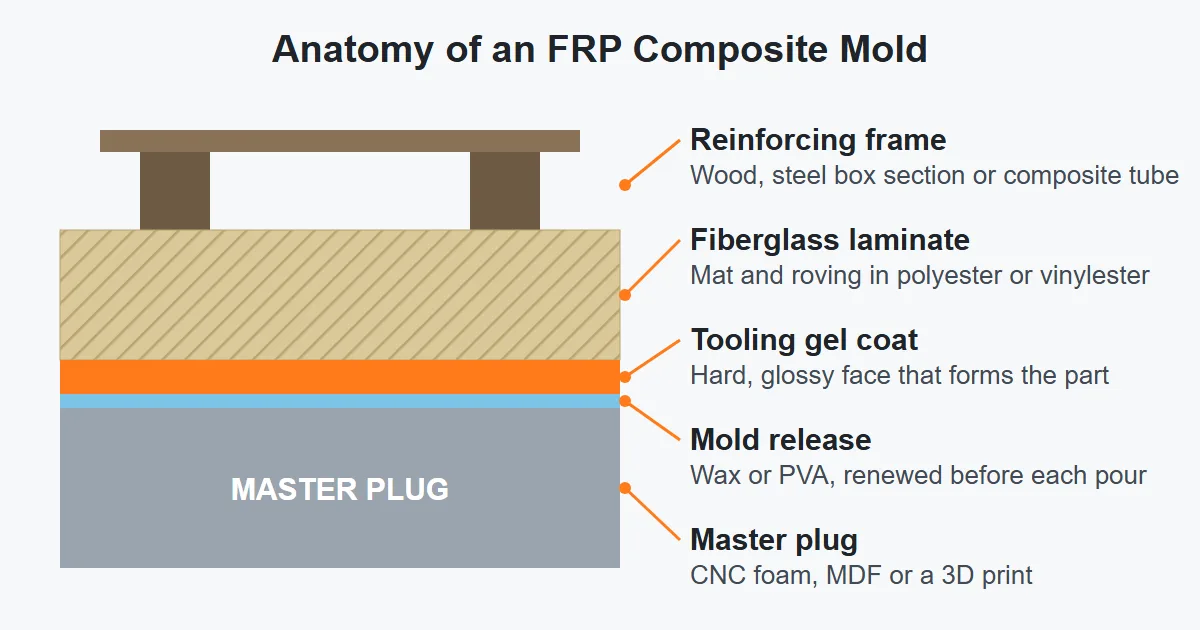
Because the mold is taken in reverse from the master plug, its accuracy and gloss depend almost entirely on the plug. That is why CT3D invests in producing plugs by CNC milling and 3D printing rather than hand-sculpting. The foam block milling process is described on our CNC foam cutting page, and wood plugs on our CNC wood molds and patterns page.
How an FRP Mold Is Made
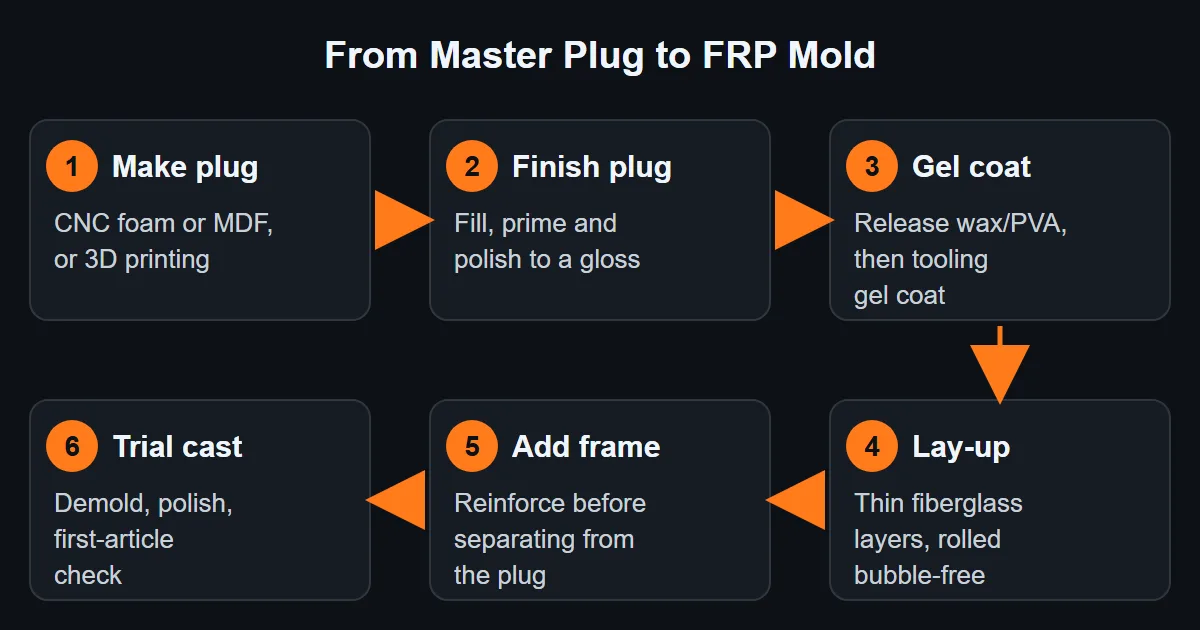
- Make the master plug: the shape is CNC-milled in EPS/XPS foam or MDF, or 3D printed, with draft and parting lines already designed in.
- Finish the plug: the plug is filled, primed and polished. Its gloss and accuracy are what the mold will copy.
- Prepare the parting: for two-piece and multi-piece molds, temporary walls are built along the parting lines to form the flanges.
- Apply release and gel coat: wax or PVA release goes on first, then a uniform layer of tooling gel coat.
- Lay up the laminate: a thin first mat layer is rolled out carefully to remove air, then further layers of mat and roving build stiffness in stages.
- Add the frame and demold: the reinforcing frame is attached before the mold is separated from the plug; the mold face is then polished and a first article is cast.
Scope of Work
- Master plug production: CNC milling in EPS/XPS foam or MDF, or 3D printing; the plug is filled, primed and polished.
- Mold split design: defining the parting line, number of mold sections, flange locations and bolt joints.
- Mold fabrication: tooling gel coat, multi-layer fiberglass lay-up, frame reinforcement, demolding and finishing.
- First-article run: trial casting of a composite or polyresin part to validate the mold.
- Low-volume production: we also cast parts from the mold to order.
| Mold type | Characteristics | Suitable products |
|---|---|---|
| Open mold (single-sided) | One finished face, fast to produce | Cladding panels, troughs, covers, relief panels |
| Two-piece mold | Flanged joint, hollow parts finished on both sides | Statues, planters, equipment housings |
| Multi-piece mold | Can be dismantled around deep undercuts | Mascots, complex statues in the round |
| Silicone soft mold + FRP mother mold | Silicone captures fine detail, composite jacket holds the shape | Ornamental statues, polyresin casting, cold-cast |
Source: mold classification based on CT3D’s composite fabrication experience.
Materials and Fabrication Standards
| Component | Technical role | Notes |
|---|---|---|
| Tooling gel coat | Hard, abrasion-resistant surface layer | Needs uniform thickness; too thin and the fiber pattern prints through |
| Polyester / vinylester resin | Matrix that bonds the fibers | Control hardener ratio and ambient temperature |
| Fiberglass mat, roving | Stiffness and strength | Each layer is rolled out to remove air bubbles |
| Reinforcing frame | Prevents distortion of large molds | Wood, steel box section or composite tube |
| Mold release (wax, PVA) | Prevents sticking between plug and mold, and between mold and part | Apply enough coats before every pour |
Source: common composite materials used in FRP mold making.
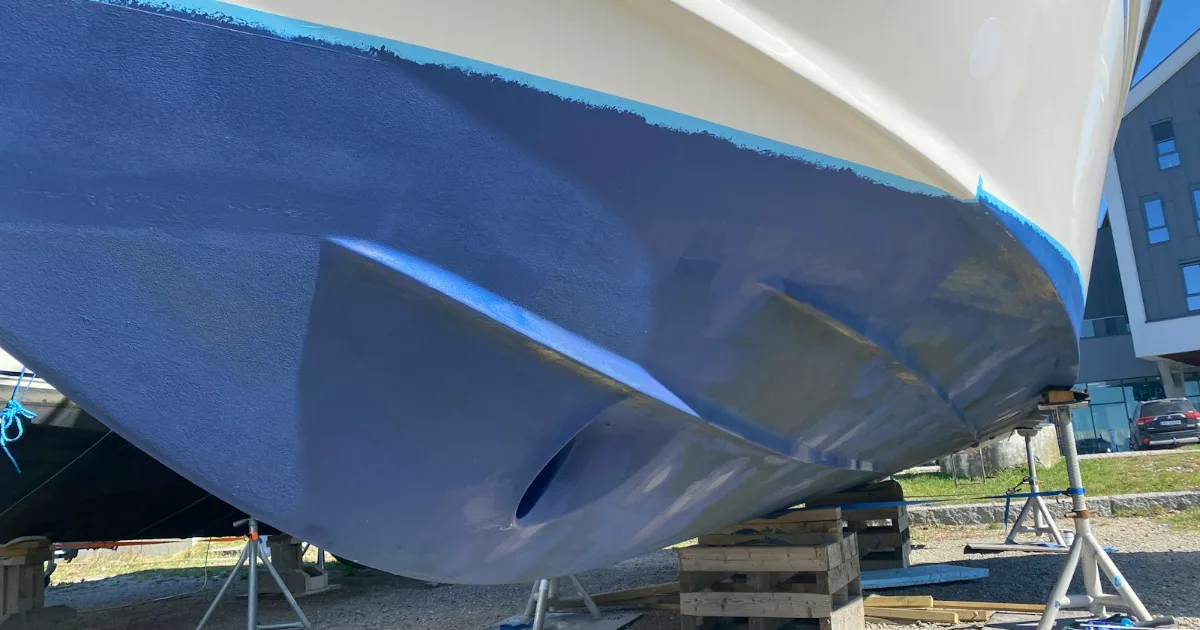
Two common technical defects are air bubbles trapped between the gel coat and the fiber layer (causing surface blisters) and uneven shrinkage that warps the mold. CT3D prevents them by laying up thin layers, rolling out air thoroughly and allowing the mold to cure fully before it is separated from the plug.
Design Guidelines for Composite Molds
Most mold problems are decided at the design stage, long before any resin is mixed. The points below are general composite-industry practice; our engineers check each of them during the free DFM review that comes with your quote.
| Design feature | Typical recommendation | Why it matters |
|---|---|---|
| Draft angle | Typically a few degrees on all walls; more on deep or textured surfaces | Parts release without sticking or damaging the gel coat |
| Internal corners | Generous radii instead of sharp corners | Glass fiber cannot follow a sharp corner, leaving voids and weak edges |
| Undercuts | Remove in design, or add mold sections or a silicone insert | A rigid FRP mold cannot flex over a recess |
| Parting line | Place on edges or along natural feature lines | The seam line is easier to hide and finish on the part |
| Flanges | Wide, flat and stiff, with bolt holes at regular spacing | Tight joints reduce flash and keep sections aligned |
| Mold stiffness | Laminate built in stages, plus a frame on large molds | Prevents twisting during demolding and transport |
Finishing Options for Molds and Cast Parts
- Mold face: wet-sanded and polished after demolding to restore a uniform gloss; release wax is applied before the first pour.
- Raw cast parts: trimmed, seam lines ground and filled, ready for priming.
- Painted finishes: solid colors and decorative effects such as faux-bronze and faux-stone – see our painting and plating page.
- Cold-cast and polyresin: parts cast from a silicone soft mold held in an FRP mother mold for fine ornamental detail – see polyresin statues.
Industry Applications for Composite Molds
| Industry | Example products from composite molds |
|---|---|
| Advertising and events | Mascots, giant product replicas |
| Religious and fine art | Composite statues, faux-bronze polyresin statues, relief panels |
| Landscape architecture | Planters, benches, decorative cladding, facade elements |
| Industrial | Machine covers, troughs, guards, replacement parts |
| Tourism and local landmarks | Large photo-spot landmarks, models of regional specialties |
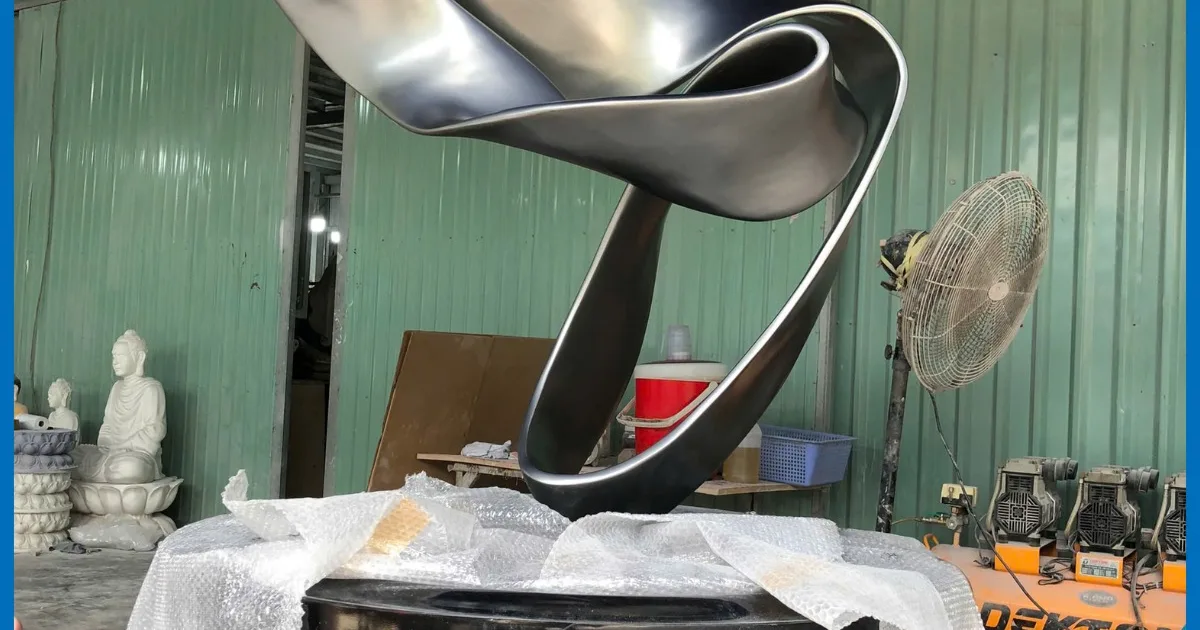
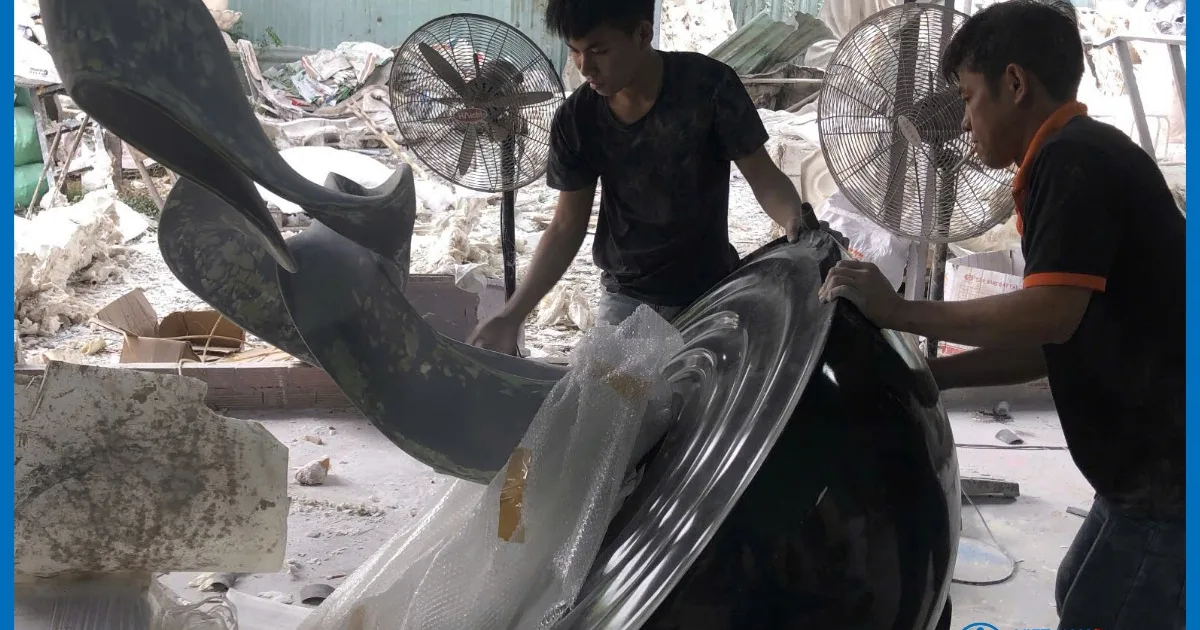
CT3D has completed published projects such as the giant shrimp landmark model for Ca Mau province and a large reclining Buddha statue – work that combined 3D scanning/design, pattern making and composite finishing. Related services: composite FRP statues, composite installations and silicone molds for resin and composite casting.
FRP Molds vs. Other Mold Types
| Criteria | FRP composite mold | Silicone mold (with jacket) | CNC wood / MDF mold | 3D printed mold |
|---|---|---|---|---|
| Rigidity | Rigid | Flexible skin, rigid jacket | Rigid | Rigid |
| Best part size | Large | Small to large | Medium to very large | Small to medium |
| Fine detail and undercuts | Limited; needs extra sections | Excellent | Limited by cutter size | Very good |
| Surface | High gloss from gel coat | Copies master texture exactly | Depends on sealing and paint | Depends on sanding and coating |
| Typical use | Hand lay-up composite, large statues, enclosures | Ornamental statues, polyresin, small decor | Plugs, sand patterns, vacuum forming | Small molds, inserts, fine ornament |
General comparison for guidance; CT3D recommends the mold type for each project during DFM review.
Quality Control
- Plug: profile checked against CAD; large blocks can be 3D scanned to generate a deviation color map.
- Mold surface: no pinholes, no blisters, no fiber print-through; uniform gloss.
- Flanges: flat, bolt holes aligned, tight joints to minimize flash.
- Trial casting: checks demolding, part wall thickness and seam lines.
Scan-based checks are described on our 3D scanning inspection page.
Common FRP Mold Defects and How CT3D Prevents Them
| Defect | Technical cause | Countermeasure |
|---|---|---|
| Blistering after a few pours | Air trapped under the gel coat, first fiber layer not fully wetted out | Lay a thin first mat layer and roll out air thoroughly before building up thicker layers |
| Warped mold, open flanges | Concentrated exothermic heat during cure, weak reinforcing frame | Build up in several thin stages and attach the frame before separating from the plug |
| Part sticking to the mold | Insufficient mold release, draft angle too small | Apply multiple wax coats, increase draft or add mold sections |
| Fiber pattern visible on the surface | Gel coat too thin, or fiber applied before the gel coat had tacked up | Control gel coat thickness and the timing of the next layer |
Source: composite fabrication experience at the CT3D workshop.
When you receive your mold, clean the surface, re-apply release wax as instructed, and store the mold in a dry place supported at the correct points to prevent twisting. Light scratches can be wet-sanded and re-polished instead of building a new mold.
How to Order an FRP Mold
- RFQ: send us your concept, photos, drawings or 3D file, together with dimensions, production quantity and casting material.
- DFM review: our engineers assess undercuts and recommend the number of mold sections and the plug method (CNC foam, wood or 3D printing).
- Quotation: plug, mold and part costs are itemized separately so you can easily compare options.
- Production: plug making – plug finishing – mold lay-up – reinforcement – demolding – mold surface finishing.
- QC: inspection of the gel coat surface and flange fit, plus a first-article trial casting.
- Delivery: handover of the mold or finished parts; shipping throughout Vietnam and internationally, or pickup at our workshop.
Why Work with CT3D
- Plug and mold under one roof: CNC foam and wood milling, 3D printing, composite lay-up and painting in our own workshops.
- Large-format experience: published landmark and statue projects such as the Ca Mau giant shrimp and a large reclining Buddha.
- Transparent quotes: plug, mold and part costs itemized separately, with a free manufacturability review.
- Verified geometry: 3D scanning and deviation maps for large plugs.
- From mold to parts: we can validate the mold with a trial casting and run low-volume production for you.
- NDA on request, engineering support in English and international shipping.
Frequently Asked Questions
How many times can a composite mold be used?
It depends on gel coat quality, geometric complexity and how well the mold release is maintained. A well-maintained mold can deliver many cycles; our engineers will advise based on your production volume.
Can you make a mold without a 3D file?
Yes. CT3D creates the 3D model from photos or drawings, or by 3D scanning a physical sample, then mills or prints the plug.
What is the difference between composite molds and silicone molds?
FRP molds are rigid and suit large parts with smooth surfaces. Silicone molds are flexible and capture fine ornamental detail and undercuts; they usually have a composite mother mold on the outside to hold their shape.
How long does it take to make a mold?
It depends on the size and the number of mold sections; the cure time of each layer is the main factor. The schedule is stated clearly in the quotation.
Can CT3D also produce the parts from the mold?
Yes. We run a first-article trial casting to validate every mold, and we can cast composite or polyresin parts from it in low volumes to order.
How should I store and maintain an FRP mold?
Clean the surface after use, re-apply release wax as instructed and store the mold in a dry place, supported at the correct points so it does not twist. Light scratches can be wet-sanded and re-polished.
Which plug method should I choose?
CNC-milled foam is efficient for large volumes of material, MDF or laminated wood suits rigid plugs with clean geometry, and 3D printing suits smaller plugs with fine detail. Our engineers recommend the method during the DFM review.
Do you ship molds or parts outside Vietnam?
Yes. We hand over the mold or the finished parts at our workshop, deliver throughout Vietnam, or arrange international shipping on request.
Videos from the CT3D Workshop
Watch the video High-Tech 3D Printed Molds produced by CT3D to get a clearer picture of our process and product quality. More videos are available on our YouTube channel Chế Tạo Vlog – CT3D.
Contact CT3D – Send Your Files for a Fast Quote
Whether you have a 3D file, a 2D drawing, photos or just an idea, you can send it to CT3D online (STL, STEP, IGES, OBJ). Our engineers will review your files, advise on process and materials, and send you a quotation with a delivery schedule.
- Email: [email protected] – [email protected]
- Phone / Zalo: +84 975 008 728 (Mr. Thai) – +84 985 936 728 (Mr. Dang) – or use our Contact form
- Head office: Binh Duong, Vietnam.
- Workshops: Ho Chi Minh City, Vietnam.
- Other workshops and drop-off points: Can Tho, Da Nang, Bien Hoa, Ba Ria – Vung Tau, Hanoi, Hai Duong, Hai Phong. Delivery throughout Vietnam and international shipping.
- Website: ct3dgroup.com – in3d.edu.vn
CT3D – 3D design & prototyping: 3D printing, 3D scanning, reverse engineering, silicone mold making, painting and finishing, CNC machining, composite fabrication, and supply of 3D printers and 3D printing resins.
Ready to Start Your Composite Mold Project?
Send photos, drawings or a 3D file with your dimensions and casting material. We review manufacturability free of charge and reply quickly with an itemized quotation and schedule.