
Custom RTV Silicone Molds – 3D Printed Masters, Food Grade
Technical summary: CT3D is a custom silicone mold manufacturer in Vietnam, producing room-temperature vulcanizing (RTV) silicone molds for art pieces, gifts and handcrafted products: candles, soap, epoxy resin, plaster, decorative concrete and food items such as chocolate. Master patterns are modeled in CAD and printed on high-resolution resin 3D printers or sculpted by hand, then surface-finished before molding. Our engineers select the silicone system (tin-cure or platinum-cure), Shore A hardness and mold construction (open, two-piece or jacketed) based on the casting material and the number of uses required.
Whether you run a candle or soap brand, produce corporate gifts or cast decorative resin and plaster, custom silicone molds let you reproduce a detailed shape again and again at low cost. On this page you will find how we make molds, which silicone and mold type suit your casting material, how long a mold lasts, design tips for masters, and how to order – even if all you have is a photo or a sketch.
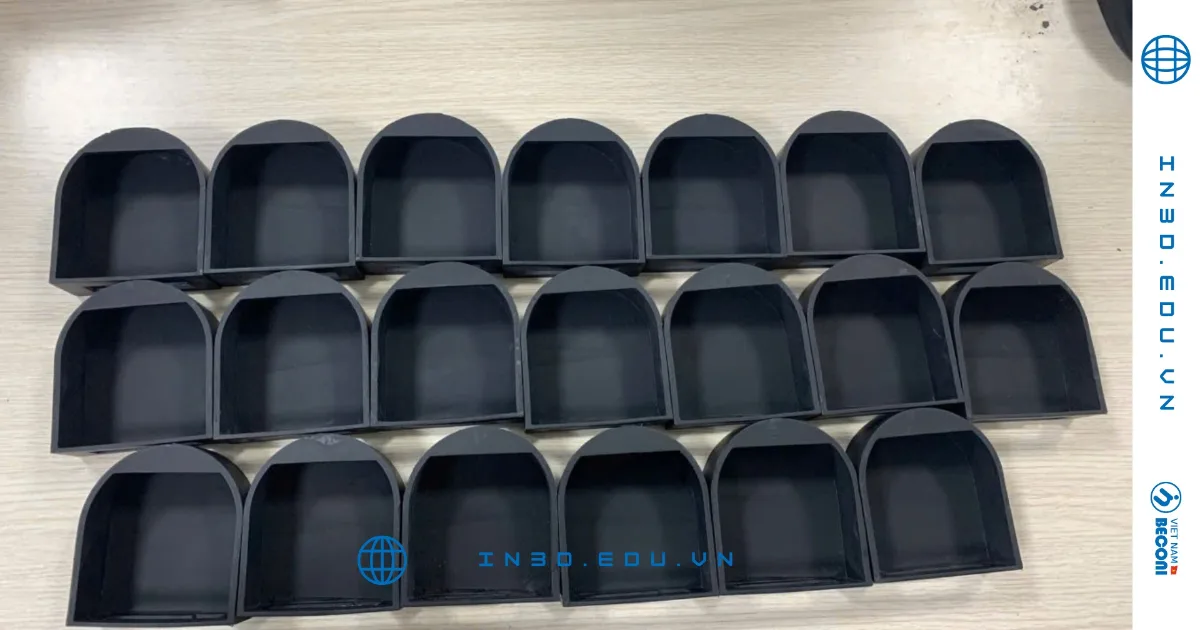
Key Facts at a Glance
| Parameter | CT3D silicone molds |
|---|---|
| Master source | 3D modeling from concepts, photos or drawings; 3D scanning of samples; hand sculpting |
| Master production | SLA/DLP resin 3D printing, 25–100 micron layers, fine details down to approximately 0.05 mm |
| Silicone systems | Tin-cure (condensation) or platinum-cure (addition), including food-grade platinum silicone |
| Hardness | Selected on the Shore A scale for each master |
| Mold construction | Open mold, two-piece mold with registration keys, glove mold with rigid jacket |
| Mold life | Approximately 15–20 casts for vacuum casting of PU resin; more than 50 casts for composite, polyresin, plaster and art products |
| Casting materials | Candle wax, soap, epoxy and PU resin, plaster, art cement, chocolate and jelly |
| Validation | First article cast in the customer’s own material |
What Problems Do Custom Silicone Molds Solve?
For crafts and gift products, customers often need to replicate a complex shape – raised ornament, a logo, a portrait, a small statue – in quantities from a few dozen to a few hundred pieces. Metal molds and injection molds are not economical at this scale, while rigid molds (plaster, wood) cannot release undercuts. Silicone solves both problems: the mold cost is low, and thanks to its elasticity the mold can be peeled off recessed features that a rigid mold would have to split into many pieces.
The key point is that cast quality can never exceed the quality of the master pattern. That is why CT3D invests most heavily in master creation: modeling, 3D printing and surface finishing.
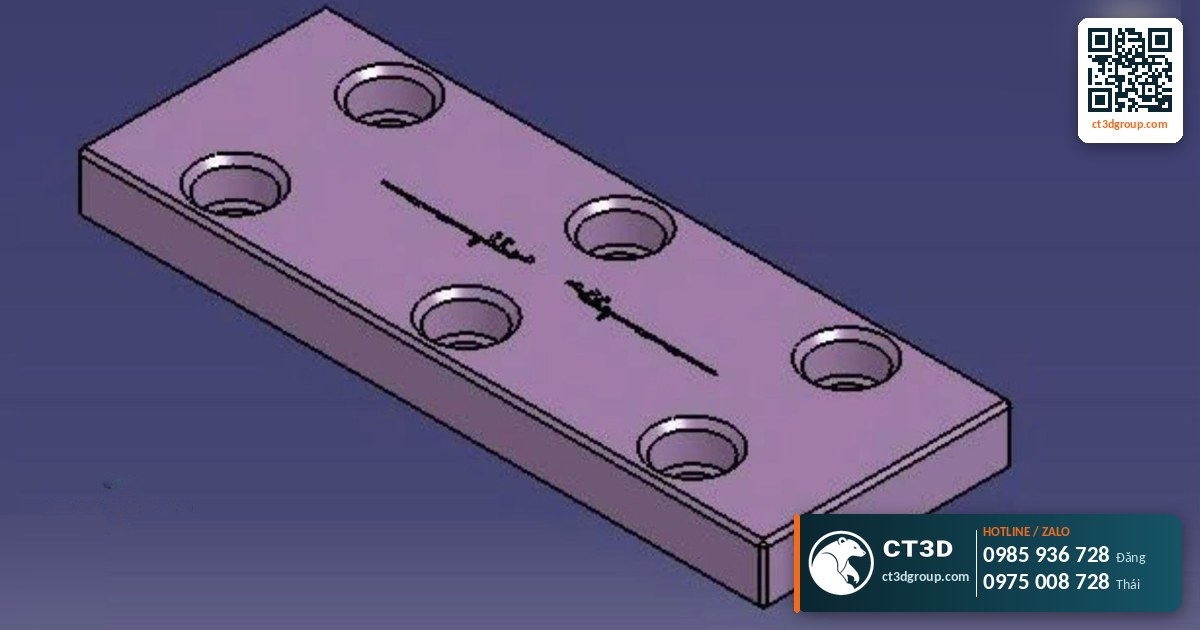
Silicone mold life at CT3D: silicone molds for vacuum casting of PU resin achieve approximately 15–20 casts; silicone molds for casting composite, polyresin, plaster and art products achieve more than 50 casts. Actual figures also depend on geometric complexity, undercuts and the casting material.
How a Silicone Mold Is Made
- Create the master: the shape is modeled in CAD (or scanned) and printed on an SLA/DLP resin printer, or sculpted by hand.
- Finish and seal the master: layer lines are sanded and primed away, and the surface is sealed so it releases cleanly and leaves no residue.
- Build the mold box and parting: the master is fixed in a mold box; for two-piece molds the parting line and registration keys are set up.
- Mix and degas: silicone is weighed at the exact ratio on a digital scale and degassed under vacuum.
- Pour or brush: a thin brush coat goes into deep details first, then the main pour starts from the lowest point; glove molds are built up in layers and covered with a rigid jacket.
- Cure, demold and test: after full cure the mold is opened, vents are trimmed and a first article is cast in your material.

Silicone Mold Scope of Work and Specifications
| Item | CT3D approach | Technical notes |
|---|---|---|
| Master source | 3D modeling from concepts, photos or drawings; 3D scanning of physical samples; hand sculpting | Files can be rescaled, with logos or raised lettering added |
| Master production | SLA/DLP resin 3D printing | 25–100 micron layers; fine details down to approximately 0.05 mm |
| Silicone system | Tin-cure (condensation cure) or platinum-cure (addition cure) | Platinum has low shrinkage and is available in food-grade versions |
| Hardness | Selected on the Shore A scale | Softer for masters with many undercuts, harder for flat masters that must hold their form |
| Mold construction | Single-sided open mold, two-piece mold with registration keys, glove mold with rigid jacket | Chosen according to product geometry and size |
| Trial casting | First article cast in the customer’s own material | Checks for air bubbles, parting line and ease of release |
Source: CT3D internal process; printing specifications per CT3D technical documentation.
Choosing the Mold Construction
The same master can be molded in different ways. The choice balances silicone cost, ease of demolding and how well the mold holds its shape under the weight of the casting material.
- Open (one-piece) mold: silicone is poured over a master with a flat back. Fast and economical for coasters, plaques, soap bars, candles and logos.
- Two-piece mold: the mold is split along a parting line, with registration keys so the halves align. Used for small statues and objects in the round; a pour spout and vents are cut in.
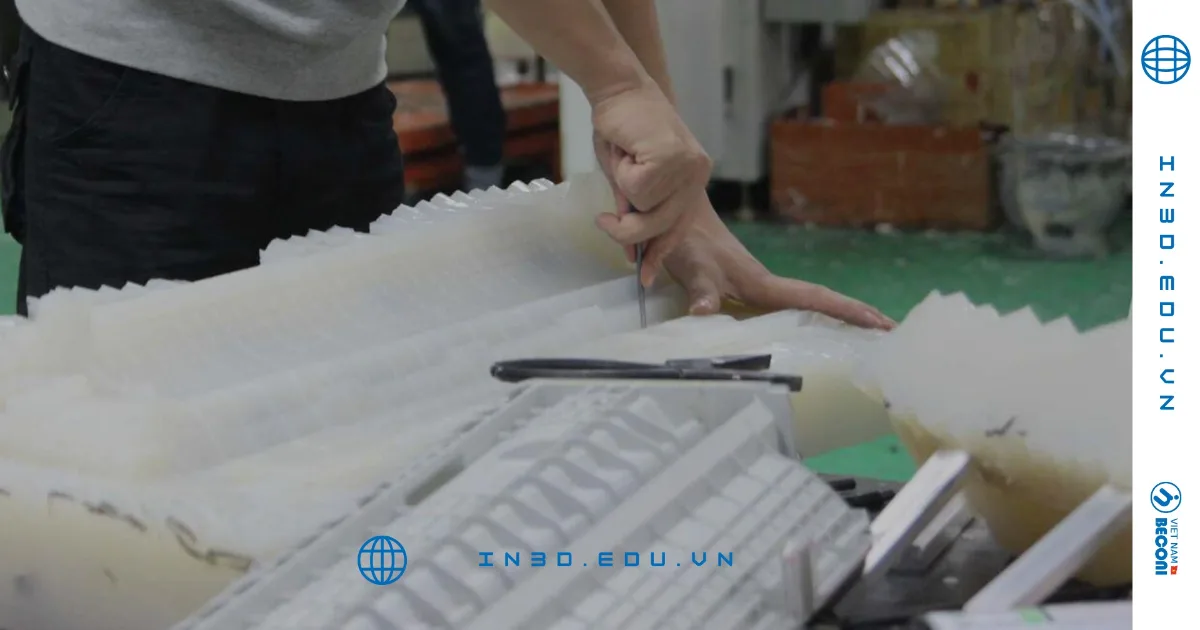
- Glove mold with jacket: a thinner silicone skin is brushed or poured over the master and supported by a rigid plaster or composite mother mold. It uses less silicone on large masters and keeps the shape accurate.

Materials and Standards
What Is the Difference Between Tin-Cure and Platinum-Cure Silicone?
Tin-cure silicone is easy to work with and rarely suffers cure inhibition, making it suitable for plaster, cement and candle molds. Its drawbacks are higher shrinkage and shorter mold life under continuous resin casting. Platinum-cure silicone has very low shrinkage, is more durable and heat-resistant, and is available in food-contact grades – mandatory for chocolate and jelly molds. In return, platinum systems are sensitive to certain substances, such as sulfur in oil-based clay or latex gloves, which can prevent the mold surface from curing. Our engineers run a compatibility test on the master before pouring.

How Does Shore A Hardness Affect the Mold?
Soft silicone (low Shore A) releases easily from deep, slender details but deforms more easily under heavy materials such as cement. Harder silicone holds its profile well and suits flat products with sharp edges. For large molds, CT3D typically uses soft silicone to capture detail and builds a plaster or composite mother mold to hold the shape.
Compatible Casting Materials
- Candles and soap: both tin-cure and platinum-cure silicone work; watch the wax pouring temperature.
- Epoxy resin, PU resin: exothermic reactions and chemicals gradually age the silicone; platinum molds last longer.
- Plaster, art cement: requires silicone with good tear strength, and a support jacket for large volumes.
- Chocolate, jelly: only food-grade platinum-cure silicone is used, and the master is fully sealed so no resin residue remains.
| Casting material | Silicone system | Points to watch |
|---|---|---|
| Candle wax, soap | Tin-cure or platinum-cure | Wax pouring temperature |
| Epoxy / PU resin | Platinum-cure preferred | Exothermic heat ages the mold over time |
| Plaster, art cement | Tear-resistant silicone | Support jacket for heavy or large casts |
| Chocolate, jelly | Food-grade platinum-cure only | Fully sealed master; clean the mold before first use |

Design Tips for Master Patterns
Good molds start with a master designed for molding. These are general mold-making guidelines; our engineers review your master or file and suggest changes before any silicone is poured.
| Topic | Typical recommendation | Why it matters |
|---|---|---|
| Surface finish | Sand and prime away all layer lines and marks | Silicone copies every flaw onto every cast |
| Flat base | Give open-mold products a flat back | Allows a simple, economical one-piece mold |
| Undercuts | Moderate undercuts are fine; very deep ones may need a softer silicone or a two-piece mold | Prevents tearing the mold on release |
| Silicone wall | Typically a consistent wall of silicone around the master, thicker for heavy casting materials | Thin walls tear; very thick walls waste silicone |
| Pour and vents | Pour from the lowest point; vent the high points and deep pockets | Avoids trapped air and pinholes |
| Fine text and logos | Enough depth and line width to survive demolding and finishing | Very fine relief can tear or fill with paint |
| Scale | Files can be rescaled and logos or lettering added before printing | One design can serve several product sizes |
Caring for Your Silicone Mold
Every mold is delivered with care and storage instructions. In general, molds last longest when they are cleaned gently after use, dried fully, stored flat and supported in their jacket, and kept away from direct sunlight and heat. Resin casting ages silicone faster than plaster or candle wax, so allow time between resin pours and replace a mold once edges begin to tear or the surface loses its gloss.
Industry Applications
- Handmade businesses: scented candles, soap, coasters and decorative resin trays.
- Corporate gifts: raised logos, commemorative medallions, small faux-bronze resin statues – see decor and corporate gifts.
- Interior decoration: relief panels, cement planters, plaster wall art.
- Confectionery: chocolate and jelly molds in branded shapes (food-grade silicone).
- Fine art and statues: replication of small statues and restoration parts; see also polyresin statues.
For candle containers rather than candle molds, see custom candle jars and vessels.
Silicone Molds vs. Other Mold Options
| Criteria | Silicone mold | FRP composite mold | Vacuum casting (silicone + vacuum) | Injection mold |
|---|---|---|---|---|
| Best for | Decor, gifts, candles, soap, resin, plaster, chocolate | Large rigid parts and statues | Engineering-grade PU parts in small batches | Mass production |
| Undercuts and fine detail | Excellent | Limited; needs extra sections | Excellent | Requires complex tooling |
| Tooling cost | Low | Medium | Low to medium | High |
| Mold life at CT3D | More than 50 casts for plaster, polyresin and art products | Many cycles with good maintenance | Approximately 15–20 casts | Very high |
See also vacuum casting and FRP composite molds.
Quality Control
- Master surface: inspected under raking light to detect layer lines and sanding marks before pouring – every defect will transfer to the product.
- Mix ratio: weighed on a digital scale, never estimated by volume.
- Air bubbles: silicone is vacuum degassed; for deep details, a thin brush coat is applied before the main pour.
- Trial casting: evaluates sharpness, flash at the parting line and ease of release; vent channels are adjusted if needed.
Cast products can be paint-finished as described on our painting and plating page.
How to Order a Silicone Mold
- Request for quotation (RFQ): send photos, drawings, 3D files or a physical sample, and tell us the casting material, dimensions and expected quantity.
- DFM review: our engineers define the parting line, pour and vent locations, silicone wall thickness and whether a support jacket is needed.
- Quotation: costs for 3D modeling, master printing, master finishing and mold pouring are itemized separately.
- Master creation and finishing: resin 3D printing, sanding, primer/filler to remove layer lines, and mold release application.
- Mold pouring: silicone is mixed at the exact ratio, degassed under vacuum to remove bubbles, poured from the lowest point and left to cure fully.
- Trial casting, QC and handover: a first article is cast and inspected, then the mold is delivered with care and storage instructions.
No physical sample or file? We can model from photos, or 3D scan an existing object.
Why Work with CT3D
- Master and mold in one place: 3D modeling, high-resolution resin printing, finishing and silicone molding by the same team.
- The right silicone for your material: tin-cure or platinum-cure, including food-grade platinum silicone, chosen after a compatibility check.
- Tested before handover: a first article is cast in your own casting material.
- Itemized quotes: modeling, master printing, finishing and mold pouring priced separately, with a free manufacturability review.
- Confidential designs: NDA on request; your files and masters are used only for your order.
- Engineering support in English and international shipping on request.
Frequently Asked Questions (FAQ)
I only have photos of the product. Can you still make a mold?
Yes. CT3D builds a 3D file from photos or drawings, prints the master and then pours the mold. The modeling cost depends on the complexity of the shape.
How many times can a silicone mold be used?
At CT3D, silicone molds for vacuum casting of PU resin achieve approximately 15–20 casts, and molds for composite, polyresin, plaster and art products achieve more than 50 casts. Actual life depends on the silicone system, casting material, complexity and storage.
What should I consider for chocolate molds?
Food-contact-grade platinum-cure silicone is mandatory, and the mold must be cleaned thoroughly before first use.
Why do cast parts have surface pinholes?
Usually because of air bubbles in the casting material or in the silicone. The fix: degas the material under vacuum, pour slowly from the lowest point and add vent channels.
Which silicone should I choose for my casting material?
Tin-cure silicone suits plaster, cement and candles. Platinum-cure silicone lasts longer with epoxy and PU resin and is the only choice for chocolate and jelly. Our engineers confirm the system after a compatibility test on the master.
Can you make large silicone molds?
Yes. For large masters we typically use a softer silicone skin to capture detail and support it with a plaster or composite mother mold, which keeps the shape accurate and reduces the amount of silicone.
Can you add a logo or change the size of my design?
Yes. Files can be rescaled, and logos or raised lettering can be added before the master is printed.
Do you ship molds outside Vietnam?
Yes. Molds are delivered with care and storage instructions, and international shipping is available on request.
Videos from the CT3D Workshop
Watch the video High-Tech 3D Printed Molds produced by CT3D to get a clearer picture of our process and product quality. More videos are available on our YouTube channel Chế Tạo Vlog – CT3D.
Contact CT3D – Send Your Files for a Fast Quote
Whether you have a 3D file, a 2D drawing, photos or just an idea, you can send it to CT3D online (STL, STEP, IGES, OBJ). Our engineers will review your files, advise on process and materials, and send you a quotation with a delivery schedule.
- Email: [email protected] – [email protected]
- Phone / Zalo: +84 975 008 728 (Mr. Thai) – +84 985 936 728 (Mr. Dang) – or use our Contact form
- Head office: Binh Duong, Vietnam.
- Workshops: Ho Chi Minh City, Vietnam.
- Other workshops and drop-off points: Can Tho, Da Nang, Bien Hoa, Ba Ria – Vung Tau, Hanoi, Hai Duong, Hai Phong. Delivery throughout Vietnam and international shipping.
- Website: ct3dgroup.com – in3d.edu.vn
CT3D – 3D design & prototyping: 3D printing, 3D scanning, reverse engineering, silicone mold making, painting and finishing, CNC machining, composite fabrication, and supply of 3D printers and 3D printing resins.
Ready to Start Your Silicone Mold Project?
Send photos, a sketch, a 3D file (STL, STEP, IGES, OBJ) or a physical sample, and tell us what you will cast. We review your design free of charge and reply quickly with an itemized quotation.