
CNC Wood Molds & Patterns – Foundry, Vacuum Forming
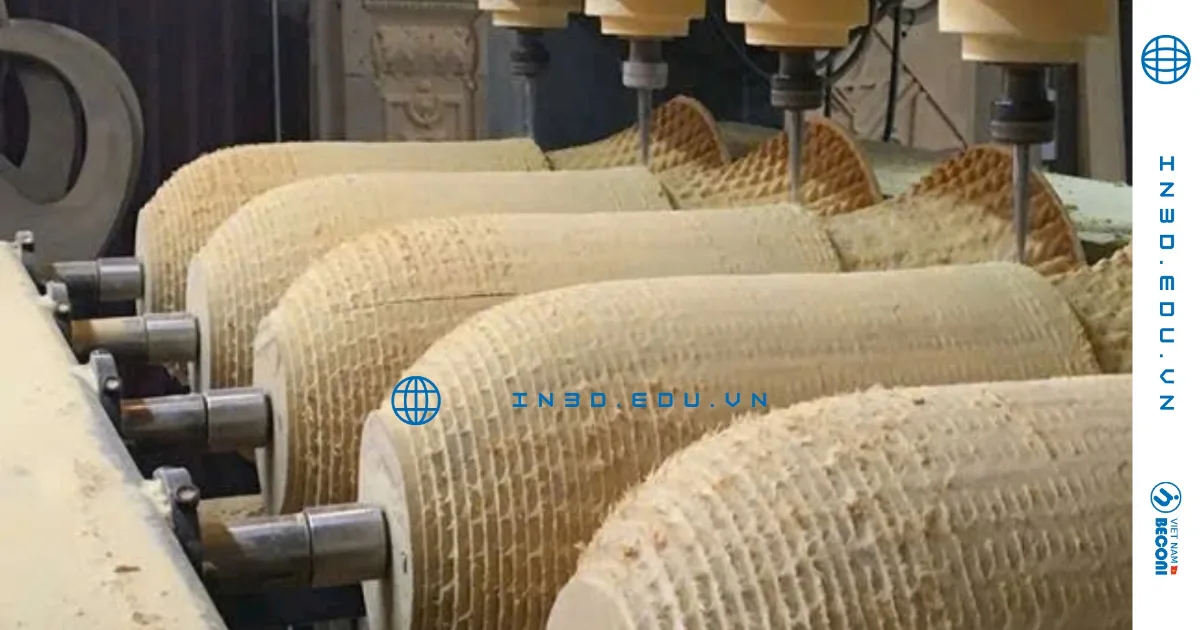
Technical summary: CT3D produces custom CNC wood molds and wood patterns in Vietnam, CNC-milled directly from your CAD data for sand casting, vacuum forming, master plugs for FRP composite molds, and molds for concrete and plaster casting. We work with natural timber, MDF/HDF and laminated boards. Every job includes CAM toolpath programming, sanding, sealing and dimensional inspection before delivery. It is a cost-effective solution for large molds, moderate production volumes and projects that need a low tooling investment.
If you are looking for a partner for CNC wood mold and pattern making, the main questions are usually the same: which wood or board to use, how accurate the mold will be, how long it will last and what it costs compared with metal or 3D printed tooling. This page answers those questions, explains how we build wood molds step by step, and shows what you need to send us to get a fast quote. One workshop handles the whole chain – 3D scanning or CAD, CNC milling, finishing and, if you need it, the FRP mold or cast parts that follow.
Key Facts at a Glance
| Parameter | CT3D capability |
|---|---|
| Machining | 3-axis CNC milling, combined with 4/5-axis when the profile requires it |
| Mold materials | MDF, HDF, kiln-dried natural wood, finger-jointed / laminated wood |
| Accepted input | STEP, IGES, STL, OBJ, 2D drawings, physical samples (3D scanned and remodeled) |
| Surface finishing | Sanding, filling, sealer, PU paint or gel coat |
| Large molds | Split into modules and joined with locating dowels; quoted per file |
| Inspection | Rules and gauges for key dimensions; 3D scan deviation color map for complex blocks |
| Delivery | Moisture-proof packaging; shipping throughout Vietnam and internationally |
CNC Wood Molds in Modern Manufacturing
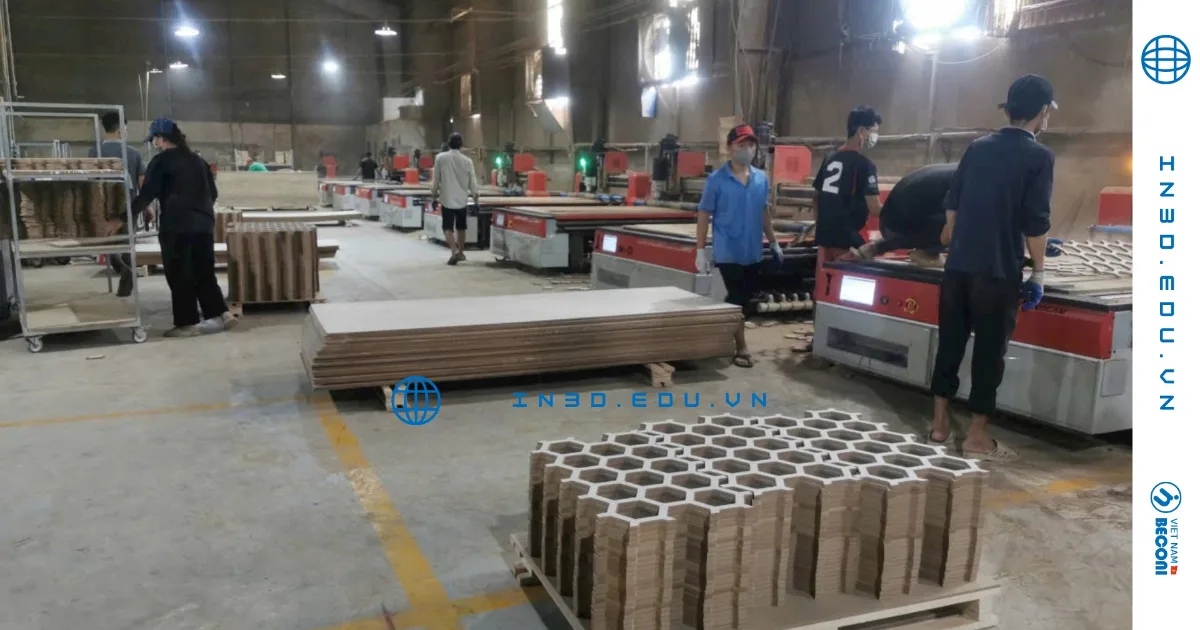
Wood has long been a pattern-making material in the foundry industry, but the way it is used has changed. Instead of hand-carving from drawings, the geometry is built in parametric CAD, converted into toolpaths and milled on 3-axis or multi-axis CNC machines. The result is a repeatable profile that is easy to modify, with digital data archived for future runs.
Compared with metal tooling, wood molds cost significantly less in material and machining time, especially for large parts such as boat hulls, tanks, canopies and statues. Compared with 3D printed molds, wood and MDF allow large blocks to be machined in one piece without joining many printed sections. For a general overview of milling services, see our CNC wood machining page.
How a CNC Wood Mold Is Made
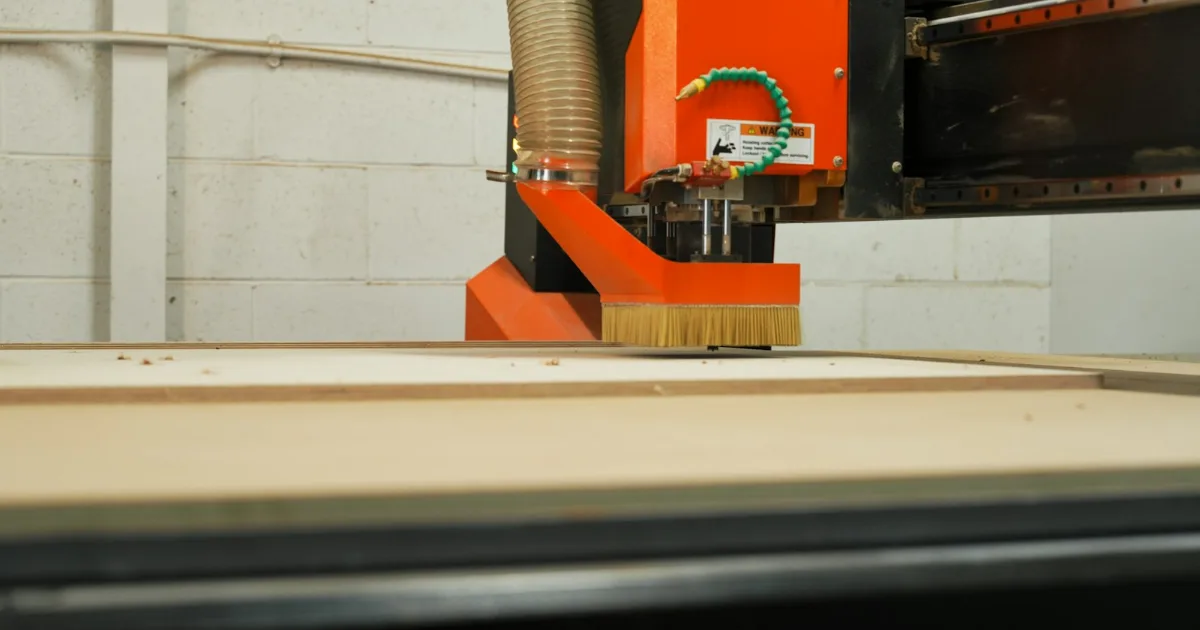
Behind every accurate wood mold is a sequence of small, controlled steps. Skipping any of them – especially blank conditioning and sealing – is the most common reason a wood mold warps or sticks after a few uses.
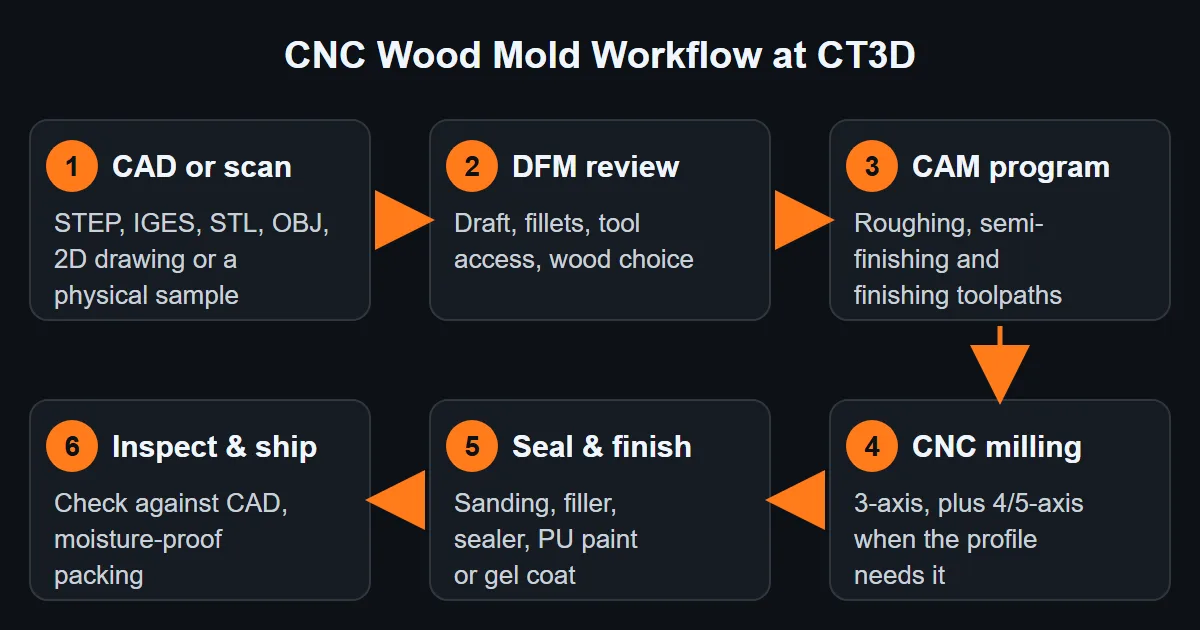
- Prepare the data: we work from your 3D file or build the model from a 2D drawing; physical samples are 3D scanned and remodeled. Draft, fillets and shrinkage allowance are added at this stage.
- Prepare the blank: the wood or board is dried to a stable moisture content, checked for cracks and knots, and glued up into a block with alternating grain where size requires it.
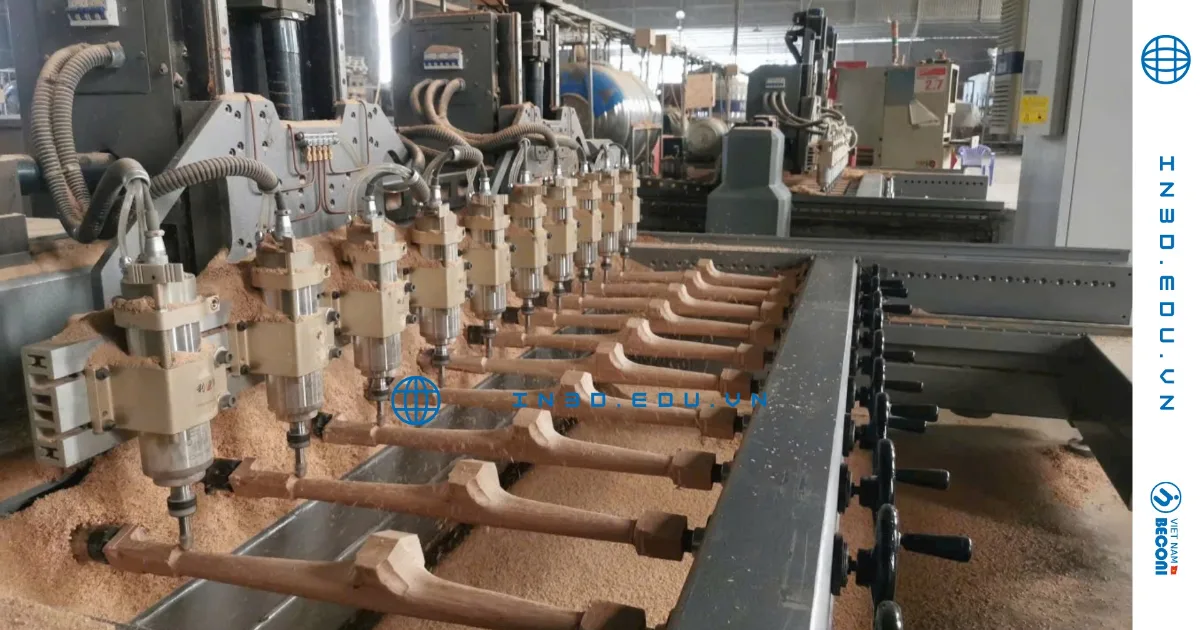
- Program the toolpaths: CAM software generates roughing, semi-finishing and finishing passes, with a small stepover on curved surfaces.
- Mill the mold: the blank is fixtured and milled on 3-axis CNC, or 4/5-axis when undercuts or steep walls need it. Large molds are milled as modules.
- Assemble and finish: modules are joined with locating dowels, then sanded, filled and sealed; PU paint or gel coat is applied where the application demands it.
- Inspect: key dimensions are measured, and complex blocks are 3D scanned and compared with the CAD model.
Scope of Work and Reference Specifications
- Foundry patterns (sand casting): wood patterns with draft angles, machining allowances and metal shrinkage compensation, plus core boxes when required.
- Vacuum forming molds: MDF/HDF molds with vacuum holes for forming thin PS, PET and ABS sheet into trays and packaging shells.
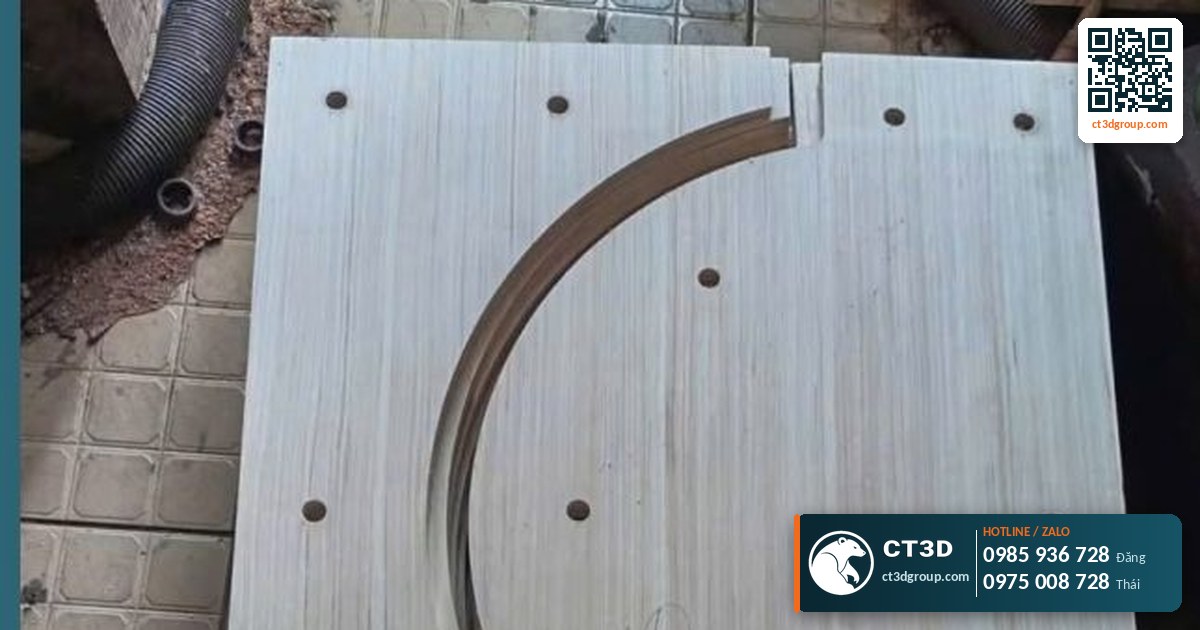
- Master plugs for composite molds: rough-milled from laminated wood, then surface-coated and polished for pulling FRP molds.
- Molds for concrete, plaster and GRC: architectural ornament molds, relief panels and decorative elements.
- Checking gauges, jigs and fixtures: profile gauges and assembly fixtures for the shop floor.
| Item | Specification / method | Notes |
|---|---|---|
| Machining method | 3-axis CNC milling, combined with 4/5-axis when needed | Selected according to profile complexity |
| Input data | STEP, IGES, STL, OBJ, 2D drawings, physical samples | Physical samples are 3D scanned and remodeled |
| Milling stages | Roughing – semi-finishing – finishing | Small stepover for curved surfaces |
| Finishing | Sanding, filling, sealer, PU paint or gel coat | Depending on mold application |
| Mold size | Large blocks are split into modules and joined with dowels | Quoted per file |
Source: CT3D in-house CNC wood/foam machining process.
Wood Materials and Blank Preparation Standards
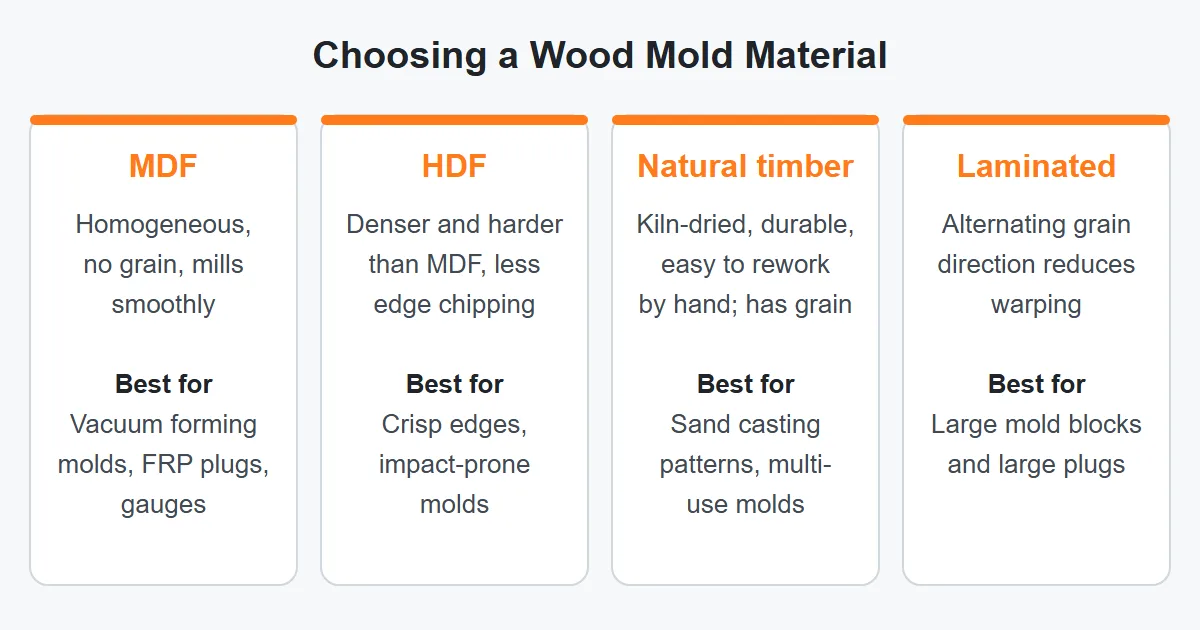
Natural wood is hygroscopic and has grain, so it moves with humidity and grain direction. This is the single most important technical factor when making accurate wood molds.
| Material | Properties | Best suited for |
|---|---|---|
| MDF | Homogeneous, grain-free, mills smoothly, cost-effective | Vacuum forming molds, composite plugs, gauges |
| HDF | Higher density than MDF, harder, less edge chipping | Molds that need crisp edges and impact resistance |
| Kiln-dried natural wood | Durable, easy to rework by hand, has grain | Sand casting patterns, multi-use molds |
| Finger-jointed / laminated wood | Reduced warping thanks to alternating grain direction | Large mold blocks, large plugs |
Source: common properties of engineering wood materials; the final selection is recommended by CT3D engineers for each application.
Wood blanks must be dried to a stable moisture content before milling. Mold surfaces that contact the casting material must be fully sealed so they do not absorb water, stick or blister when exposed to resin or concrete. A wax or PVA mold release is applied before every pour.
Design Guidelines for Wood Molds (DFM)
- Draft angle: both sand casting patterns and vacuum forming molds need draft so the pattern can be withdrawn without breaking the sand or tearing the plastic sheet.
- Fillet radius: milling cutters have a radius, so internal corners cannot be perfectly sharp; design fillets to match the tool diameter.
- Shrinkage allowance: metal casting patterns must be scaled up according to the shrinkage factor of the casting alloy.
- Grain direction: orient the grain along slender features to reduce the risk of breakage.
- Modular split: large blocks are divided into several sections with locating dowels, making them easier to transport and keeping warpage under control.
The table below gives general starting points used across the industry. They are not fixed CT3D limits – every file is reviewed individually, and your foundry or forming shop may have its own standards.
| Design feature | Typical recommendation | Why it matters |
|---|---|---|
| Draft on sand casting patterns | Typically 1–3°, more on deep pockets | Lets the pattern leave the sand cleanly |
| Draft on vacuum forming molds | Typically larger on male (plug) forms than on female cavities | Formed sheet shrinks onto male molds and grips them |
| Internal corner radius | At least the radius of the finishing cutter, larger where possible | Sharp internal corners cannot be milled and crack easily |
| Shrinkage allowance | Set per alloy, typically around 1–2% for common casting metals | Confirm the exact factor with your foundry |
| Machining allowance | Extra stock on faces that will be machined after casting | Leaves material for cleaning up the cast surface |
| Vacuum holes | Small holes at the deepest points, corners and recesses | Ensures the sheet pulls fully into every detail |
| Slender ribs and fins | Grain along the feature; consider a 3D printed insert | Thin wood sections across the grain break easily |
When a mold has freeform surfaces that are difficult to mill, or details smaller than the cutter can reach, CT3D can combine 3D printed inserts mounted on the wood mold. See 3D printed molds if your part requires a very fine surface.
Surface Finishing Options
The finish of a wood mold is chosen by what touches it. A foundry pattern needs a hard, sand-resistant face; a plug for an FRP mold needs a high-gloss surface, because every scratch is copied into the composite mold.
| Finish | What it does | Typical use |
|---|---|---|
| Sanding | Removes tool marks after the finishing pass | All molds and patterns |
| Filling | Closes pores, joints and small defects | MDF edges, glued-up laminated blocks |
| Sealer | Stops the wood absorbing moisture, resin or water | Concrete, plaster and resin molds; sand patterns |
| PU paint | Hard, durable, cleanable surface | Foundry patterns, gauges, multi-use molds |
| Gel coat | Glossy, polishable surface | Master plugs for pulling FRP composite molds |
| Wax or PVA release | Prevents the cast material sticking | Applied before every pour |
Industry Applications
| Industry | Wood mold products |
|---|---|
| Metal casting | Sand casting patterns for pump housings, rough gears, machine parts and large bronze statues |
| Packaging and thermoformed plastics | Vacuum forming molds for trays, blister packs and box shells |
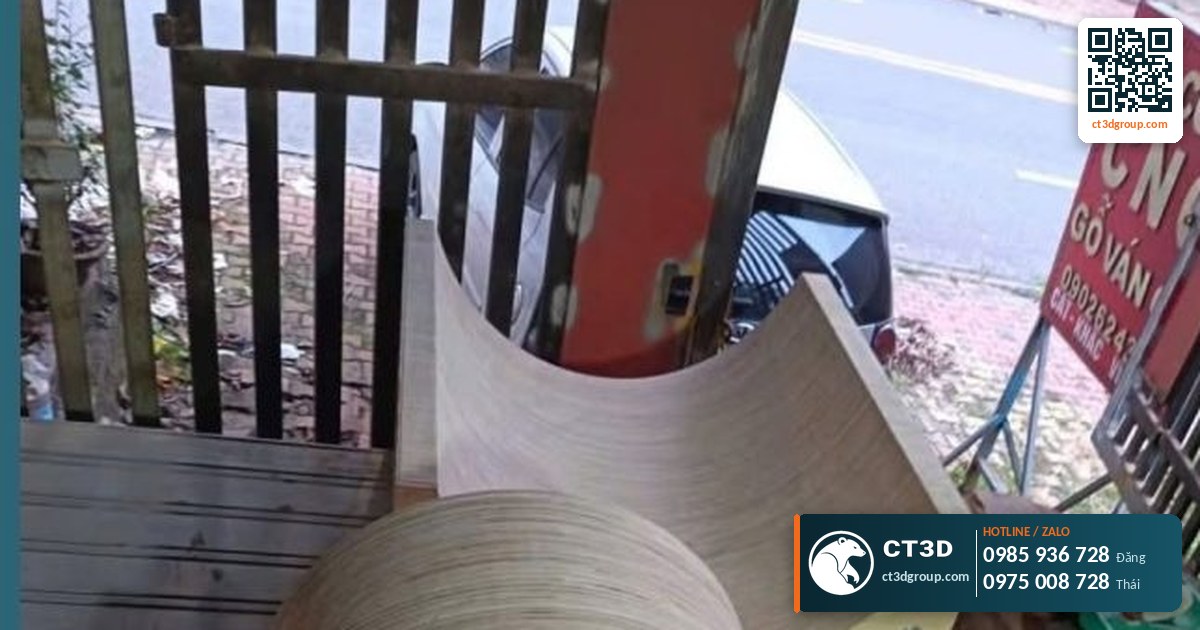
| Composites and marine | Plugs for boat hulls, tanks, covers and large mascots |
| Architecture and construction | Molds for relief panels, moldings, GRC ornaments and decorative concrete |
| Factories | Profile checking gauges, welding fixtures and assembly jigs |
If the next step after the wood plug is a composite mold, see our FRP composite molds page; for bronze work, see bronze casting.
Wood Molds vs. Other Tooling Options
Wood is not always the right answer. The comparison below is a general guide to help you choose; our engineers will recommend the most economical route for your part.
| Criteria | CNC wood / MDF mold | 3D printed mold | FRP composite mold | Metal tooling |
|---|---|---|---|---|
| Tooling cost | Low | Low to medium | Medium (needs a plug) | High |
| Best part size | Medium to very large | Small to medium (larger parts are printed in sections) | Large | Small to large |
| Fine detail | Limited by cutter size | Very good | Copied from the plug | Very good |
| Durability | Moderate; depends on sealing and care | Low to moderate | Good with proper maintenance | Very high |
| Ease of modification | Easy – wood can be reworked by hand | Reprint the section | Difficult | Difficult and costly |
| Typical use | Sand patterns, vacuum forming, plugs, concrete molds | Small molds, inserts, fine ornament | Hand lay-up composite and polyresin parts | High-volume production |
General industry comparison for guidance only; actual suitability depends on geometry, quantity and casting material.
Quality Control
- Blank inspection: moisture content, cracks and knots are checked before the blank goes on the machine.
- Post-milling inspection: key dimensions are measured with rules and gauges; complex blocks are 3D scanned to create a deviation color map against CAD.
- Surface inspection: tool marks, edge chipping and filler pinholes; parting surface flatness is evaluated.
- Mold trials: vacuum forming molds and casting molds can be test-run on request.
Learn more about scan-based inspection on our 3D scanning inspection page.
How to Order a CNC Wood Mold
- RFQ: send us your file, drawing or physical sample, and tell us the material to be cast or formed, the expected number of uses and the overall dimensions.
- DFM review: we check draft angles, fillets and tool access, and recommend a suitable wood material.
- Quotation: we calculate blank material, CNC machine time and finishing labor; the quote includes a delivery schedule.
- CAM programming and machining: roughing and finishing toolpaths are generated, blanks are fixtured, milled and modules assembled.
- Finishing and QC: sanding, filling, sealing or painting, followed by dimensional inspection against CAD.
- Delivery: moisture-proof packaging, delivery to your site or pickup at our workshop; we ship throughout Vietnam and internationally.
Why Work with CT3D
- One workshop, whole chain: 3D scanning, CAD modeling, CNC milling, finishing and – when needed – the FRP mold or cast parts that follow the wood plug.
- Measured, not guessed: complex blocks can be 3D scanned and compared with CAD as a deviation color map.
- Hybrid molds: 3D printed inserts can be added where details are too fine for a cutter.
- Free manufacturability review: draft, fillets, split lines and material are checked with every quote.
- Confidentiality: we sign an NDA on request and use your files only for your project.
- Engineering support in English and international shipping on request.
Frequently Asked Questions
Do wood molds warp over time?
They can, if the blank has not reached a stable moisture content or the surface is not fully sealed. CT3D uses MDF/HDF or cross-grain laminated wood and applies sealer to minimize this risk.
When should I choose a wood mold instead of a 3D printed mold?
When the mold is large, the geometry is not overly detailed and cost needs to stay low. For small parts and fine ornamental detail, 3D printing is the better fit.
Can wood molds be used for casting resin or composites?
Yes, once the surface has been sealed and polished and a suitable mold release is used. Typically, the wood serves as a plug from which a composite mold is pulled for producing the final parts.
What do I need to prepare to get a quote?
A 3D file or dimensioned drawing, the material to be cast, the expected production quantity and your surface finish requirements.
Which file formats do you accept?
STEP, IGES, STL and OBJ files, as well as 2D drawings. If you only have a physical part, we can 3D scan it and remodel it in CAD before milling the mold.
How large can a CNC wood mold be?
Large molds are split into modules that are milled separately and joined with locating dowels, which also makes them easier to transport. Send us your overall dimensions and we will propose a split and quote per file.
How many times can a wood mold be used?
It depends on the wood or board, the quality of the sealing, the casting material and how carefully the mold is handled. Tell us your expected number of uses and our engineers will recommend the material and finish.
Can the mold be modified after a trial?
Usually yes. Wood can be reworked by hand, and because the geometry is kept as digital data, revised sections can be re-milled without starting over.
Videos from the CT3D Workshop
Watch the video High-Tech 3D Printed Molds produced by CT3D to get a clearer picture of our process and product quality. More videos are available on our YouTube channel Chế Tạo Vlog – CT3D.
Contact CT3D – Send Your Files for a Fast Quote
Whether you have a 3D file, a 2D drawing, photos or just an idea, you can send it to CT3D online (STL, STEP, IGES, OBJ). Our engineers will review your files, advise on process and materials, and send you a quotation with a delivery schedule.
- Email: [email protected] – [email protected]
- Phone / Zalo: +84 975 008 728 (Mr. Thai) – +84 985 936 728 (Mr. Dang) – or use our Contact form
- Head office: Binh Duong, Vietnam.
- Workshops: Ho Chi Minh City, Vietnam.
- Other workshops and drop-off points: Can Tho, Da Nang, Bien Hoa, Ba Ria – Vung Tau, Hanoi, Hai Duong, Hai Phong. Delivery throughout Vietnam and international shipping.
- Website: ct3dgroup.com – in3d.edu.vn
CT3D – 3D design & prototyping: 3D printing, 3D scanning, reverse engineering, silicone mold making, painting and finishing, CNC machining, composite fabrication, and supply of 3D printers and 3D printing resins.
Ready to Start Your Wood Mold or Pattern Project?
Send your STEP, IGES, STL or OBJ file, a 2D drawing or photos of a sample. We review manufacturability free of charge and reply quickly with a quotation and delivery schedule.