

Quick answer: Heat-resistant resin 3D printing uses resins with a high heat deflection temperature (HDT) for parts operating near heat sources, low-volume injection mold prototypes, silicone/PU casting molds and hot-air ducts. Standard resin typically withstands only about 50–70 °C before softening; some high-temperature resins are rated by their manufacturers at an HDT above 200 °C after thermal post-curing. At Ho Chi Minh City market rates in 2026, heat-resistant resin costs 60–100% more than standard resin (not CT3D prices).
Customers often contact CT3D after a “painful” experience: a resin part placed near a lamp, next to a motor or inside a car in the sun warped and sagged. Or a mold printed in standard resin for a test casting cracked on the very first pour. This article explains why resin softens when hot, how to read HDT data, and when heat-resistant resin is truly worth using. The overall picture of materials and pricing is in our pillar article on resin 3D printing.
Why Does 3D Printing Resin Soften When Hot?
Once cured, resin is a thermoset: it does not melt like PLA or ABS, but there is still a temperature range in which the polymer network “loosens”, changing from a hard, glassy state to a rubbery one. This range is called the glass transition temperature (Tg). Near Tg, stiffness drops sharply and the part begins to sag under load.
Heat-resistant resins are formulated with a denser cross-linked network and stiffer molecules, so their Tg is higher. The trade-off is that the material is usually more brittle. This is an almost unavoidable rule: the more heat resistant, the more brittle. That is why heat-resistant resin is not the default choice for every part – use it only when heat is the primary requirement.
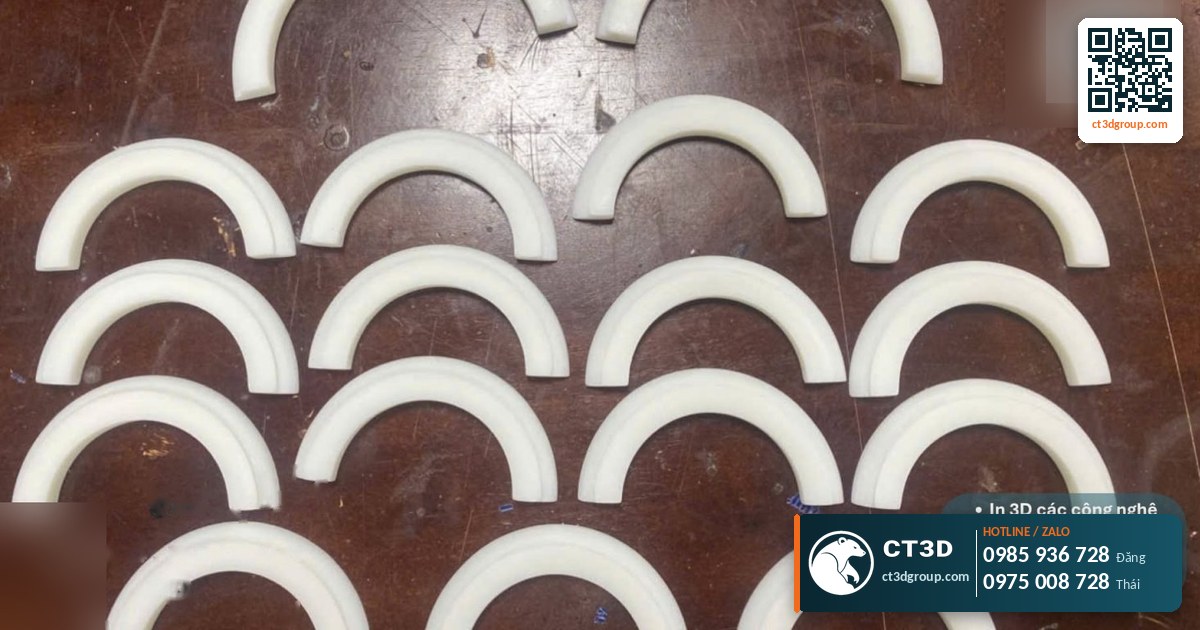
What Is HDT and How Do You Read Heat Resistance Data?
HDT (Heat Deflection Temperature) is the temperature at which a standard test bar deflects by a specified amount under a fixed bending load while being slowly heated. It is commonly measured according to ASTM D648 or ISO 75, at two load levels: 0.45 MPa (light load) and 1.8 MPa (heavy load).
Three things to remember when reading a resin’s TDS (Technical Data Sheet):
- HDT at 0.45 MPa is always higher than at 1.8 MPa. Compare materials at the same load level.
- HDT depends on post-curing. Many heat-resistant resins only reach their published HDT after UV curing and thermal post-curing (baking in an oven) according to the manufacturer’s protocol.
- HDT is not a safe operating temperature. It is the point at which the material starts to deflect in the test. Long-term operating temperature should be below HDT by a safety margin.
| Material group | Heat resistance (reference) | Toughness | Typical applications |
|---|---|---|---|
| Standard resin | HDT about 50–70 °C | Low | Appearance models, indoor display |
| Tough / ABS-like resin | Similar to or slightly above standard | High | Assemblies, housings |
| Engineering resin | Medium – high, depending on the type | Medium | Technical parts near moderate heat |
| High-temperature resin | Some types rated at HDT above 200 °C at 0.45 MPa | Low, brittle | Test molds, hot-air ducts, fixtures near heat |
| FDM PLA | Softens at about 55–60 °C | Medium | Low-cost models, not near heat |
| FDM ABS/ASA | About 90–100 °C | Good | Outdoor and in-vehicle parts |
Source: common reference values from material manufacturers’ TDS; exact values depend on resin type and curing process. CT3D provides the TDS with the quote.
Worked Example: Choosing a Material by Operating Temperature
Suppose you need a hot-air duct for a sample dryer, with outlet air at about 90 °C and a light load (only its own weight and low air pressure).
- Operating temperature: 90 °C. Add a safety margin of at least 20–30 °C → you need a material with an HDT (0.45 MPa) of about 110–120 °C or higher.
- Standard resin (50–70 °C): ruled out.
- FDM ABS/ASA (90–100 °C): right at the limit, with a risk of long-term deformation – ruled out if accuracy matters.
- Heat-resistant resin: meets the requirement, but is brittle – design moderately thick walls, fillet corners and avoid impact.
If the same duct is also subject to strong vibration, CT3D engineers may propose a hybrid solution: heat-resistant resin for the section near the heat source and a tougher material further away, joined with flanges.
How Is Heat-Resistant Resin Used to Print Test Molds?
Low-volume injection mold inserts
This is the most valuable application. Instead of spending weeks machining a steel mold, engineers print the mold cavity (insert) in heat-resistant resin, fit it into a standard metal mold base and run trial shots on an injection molding machine. The goal is to get a few dozen real parts in the actual production plastic to check assembly, run tests, take photos and obtain approval – before investing in a steel mold.
Resin mold life is very limited and depends heavily on the molding plastic, temperature, pressure and design. Low-melt, free-flowing plastics such as PP and PE are easier; glass-filled or high-temperature plastics are much harder. Design principles for resin molds:
- Use larger draft angles than for steel molds to ease part ejection and reduce the force on the brittle cavity.
- Avoid thin ribs and tall, slender cores in the cavity – they break easily.
- Reduce injection pressure and speed, and increase cooling time between shots, since resin conducts heat poorly.
- Polish the cavity surface so parts release easily.
To know when to switch from 3D printing to injection molding, see 3D printing vs. injection molding: the break-even point.
Master patterns and molds for silicone, PU and epoxy casting
When casting large volumes of PU or epoxy, the exothermic reaction can heat the mold significantly. Master patterns or rigid molds in heat-resistant resin deform less. In addition, when silicone needs to be heat-cured quickly, a heat-resistant master pattern keeps its dimensions. The soft-mold process is described in what is silicone mold making.
Low-volume vacuum forming (thermoforming) molds
A plastic sheet is heated until soft and then vacuum-drawn over the mold. Heat-resistant resin molds give crisp mold details, and vacuum holes can be built right into the design file.
Other parts near heat
Hot-air ducts, sensor brackets near engines, lamp housings exposed to bulb heat, and fixtures for soldering, drying and hot-melt gluing operations. For parts subject to both heat and impact, consider Tough resin or switch to metal.
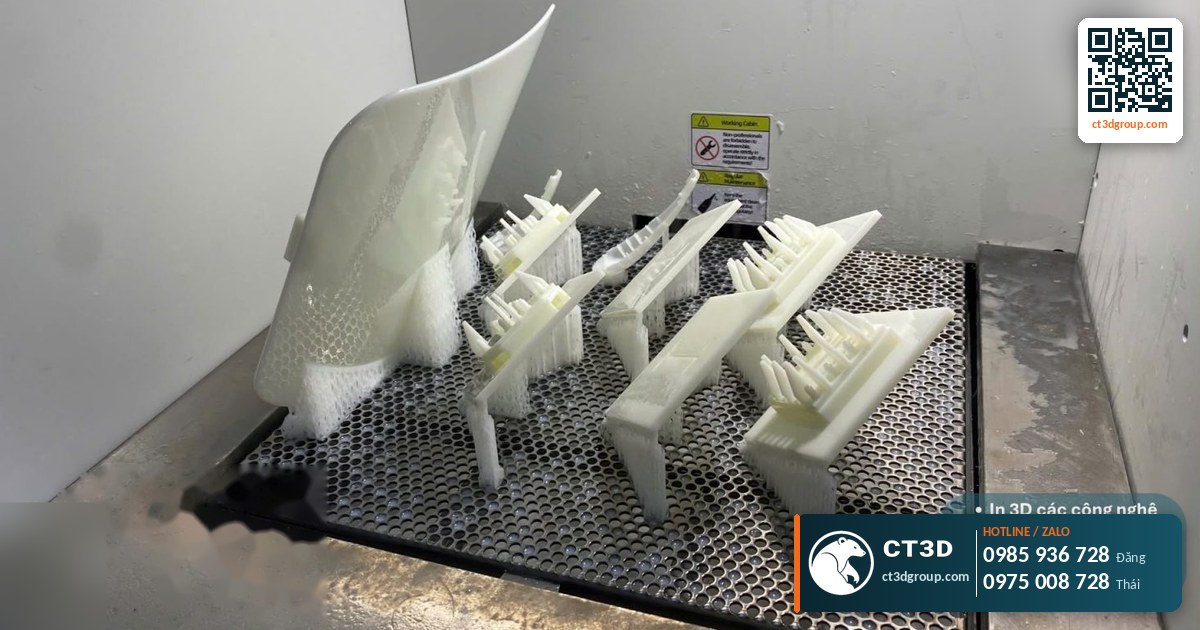
Heat-Resistant Resin Printing Parameters and Indicative Costs
| Item | Value | Notes |
|---|---|---|
| Technology | SLA / DLP | 25–100 micron layers |
| SLA accuracy | ±0.05–0.1 mm | May shrink slightly after thermal curing; compensation needed |
| DLP accuracy | ±0.03–0.08 mm | Suited to small mold inserts |
| Heat-resistant resin surcharge | +60–100% | Compared with standard resin, market rates |
| Standard resin, 5–10 cm part | 300,000–1,200,000 VND (≈ US$12–46) | Market rates, used as the base for the surcharge |
| Lead time | Ready file: 1–3 days | Plus thermal curing time per the material protocol |
Source: CT3D technical documentation; prices are Ho Chi Minh City market rates in 2026, not CT3D prices, and are indicative only (1 USD ≈ 26,000 VND). CT3D quotes per file.
Estimate example: for a mold insert of about 8 cm, if standard resin at market rates costs about 300,000–1,200,000 VND, then with heat-resistant resin at +60–100% it would be about 480,000–2,400,000 VND (≈ US$18–92), excluding cavity polishing. That is far less than a steel mold, so it is well worth testing the design before committing to production tooling.
Common Problems with Heat-Resistant Resin and How to Fix Them
| Problem | Cause | Solution |
|---|---|---|
| Part still softens when hot | Insufficient thermal post-cure, UV cure only | Post-cure per the manufacturer’s protocol, test before delivery |
| Cracks during thermal curing | Temperature ramped too quickly, walls too thick | Ramp temperature gradually, hollow the part, add drain holes |
| Mold breaks during part ejection | Small draft angle, slender cores | Increase draft, enlarge core cross-section, use mold release |
| Dimensions off after curing | Shrinkage during thermal curing | Print a test part, measure and compensate dimensions |
| Flash on the first shots | High pressure, parting surface not flat | Reduce pressure, sand the parting surface flat |
| Breaks during assembly | Brittle material, overtightened screws | Use metal inserts and washers, limit tightening torque |
Source: CT3D production experience.
Additional note: heat-resistant parts still need excess resin washed off and thorough curing. Under-cured resin can give off odors and leave a tacky surface when heated. For the standard wash and cure process, see resin print post-processing.
Checklist for Sending a Heat-Resistant Resin Printing Request to CT3D
- 3D file (STEP preferred, or STL, OBJ, 3MF) via our website, Zalo, email or our contact form.
- Maximum operating temperature and duration of heat exposure (short-term or continuous).
- Loads: whether the part carries force, pressure or vibration.
- For injection molds: the plastic to be molded, number of parts needed, and whether a mold base is already available.
- Critical dimensions, tolerances and surface requirements.
CT3D engineers will analyze the file, calculate weight, recommend a material and send a quote with lead time. If heat-resistant resin is not suitable, CT3D can propose alternatives such as metal printing, CNC machining or silicone molds. See our 3D-printed mold service on in3d.edu.vn (in Vietnamese) or our 3D-printed molds and rapid tooling page. Other resin types and the full price list are in our pillar article on resin 3D printing.
Frequently Asked Questions
What temperature can heat-resistant resin withstand?
It depends on the resin type and curing process. Standard resin typically handles about 50–70 °C; some high-temperature resins are rated by their manufacturers at an HDT above 200 °C at 0.45 MPa. The actual operating temperature should be below HDT by a safety margin.
Can injection molds be printed in resin?
Yes, for small trial runs. Mold inserts printed in heat-resistant resin are fitted into a metal mold base and can produce a limited number of parts depending on the plastic and design. They are suited to validating a product before making a steel mold.
Why is heat-resistant resin brittle?
To withstand heat, the polymer network is more densely cross-linked and stiffer, which reduces the material’s ability to deform before breaking. Design with fillets, avoid impact and do not overtighten screws.
How much does heat-resistant resin printing cost?
At Ho Chi Minh City market rates in 2026, heat-resistant resin costs 60–100% more than standard resin. These are not CT3D prices; CT3D quotes per file.
Real Footage from the CT3D Workshop
Watch the Ultra-smooth SLA 3D printing service video produced by CT3D to get a clearer picture of our process and product quality. More videos are available on our Chế Tạo Vlog – CT3D channel.
Contact CT3D – Send Your File for a Fast Quote
Whether you have a 3D file, a 2D drawing, photos or just an idea, you can send it to CT3D. Our engineers will check the file, recommend the right technology and material, and send you a quote with a lead time.
- Email: [email protected] – [email protected]
- Hotline / Zalo: +84 975 008 728 (Mr. Thai) – +84 985 936 728 (Mr. Dang), or use our contact form
- Head office: Binh Duong.
- Workshops in Ho Chi Minh City: Linh Trung (Thu Duc), Tam Binh (Thu Duc), former District 6.
- Other workshops and drop-off points: Can Tho, Da Nang, Bien Hoa, Ba Ria – Vung Tau, Hanoi, Hai Duong, Hai Phong. Nationwide delivery.
- Website: ct3dgroup.com – in3d.edu.vn
CT3D – 3D design & prototyping: 3D printing, 3D scanning, reverse engineering, silicone mold making, painting and finishing, CNC machining, composite fabrication, plus 3D printers and 3D printing resins.
Danh sách cửa hàng:
CT3D là đơn vị cung cấp trọn gói các dịch vụ thiết kế và sản xuất theo yêu cầu tại TP.HCM và khu vực lân cận (Bình Dương, Đồng Nai, Long An…). Với năng lực khép kín từ thiết kế 3D, in 3D (FDM, resin/SLA, SLS, in 3D kim loại), scan 3D – thiết kế ngược, làm khuôn, đúc composite – poly resin – poly stone đến gia công CNC và sơn màu hoàn thiện, CT3D đồng hành cùng khách hàng qua toàn bộ quy trình – từ ý tưởng, bản vẽ hay sản phẩm mẫu đến thành phẩm hoàn chỉnh. Dù bạn cần tạo mẫu nhanh, sản xuất số lượng, chế tác tượng – mô hình – quà tặng hay linh kiện kỹ thuật, đội ngũ CT3D sẽ tư vấn công nghệ và vật liệu phù hợp, đảm bảo sản phẩm sắc nét, đúng yêu cầu và tối ưu chi phí. Khách hàng tại TP.HCM và vùng lân cận có thể trao đổi trực tiếp, gửi file online và nhận sản phẩm thuận tiện, hỗ trợ cả đơn gấp lẫn dự án số lượng.
CT3D cung cấp trọn gói các dịch vụ thiết kế và sản xuất theo yêu cầu, phục vụ khách hàng tại Hà Nội và các tỉnh lân cận (Bắc Ninh, Hưng Yên, Hải Phòng, Vĩnh Phúc…). Với năng lực khép kín từ thiết kế 3D, in 3D (FDM, resin/SLA, SLS, in 3D kim loại), scan 3D – thiết kế ngược, làm khuôn, đúc composite – poly resin – poly stone đến gia công CNC và sơn màu hoàn thiện, CT3D đồng hành cùng khách hàng qua toàn bộ quy trình – từ ý tưởng, bản vẽ hay sản phẩm mẫu đến thành phẩm hoàn chỉnh. Quy trình làm việc thuận tiện: bạn gửi file 3D hoặc mô tả ý tưởng qua online, đội ngũ CT3D tư vấn công nghệ – vật liệu, báo giá nhanh và giao hàng tận nơi tại Hà Nội. Dù bạn cần tạo mẫu nhanh, sản xuất số lượng, chế tác tượng – mô hình – quà tặng hay linh kiện kỹ thuật, CT3D đều đáp ứng với sản phẩm sắc nét, đúng yêu cầu và tối ưu chi phí.

