
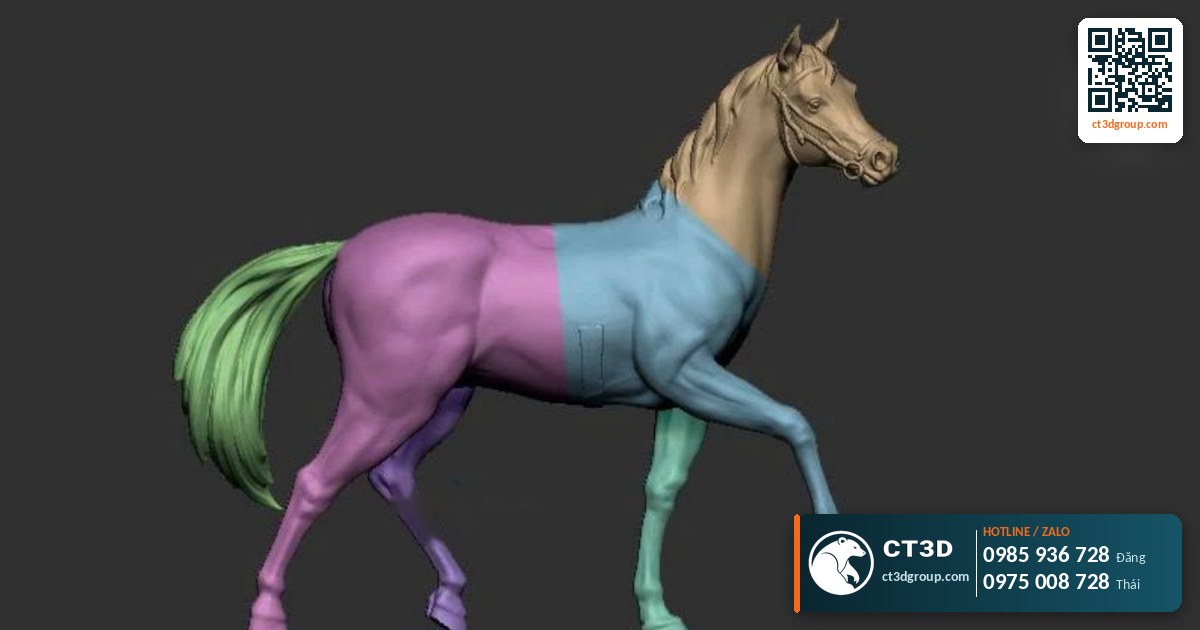
Quick answer: Silicone mold making means pouring liquid silicone rubber around an original model (the master), letting the silicone cure, then cutting it open to get a flexible mold that carries an exact impression of the master. Resin, polyurethane (PU), plaster or composite is then poured into the mold to make copies. Silicone molds suit small batches, from a few to a few dozen parts per mold, at far lower cost than steel injection molds. The master is usually resin 3D printed for a smooth surface.
Do you have a statue, a trophy or a plastic part and need 20 or 50 identical copies? 3D printing each one takes time, and a steel mold is far too expensive. A silicone mold is often the middle-ground solution. This article is a beginner’s overview of silicone mold making: what a silicone mold is, how resin and composite casting work, and when to use them. The detailed technical process, from preparing the printed master to choosing silicone and pouring the mold, is covered in our in-depth article making silicone molds from 3D prints. For the bigger picture of our model-making services, see custom 3D model printing.
What Is a Silicone Mold? An Everyday Analogy
Think of a silicone jelly mold in your kitchen. The mold is soft and flexible: you pour in the jelly, let it set, then flex the mold gently and the jelly pops out in perfect shape. Silicone molds in model making work the same way, except the shapes are more complex and the material poured in is plastic.
Mold-making silicone is a two-part rubber. When part A is mixed with part B, the mixture cures over time into a soft, elastic rubber block. Because it is soft, the mold can be flexed to release the part, even when the part has grooves or slight undercuts. This is something rigid molds made of steel or plaster struggle to do.
Silicone is also naturally non-stick with many casting resins. As a result, cast parts reproduce the surface of the master very faithfully, down to fine textures.
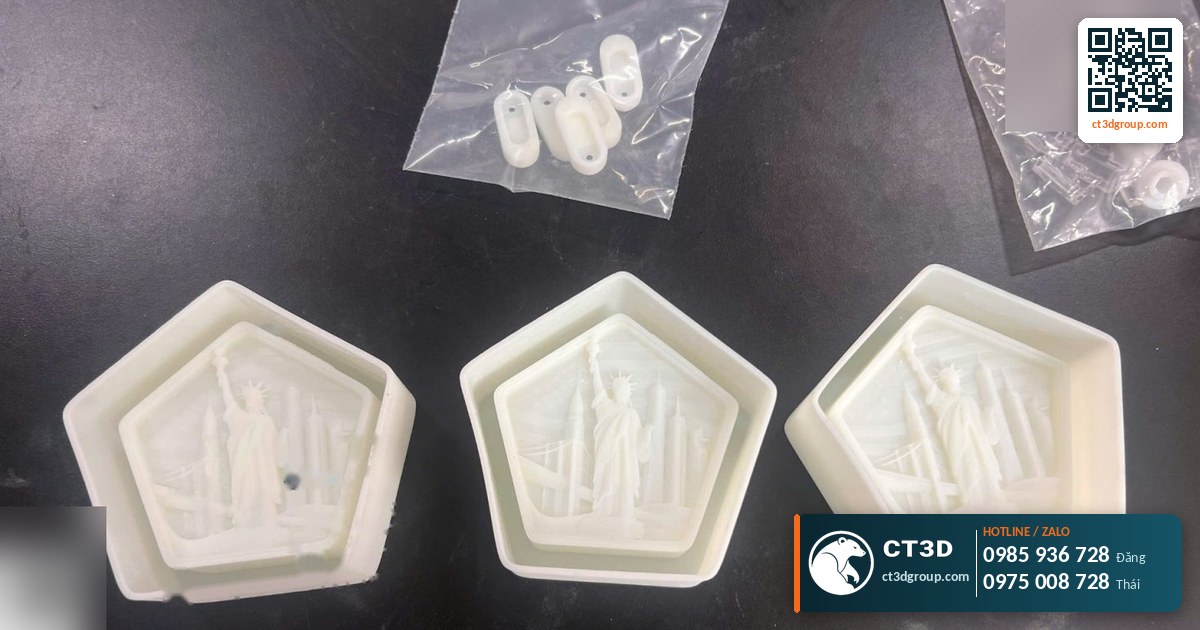
Silicone mold life at CT3D: silicone molds for PU vacuum casting last about 15–20 casts; silicone molds for composite, polyresin, plaster and art pieces last more than 50 casts. Actual figures depend on geometric complexity, undercuts and the casting material.
Basic Silicone Mold Making Terms
Master
The original model the mold is taken from. A good master means good cast parts. The master can be an existing statue, a hand sculpture or, most commonly today, a 3D print that has been carefully sanded and finished.
Parting line
The cut line that divides the mold into two or more pieces so the part can be removed. Its position determines where flash appears on the part. Skilled mold makers place it in hidden areas.
Sprue and vents
The sprue is the channel used to pour material in. Vents let air escape, preventing bubbles and pinholes on the part.
Mother mold
For large molds, the thin silicone layer is backed by a rigid shell (plaster or composite) that holds its shape and prevents distortion during pouring.
Vacuum degassing
The step of drawing air bubbles out of the silicone or resin in a vacuum chamber. It reduces bubbles and pinholes in both the mold and the cast parts.
Resin and Composite Casting with Silicone Molds (Overview)
Below are the main steps, at an overview level to help beginners picture the process. Detailed parameters and technical tips are covered in making silicone molds from 3D prints.
- Prepare the master: 3D print it or use an existing model, then sand and prime it for a truly smooth surface.
- Build the mold box: fix the master inside the box and define the parting line and sprue.
- Pour the silicone: mix the two-part silicone, degas it if needed and pour it to fully encase the master.
- Cure and open the mold: once the silicone has cured, cut along the parting line and remove the master.
- Cast the parts: pour resin, PU, plaster or a composite mix into the mold.
- Demold and finish: cut off the sprue, sand the flash and paint as required.
What is resin casting?
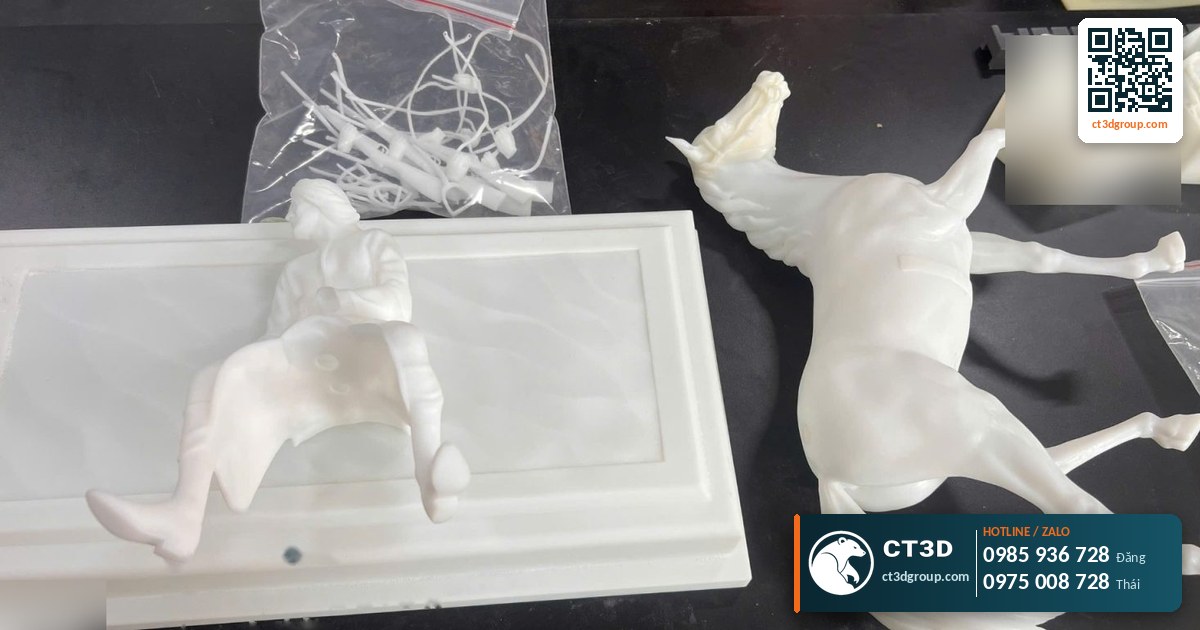
Resin casting means pouring a two-part liquid resin (such as polyurethane, epoxy or polyester) into the mold. The resin cures into a rigid part. Casting resin can be tinted or mixed with stone powder or bronze powder for special effects. Typical products are statues, gifts, trophies and model parts.
What is composite casting?
Composite is a material combining resin with reinforcing fibers (usually glass fiber) or fillers. For large products such as outdoor statues and mascots, multiple layers of resin and fiber are laid up inside the mold instead of casting it solid. The result is lighter, stronger and more weather-resistant. For composite statue production, also see in3d.edu.vn.
When Should You Use a Silicone Mold? A Quick Comparison with Other Methods
| Method | Suitable quantity | Upfront cost | Notes for beginners |
|---|---|---|---|
| Direct 3D printing of each part | 1 to a few dozen | No tooling cost | Flexible, easy design changes |
| Silicone mold + resin casting | 15–20 casts/mold (PU vacuum casting); 50+ casts/mold (composite, art pieces) | Low | Requires a master; the mold wears with each cast |
| Composite / wood mold | Large parts, medium quantities | Medium | Used for mascots, large statues, large shells |
| Steel injection mold | Thousands and up | Very high | Lowest unit price at high volumes |
Source: common prototyping industry practice and CT3D experience; casts per mold depend on geometry, silicone type and casting material.
An easy rule to remember: a few parts, 3D print; a few dozen, silicone mold; thousands, steel mold. The real boundaries also depend on size and complexity. For a detailed comparison of 3D printing and injection molding, see 3D printing vs. injection molding.
Pros and Cons of Silicone Molds
Advantages
- Low tooling cost and fast turnaround compared with metal molds.
- Very faithful reproduction of surface detail.
- Flexible molds can release parts with grooves and slight undercuts.
- Compatible with many casting materials: resin, PU, plaster, wax, composite.
Limitations
- Molds wear gradually, so the number of casts is limited.
- Each cast must wait for the material to cure, so throughput is lower than injection molding.
- Dimensional accuracy depends on craftsmanship and material shrinkage.
- Cast parts still need sprue removal, flash sanding and paint finishing.
Common Silicone Mold Casting Defects and How to Fix Them
| Defect | Common cause | Fix |
|---|---|---|
| Bubbles and pinholes in the part | No vacuum degassing, insufficient vents | Degas under vacuum, add vents |
| Silicone doesn’t cure at the master surface | The master surface inhibits curing | Apply a suitable sealer coat, test on a small sample first |
| Thick flash, mold misalignment | No registration keys, loose clamping | Add registration keys, use a mother mold |
| Mold tears early | Rough demolding, silicone too thin | Increase mold thickness, choose a tougher silicone |
| 3D print layer lines visible on the part | Master not properly finished | Sand and prime the master thoroughly |
Source: experience from CT3D’s CT-Mold mold-making workshop.
The last defect is very common. A silicone mold copies everything, flaws included. That is why finishing the master is just as important as making the mold. See also 3D print post-processing basics.
Real Applications and Mold-Making Services at CT3D
Silicone molds are widely used for: reproducing small statues and religious statues; producing trophies and commemorative medals; corporate gifts; display model parts; low-volume product prototypes; and cores and shells for composite statues and mascots. For large mascots, CT3D often combines CNC foam cutting, 3D printing and composite; see making mascots with CNC foam and composite.
CT3D (brands CT-3D, CT-Art, CT-Mold) has more than 12 years of experience and offers the complete chain: 3D scanning or CAD modeling, 3D printing the master, silicone mold making, resin/composite casting and paint finishing. Mold and casting costs are quoted per project, as they depend on size, complexity and quantity.
Our 6-step process: send a file or photos of the part (STL, STEP, OBJ, 3MF via our website, Zalo or email) → state quantity, casting material and colors → an engineer analyzes the request → quote with lead time → confirmation and production → delivery to your door or pickup at the workshop. To learn how to choose silicone, set mold thickness and prepare a printed master, read making silicone molds from 3D prints next.
Frequently Asked Questions
How many parts can one silicone mold produce?
Usually from a few to a few dozen, depending on shape, silicone type and casting material. The more complex the shape and the more heat the material gives off while curing, the faster the mold wears.
Can a silicone mold be made from a 3D print?
Yes, this is the most common approach today. The 3D printed master, usually resin, should be carefully sanded and primed before molding.
How does resin casting differ from composite casting?
Resin casting is usually poured solid and suits small to medium parts. Composite casting lays up multiple layers of resin and reinforcing fiber, suiting large parts that need to be light and durable outdoors.
When should I use a silicone mold instead of 3D printing?
When you need many identical copies, from a few dozen or so, or when you want special casting materials such as resin mixed with stone or bronze powder.
How much does silicone mold making cost?
It depends on size, complexity, the number of mold pieces and the number of parts. CT3D quotes per project after reviewing your file or photos.
Real Footage from the CT3D Workshop
Watch the video High-tech 3D printed molds, produced by CT3D, to get a clearer picture of the process and product quality. More videos are available on the Che Tao Vlog – CT3D channel.
Contact CT3D – Send Your File, Get a Fast Quote
Whether you have a 3D file, a 2D drawing, photos or just an idea, you can send it to CT3D. Our engineers will check the file, advise on technology and material, and send you a quote with a lead time.
- Email: [email protected] – [email protected]
- Hotline / Zalo: +84 975 008 728 (Mr. Thai) – +84 985 936 728 (Mr. Dang), or use our contact form
- Head office: Binh Duong.
- Workshops in Ho Chi Minh City: Linh Trung (Thu Duc), Tam Binh (Thu Duc), District 6 (former).
- Other workshops and drop-off points: Can Tho, Da Nang, Bien Hoa, Ba Ria – Vung Tau, Hanoi, Hai Duong, Hai Phong. Nationwide delivery.
- Website: ct3dgroup.com – in3d.edu.vn
CT3D – 3D design & prototyping: 3D printing, 3D scanning, reverse engineering, silicone mold making, painting and finishing, CNC machining, composite fabrication, and supply of 3D printers and 3D printing resins.
Danh sách cửa hàng:
CT3D là đơn vị cung cấp trọn gói các dịch vụ thiết kế và sản xuất theo yêu cầu tại TP.HCM và khu vực lân cận (Bình Dương, Đồng Nai, Long An…). Với năng lực khép kín từ thiết kế 3D, in 3D (FDM, resin/SLA, SLS, in 3D kim loại), scan 3D – thiết kế ngược, làm khuôn, đúc composite – poly resin – poly stone đến gia công CNC và sơn màu hoàn thiện, CT3D đồng hành cùng khách hàng qua toàn bộ quy trình – từ ý tưởng, bản vẽ hay sản phẩm mẫu đến thành phẩm hoàn chỉnh. Dù bạn cần tạo mẫu nhanh, sản xuất số lượng, chế tác tượng – mô hình – quà tặng hay linh kiện kỹ thuật, đội ngũ CT3D sẽ tư vấn công nghệ và vật liệu phù hợp, đảm bảo sản phẩm sắc nét, đúng yêu cầu và tối ưu chi phí. Khách hàng tại TP.HCM và vùng lân cận có thể trao đổi trực tiếp, gửi file online và nhận sản phẩm thuận tiện, hỗ trợ cả đơn gấp lẫn dự án số lượng.
CT3D cung cấp trọn gói các dịch vụ thiết kế và sản xuất theo yêu cầu, phục vụ khách hàng tại Hà Nội và các tỉnh lân cận (Bắc Ninh, Hưng Yên, Hải Phòng, Vĩnh Phúc…). Với năng lực khép kín từ thiết kế 3D, in 3D (FDM, resin/SLA, SLS, in 3D kim loại), scan 3D – thiết kế ngược, làm khuôn, đúc composite – poly resin – poly stone đến gia công CNC và sơn màu hoàn thiện, CT3D đồng hành cùng khách hàng qua toàn bộ quy trình – từ ý tưởng, bản vẽ hay sản phẩm mẫu đến thành phẩm hoàn chỉnh. Quy trình làm việc thuận tiện: bạn gửi file 3D hoặc mô tả ý tưởng qua online, đội ngũ CT3D tư vấn công nghệ – vật liệu, báo giá nhanh và giao hàng tận nơi tại Hà Nội. Dù bạn cần tạo mẫu nhanh, sản xuất số lượng, chế tác tượng – mô hình – quà tặng hay linh kiện kỹ thuật, CT3D đều đáp ứng với sản phẩm sắc nét, đúng yêu cầu và tối ưu chi phí.

