
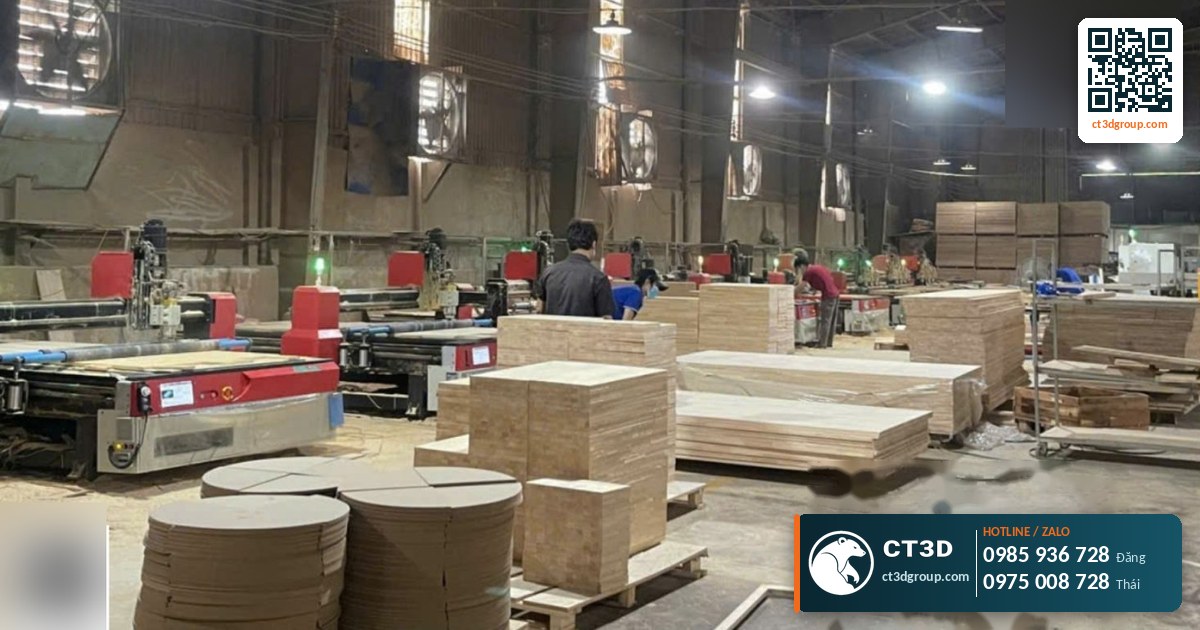
Quick answer: CNC machining uses computer-controlled machines to cut, mill, turn and drill material away from a solid blank (wood, foam, plastic, aluminum, steel) until the desired shape remains. It is a “subtractive” method, the opposite of 3D printing, which “adds” material layer by layer. CNC excels at accuracy, surface finish and solid-stock materials; 3D printing excels at complex shapes, hollow interiors and fast low-volume production. Many projects combine both.
When you need a part, a model or a product prototype, you may wonder: CNC machining or 3D printing? This article is a beginner’s overview of CNC machining vs. 3D printing: what CNC is, how it works, how it differs from 3D printing and when to choose which. An in-depth comparison of accuracy, materials and cost between metal 3D printing and metal CNC is covered in metal 3D printing vs. CNC. For the big picture of printing technologies, see 3D printing technologies compared: FDM, SLA, MJF, SLM.
What Is CNC Machining? An Everyday Analogy
CNC stands for Computer Numerical Control. Picture a woodcarver. He takes a chisel and gradually carves away a block of wood until a statue emerges. A CNC machine does exactly that, but replaces the human hand with a fast-spinning cutting tool, and the human eye with coordinates in a computer.
The basic workflow is easy to follow: an engineer creates or receives a 3D file, CAM software calculates the toolpaths, and the CNC machine reads the program and moves the tool along the X, Y and Z axes to cut away excess material. The result is a part with dimensions that match the drawing.
A 3D printer, by contrast, is like a bricklayer: it places thin layers one on top of another. Nothing is cut away; only the material needed is added. Once you understand these two images, “carving” versus “building up,” you have grasped 80% of the difference between CNC and 3D printing.
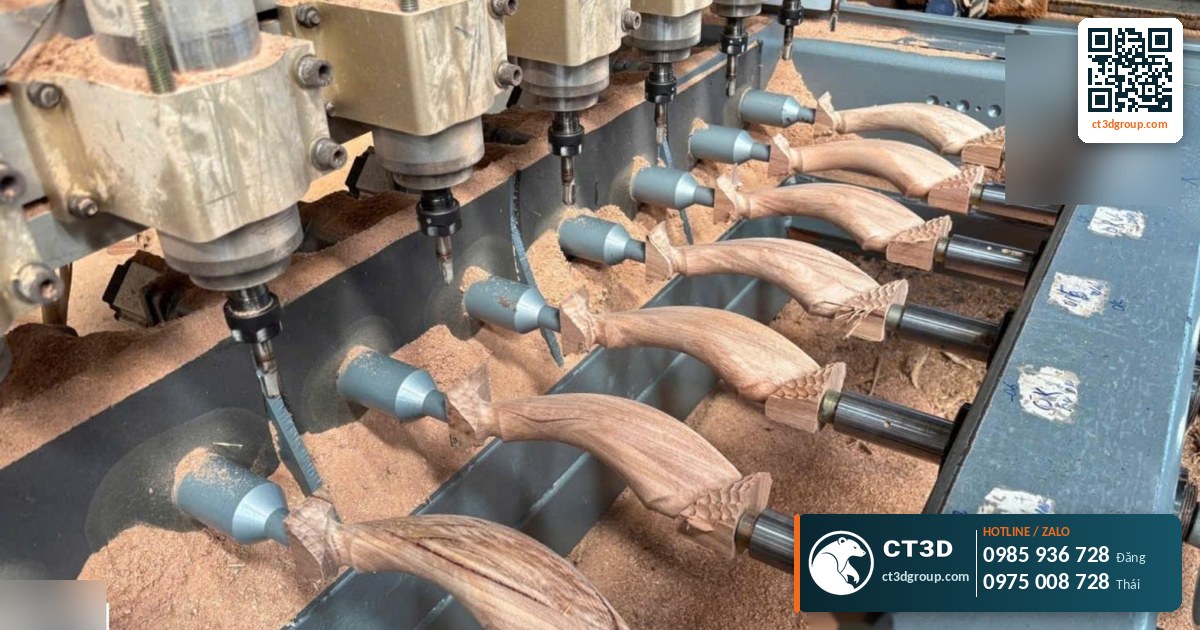
Types of CNC Machines and Terms Beginners Should Know
CNC milling
The tool rotates while the workpiece stays still or moves. Used for flat faces, pockets, slots and curved surfaces. This is the most common type in mold making, machine parts and relief carving.
CNC turning
The workpiece rotates while a stationary tool feeds in to cut. Used for round parts such as shafts, bushings and nuts.
CNC cutting (router, laser, plasma)
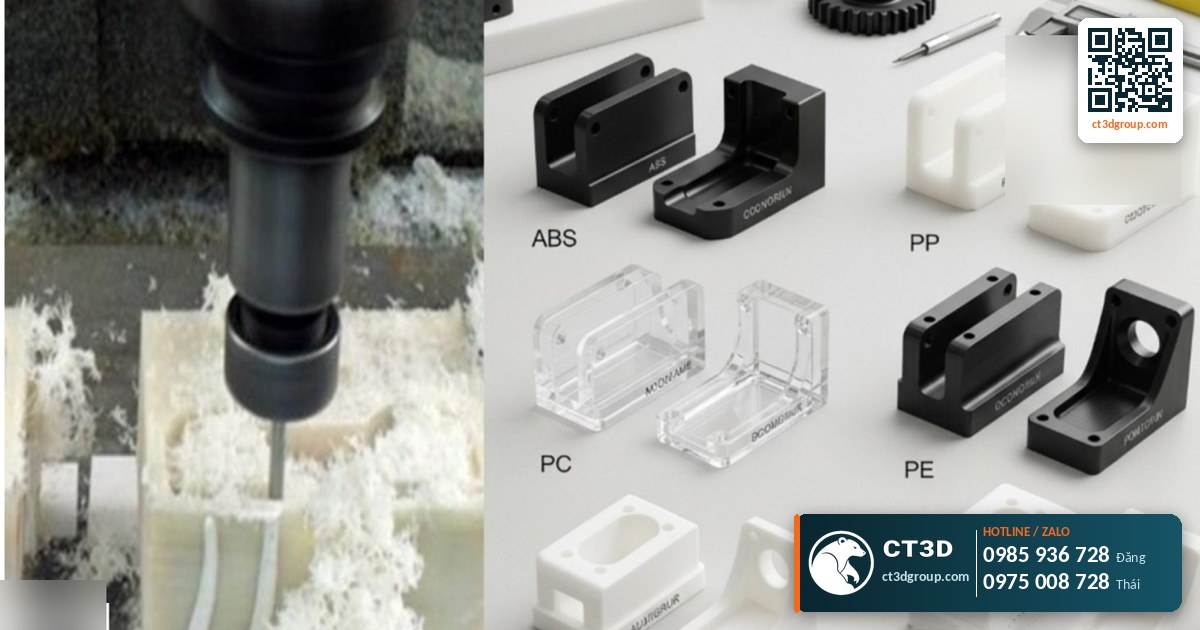
Used to cut flat sheets: MDF, acrylic, aluminum sheet, foam. Common in signage, furniture and model making.
Number of axes (3-axis, 4-axis, 5-axis)
A 3-axis machine moves the tool left-right, front-back and up-down. 4- and 5-axis machines add rotary axes so the tool can reach multiple faces without re-fixturing the workpiece. The more axes, the more complex the shapes it can make, such as statues in the round or impellers.
Stock and fixtures
Stock is the initial block of material. A fixture is the device that clamps the stock firmly during cutting. Proper fixturing is a prerequisite for accurate parts.
CNC vs. 3D Printing in Manufacturing: An Overview Comparison
| Criterion | CNC machining | 3D printing |
|---|---|---|
| Principle | Subtractive: carving from a solid blank | Additive: building up layer by layer |
| Suitable shapes | Flat faces, holes, slots, shapes the tool can reach | Complex shapes, hollow interiors, lattices, consolidated parts |
| Materials | Wood, foam, plastic sheet, aluminum, steel… in solid form | Filament, resin, PA12 powder, metal powder |
| Surface | Smooth, flat, few marks | Layer lines, usually needs post-processing |
| Waste material | Lots of chips and scrap | Little; SLM metal printing cuts scrap by up to 90% |
| Preparation | Toolpath programming, tool selection, fixturing | Slicing, support placement |
| Sensible quantity | From 1 part to medium batches | From 1 part; strongest for low volumes and prototypes |
Source: general principles of both methods; metal printing figures from CT3D technical documentation.
The table above is only an overview. For metal parts, where the two methods compete directly, tolerances, surface roughness, cost and ways to combine them are analyzed in detail in metal 3D printing vs. CNC.
When to Choose CNC and When to Choose 3D Printing
Choose CNC when
- The part is mainly flat faces, holes and slots that the tool can easily reach.
- You need solid-stock materials such as natural wood, aluminum plate or steel.
- You need a good surface straight away with little post-processing.
- You are making flat panels, reliefs, table legs, wood molds or signs.
- You are making large foam blocks for mascots, scale models or event props.
Choose 3D printing when
- The shape is complex, with many enclosed cavities or a hollow interior.
- You need fast prototypes and frequent design changes.
- Quantities are low and you want to avoid fixture and programming costs.
- You need lightweighting with lattice structures, or want to consolidate several parts into one.
- You are making statues, figures or models with many small details.
Combine both when
- A 3D printed metal part needs precise mating faces: print with SLM, then CNC machine the mating surfaces. This is a standard metal post-processing step at CT3D.
- Mascots and large statues: CNC foam for the large core, 3D printing for small details such as faces and hands, then a composite shell. See making mascots with CNC foam and composite.
- Molds: CNC a wood pattern or 3D print a master, then make a silicone mold for replication. See what is silicone mold making.
Common Misconceptions When Comparing CNC and 3D Printing
“3D printing will replace CNC”
Not true. The two methods complement each other. In real production, metal 3D printing often needs CNC to finish mating faces.
“CNC is always more accurate than 3D printing”
Usually true for directly machined faces, but not absolute. For example, SLM metal printing at CT3D achieves ±0.02 mm according to technical documentation; DLP resin printing achieves ±0.03–0.08 mm. Accuracy also depends on size, material and design. Read more in 3D printing accuracy and tolerances.
“3D printing is always cheaper”
Not necessarily. For simple, solid parts, CNC can be faster and cheaper. For complex parts in low volumes, 3D printing usually wins because it needs no fixtures and no repeated tool setups.
“CNC is only for metal”
CNC is used extensively for wood, foam, plastic sheet and acrylic. At CT3D, CNC wood machining and CNC foam cutting are two popular services for interiors, signage, events and mascots.
CNC Machining and 3D Printing Services at CT3D
CT3D has more than 12 years of experience and offers 3D printing (FDM, resin SLA/DLP/LCD, MJF/SLS PA12, SLM metal), CNC wood machining, CNC foam cutting, mold making (3D printed, silicone, wood), composite installations, 3D scanning and reverse engineering under one roof. With both methods available from a single supplier, our engineers propose the best solution for each part rather than being “locked” into one technology.
| Need | Solution CT3D typically proposes |
|---|---|
| Reliefs, table legs, wood molds, decor | CNC wood machining (MDF, HDF, natural wood) |
| Mascots, scale models, event props, composite cores | CNC EPS/XPS foam + composite |
| Statues, figures, finely detailed models | Resin or FDM 3D printing |
| Complex-shaped metal parts | SLM printing + CNC on mating faces |
| Low-volume replication | 3D printed/CNC master + silicone mold |
Source: CT3D service catalog. CNC machining pricing: quoted per drawing.
Our 6-step process: send a file or drawing (STL, STEP, OBJ, 3MF or 2D drawings via our website, Zalo or email) → state your technical requirements → an engineer analyzes it and chooses CNC, 3D printing or a combination → quote with lead time → confirmation and production → delivery to your door or pickup at the workshop. If your part is metal, read metal 3D printing vs. CNC before deciding. For metal 3D printing services, also see in3d.edu.vn.
Frequently Asked Questions
What is CNC machining?
It is a method that uses computer-controlled machines to cut, mill, turn and drill material away from a solid blank, producing a part that matches the drawing or 3D file.
How do CNC and 3D printing differ?
CNC removes material from a solid block; 3D printing adds material layer by layer. CNC is strong on surface finish and solid materials; 3D printing is strong on complex shapes and fast prototyping.
Can 3D printing and CNC be combined?
Yes, and it is very common. For example, SLM metal printing followed by CNC on mating faces, or a CNC foam mascot core with 3D printed small details and a composite shell.
How much does CNC machining cost?
It depends on material, size, complexity, quantity and tolerance requirements. CT3D quotes per drawing.
Is CNC worth it for a single part?
Yes, if the shape is simple and you need solid material. For complex shapes, 3D printing is usually faster and cheaper at low volumes.
Real Footage from the CT3D Workshop
Watch the video 5-axis CNC foam machining, produced by CT3D, to get a clearer picture of the process and product quality. More videos are available on the Che Tao Vlog – CT3D channel.
Contact CT3D – Send Your File, Get a Fast Quote
Whether you have a 3D file, a 2D drawing, photos or just an idea, you can send it to CT3D. Our engineers will check the file, advise on technology and material, and send you a quote with a lead time.
- Email: [email protected] – [email protected]
- Hotline / Zalo: +84 975 008 728 (Mr. Thai) – +84 985 936 728 (Mr. Dang), or use our contact form
- Head office: Binh Duong.
- Workshops in Ho Chi Minh City: Linh Trung (Thu Duc), Tam Binh (Thu Duc), District 6 (former).
- Other workshops and drop-off points: Can Tho, Da Nang, Bien Hoa, Ba Ria – Vung Tau, Hanoi, Hai Duong, Hai Phong. Nationwide delivery.
- Website: ct3dgroup.com – in3d.edu.vn
CT3D – 3D design & prototyping: 3D printing, 3D scanning, reverse engineering, silicone mold making, painting and finishing, CNC machining, composite fabrication, and supply of 3D printers and 3D printing resins.
Danh sách cửa hàng:
CT3D là đơn vị cung cấp trọn gói các dịch vụ thiết kế và sản xuất theo yêu cầu tại TP.HCM và khu vực lân cận (Bình Dương, Đồng Nai, Long An…). Với năng lực khép kín từ thiết kế 3D, in 3D (FDM, resin/SLA, SLS, in 3D kim loại), scan 3D – thiết kế ngược, làm khuôn, đúc composite – poly resin – poly stone đến gia công CNC và sơn màu hoàn thiện, CT3D đồng hành cùng khách hàng qua toàn bộ quy trình – từ ý tưởng, bản vẽ hay sản phẩm mẫu đến thành phẩm hoàn chỉnh. Dù bạn cần tạo mẫu nhanh, sản xuất số lượng, chế tác tượng – mô hình – quà tặng hay linh kiện kỹ thuật, đội ngũ CT3D sẽ tư vấn công nghệ và vật liệu phù hợp, đảm bảo sản phẩm sắc nét, đúng yêu cầu và tối ưu chi phí. Khách hàng tại TP.HCM và vùng lân cận có thể trao đổi trực tiếp, gửi file online và nhận sản phẩm thuận tiện, hỗ trợ cả đơn gấp lẫn dự án số lượng.
CT3D cung cấp trọn gói các dịch vụ thiết kế và sản xuất theo yêu cầu, phục vụ khách hàng tại Hà Nội và các tỉnh lân cận (Bắc Ninh, Hưng Yên, Hải Phòng, Vĩnh Phúc…). Với năng lực khép kín từ thiết kế 3D, in 3D (FDM, resin/SLA, SLS, in 3D kim loại), scan 3D – thiết kế ngược, làm khuôn, đúc composite – poly resin – poly stone đến gia công CNC và sơn màu hoàn thiện, CT3D đồng hành cùng khách hàng qua toàn bộ quy trình – từ ý tưởng, bản vẽ hay sản phẩm mẫu đến thành phẩm hoàn chỉnh. Quy trình làm việc thuận tiện: bạn gửi file 3D hoặc mô tả ý tưởng qua online, đội ngũ CT3D tư vấn công nghệ – vật liệu, báo giá nhanh và giao hàng tận nơi tại Hà Nội. Dù bạn cần tạo mẫu nhanh, sản xuất số lượng, chế tác tượng – mô hình – quà tặng hay linh kiện kỹ thuật, CT3D đều đáp ứng với sản phẩm sắc nét, đúng yêu cầu và tối ưu chi phí.

