

Quick answer: CT3D’s indicative 2026 ABS 3D printing price starts from 1,000 VND/g (≈ US$0.04/g) and ASA from 2,000 VND/g (≈ US$0.08/g), charged on the actual grams including supports. Ho Chi Minh City market rates for functional printing in PETG/ABS/ASA at 30–50% infill run about 1,800–2,800 VND/g (≈ US$0.07–0.11/g; not CT3D’s prices). ABS is worth the cost when the part operates at around 80–90 °C or needs sanding, painting or surface finishing; ASA is worth the cost when the part is installed outdoors with long-term sun and UV exposure.
Customers often ask me: “PLA is cheaper, so why print in ABS or ASA?” The answer lies in the part’s operating environment. This article takes an in-depth look at two engineering materials, ABS and ASA: how they resist heat and UV, why they are harder to print, and how to calculate whether the price difference is worth it. For a consolidated price list covering all technologies, see our pillar 3D printing price guide.
What are ABS and ASA, and how do they differ?
ABS (acrylonitrile butadiene styrene) is a very familiar engineering plastic: electrical appliance housings, interlocking toy bricks and many automotive interior parts. Its three components provide three properties: acrylonitrile for stiffness and chemical resistance; butadiene (a rubber) for toughness and impact resistance; and styrene for a glossy surface and easy processing.
ASA (acrylonitrile styrene acrylate) has a structure similar to ABS, but replaces the butadiene rubber with acrylate rubber. The key point: butadiene has double bonds in its chain that are easily broken by UV light and oxygen, causing ABS to yellow, chalk and gradually become brittle in sunlight. Acrylate doesn’t have this weakness, so ASA retains its color and mechanical properties outdoors far better. That is why ASA is widely used for outdoor equipment housings, vehicle exterior parts and signage.

Specifications and ABS/ASA 3D printing cost compared with PLA
| Criteria | PLA | ABS | ASA |
|---|---|---|---|
| CT3D print price (indicative 2026) | From 650 VND/g (≈ US$0.025/g) | From 1,000 VND/g (≈ US$0.04/g) | From 2,000 VND/g (≈ US$0.08/g) |
| Raw filament (Ho Chi Minh City market) | ~250,000 VND/kg (≈ US$9.60/kg) | ~350,000 VND/kg (≈ US$13.50/kg) | No stable public figure |
| Typical nozzle temperature | 190–220 °C | 230–250 °C | 240–260 °C |
| Bed temperature | 50–60 °C | 90–110 °C | 90–110 °C |
| Softening temperature (approx.) | 55–60 °C | About 100 °C | About 100 °C |
| Density (approx.) | 1.24 g/cm³ | 1.04 g/cm³ | 1.07 g/cm³ |
| UV / outdoor resistance | Poor | Fair – poor | Good |
| Warping during printing | Low | High | Medium – high |
| Enclosed printer required | No | Yes | Yes |
Source: CT3D indicative prices 2026; Ho Chi Minh City market rates 2026; print settings and properties are typical filament manufacturer values and may vary by brand. Prices are indicative.
Why does ABS and ASA printing cost more than PLA?
The price difference isn’t just due to more expensive raw material. Most of it comes from the difficulty of the printing process.
Shrinkage and warping
ABS and ASA are extruded at about 230–260 °C and gradually cool to room temperature, shrinking as they cool. Lower layers have already cooled while upper layers are still hot, so stresses pull the part’s corners off the bed (warping) or crack it between layers (delamination). The longer, flatter and more square-cornered the part, the more likely it is to warp.
Enclosed chambers and thermal stability
To reduce temperature differences between layers, ABS/ASA printers need an enclosed chamber that keeps the air inside warm. A fan draft, air conditioning or an opened door can ruin a print that has been running for hours. Enclosed printers cost more, run slower and take up more space – meaning higher machine depreciation.
Fumes and ventilation
When melted, ABS gives off a noticeable styrene odor, and ASA also smells. The workshop needs ventilation and air filtration – an operating cost PLA printing barely has.
Higher failure rates
With PLA, a 10-hour print on a well-tuned machine rarely fails midway. With large ABS/ASA parts, the risk of layer cracking and corner lifting is higher. The per-gram price has to cover this risk.
An overlooked point: for the same volume, ABS is lighter than PLA
ABS has a density of about 1.04 g/cm³, PLA about 1.24 g/cm³. For the same model and settings, an ABS print is about 16% lighter than PLA. ASA, at about 1.07 g/cm³, is about 14% lighter than PLA.
Because pricing is per gram, the actual cost difference between PLA and ABS is smaller than the unit price difference. The illustrative example below makes this clear.
| Same enclosure, ~120 cm³ of printed plastic | Estimated weight | CT3D indicative unit price | Illustrative total |
|---|---|---|---|
| PLA | 120 × 1.24 ≈ 149 g | From 650 VND/g | From about 97,000 VND (≈ US$3.70) |
| ABS | 120 × 1.04 ≈ 125 g | From 1,000 VND/g | From about 125,000 VND (≈ US$4.80) |
| ASA | 120 × 1.07 ≈ 128 g | From 2,000 VND/g | From about 256,000 VND (≈ US$9.85) |
Source: CT3D illustrative calculation; densities are typical values. Not a fixed quotation.
The ABS unit price is about 54% higher than PLA, but in this example the total is only about 29% higher. With ASA the difference is more pronounced, because its unit price is double that of ABS.
When is ABS worth the money?
ABS is a sensible choice when any of the following apply:
- The part operates above PLA’s limits: housings around motors, around lamps, near power circuit boards, or inside a car cabin parked in the sun. PLA softens at around 55–60 °C, while ABS can handle about 80–90 °C in continuous service (still a safe margin below its softening point of about 100 °C).
- It must withstand impact, bending or slight flexing: thanks to its rubber component, ABS is tougher than PLA and usually deforms before breaking when overloaded.
- Surface post-processing is needed: ABS is easy to sand and paint, and can be acetone vapor-smoothed for a glossy surface close to an injection-molded part. See the steps in our article on 3D print post-processing.
- Prototypes for products that will be molded in ABS: using the same material family gives a more realistic feel and stiffness.
When should you pay extra for ASA?
- Long-term outdoor installation: sensor housings, junction boxes, camera mounts, balcony fittings, signage.
- Car and motorcycle exterior parts: trims, covers and accessory brackets exposed to sun and rain.
- Color retention: white or gray ABS yellows in the sun; ASA holds its color much better.
- Agricultural and aquaculture equipment: sunny, humid, salty-air environments.
If the part stays indoors and doesn’t get hot, ASA is usually unnecessary. In that case PLA or PETG is more economical.
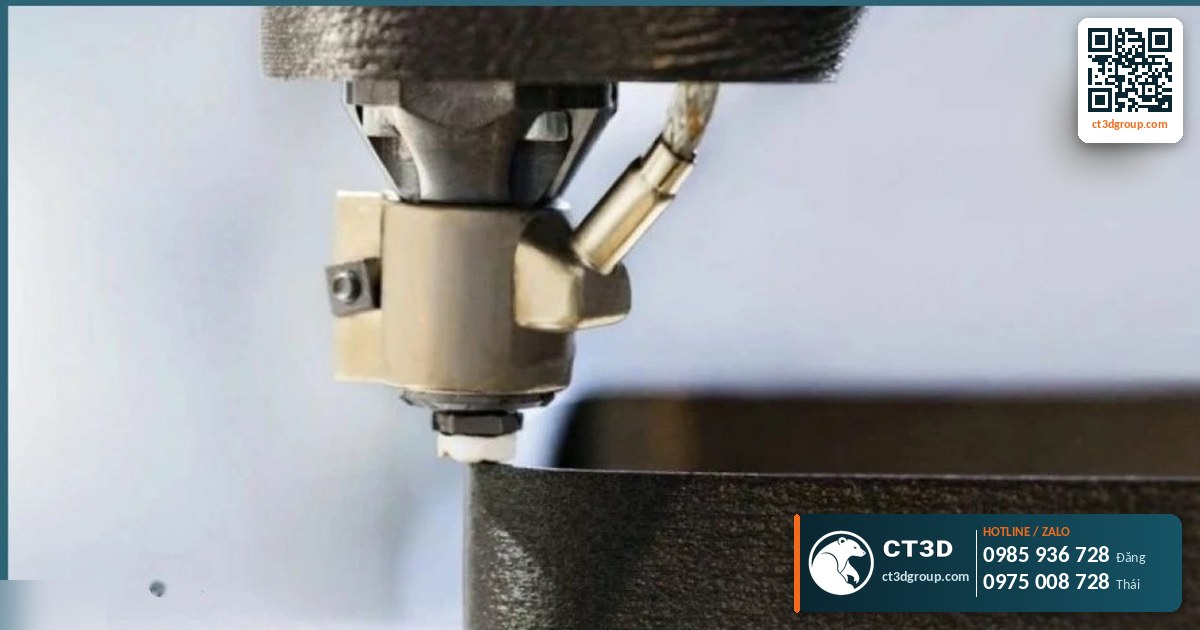
Designing files for ABS/ASA to reduce risk and cost
- Fillet corners: replace sharp square corners at the base with R2–R5 mm fillets to reduce stress concentration and corner lifting.
- Avoid long, continuous flat bases: parts longer than 150–200 mm can be split into sections and joined with pins.
- Uniform wall thickness: large variations in wall thickness cause uneven shrinkage and cracking.
- Allow tolerance for mounting holes: due to shrinkage, printed holes are usually smaller than designed; drill or ream precision holes afterwards. See our article on 3D printing accuracy and tolerances.
- Sensible infill: 30–50% for load-bearing parts; 3–4 perimeters.
Common ABS and ASA printing problems and how to fix them
| Problem | Cause | How CT3D handles it |
|---|---|---|
| Corner lifting, warping | Shrinkage, bed not hot enough, drafts | Enclosed chamber, bed at 90–110 °C, add a brim, fillet corners |
| Cracks between layers | Temperature difference between new and old layers | Reduce cooling fan, raise chamber temperature, slow down |
| Mounting holes smaller than designed | Shrinkage after cooling | Compensate dimensions in the file or drill/ream after printing |
| Rough, stringy surface | Moisture in the filament, incorrect temperature | Dry filament before printing, adjust temperature |
| ABS yellows after months outdoors | Butadiene degraded by UV | Switch to ASA or apply a UV-protective coating |
Source: operating experience of CT3D engineers with FDM machines.
Lifecycle cost comparison: cheap to print isn’t always cheap to use
Suppose you need an outdoor sensor enclosure. PLA is cheapest to print, but in the sun the enclosure may deform once its surface exceeds 55–60 °C – which easily happens to dark objects in midday sun. If it has to be reprinted 2–3 times, plus the labor of removal and reinstallation and equipment downtime, the total cost exceeds printing it in ASA from the start.
Conversely, printing a jig for a cool workshop with no heat exposure in ASA is wasteful. The principle I always share with customers: choose the material for the part’s worst-case operating conditions, not for the unit price.
For parts that need to be even stiffer or carry higher mechanical loads, see carbon fiber and nylon 3D printing cost. If you’re weighing several FDM plastics, our article on FDM 3D printing materials has an overall comparison table.
How to order ABS/ASA printing from CT3D – checklist
- Send an STL, STEP, OBJ or 3MF file via our website, Zalo, email or our contact form.
- Describe the operating environment: maximum temperature, indoors or outdoors, any contact with oil or chemicals.
- Our engineers review the file, propose an orientation, split long parts if needed and calculate the actual weight.
- Quote with delivery time; if PLA or PETG would do the job, CT3D will tell you straight away so you can save.
- Confirmation, production and dimensional inspection of mounting features.
- Door-to-door delivery or workshop pickup; nationwide delivery within 1–3 days after completion.
CT3D has more than 12 years of 3D printing experience, with workshops in Ho Chi Minh City and Binh Duong and drop-off points nationwide. For examples of industrial black ABS parts, see our industrial black ABS 3D printing service. ABS/ASA pricing in the context of the full price list is summarized in our 3D printing price guide; to compare with PLA, see PLA 3D printing cost per gram.
Frequently asked questions
How much does ABS 3D printing cost per gram?
At CT3D, the indicative 2026 ABS price starts from 1,000 VND/g (≈ US$0.04/g), charged on the actual grams including supports. Market rates for functional printing in PETG/ABS/ASA are about 1,800–2,800 VND/g.
How much does ASA 3D printing cost?
At CT3D, ASA starts from 2,000 VND/g (≈ US$0.08/g). ASA costs more than ABS because the material is more expensive and needs stable printing conditions; in return it performs well under UV and outdoors.
What temperature can ABS and ASA withstand?
Both soften at around 100 °C. For continuous service, keep them below about 80–90 °C so the part doesn’t deform.
Should ABS be used for outdoor parts?
ABS can be used outdoors for short periods or when painted. For long-term sun exposure, ASA is the better choice because it doesn’t yellow or become brittle from UV.
Why does ABS warp so often when printing?
ABS shrinks as it cools from about 240 °C. An enclosed chamber, a 90–110 °C bed, no drafts and filleted corners help limit warping.
Video from the CT3D workshop
Watch the video Affordable SLA 3D printing by CT3D to get a clearer picture of our process and product quality. More videos are available on our channel Che Tao Vlog – CT3D.
Contact CT3D – send your file, get a fast quote
Whether you have a 3D file, a 2D drawing, photos or just an idea, you can send it to CT3D. Our engineers will check the file, recommend the right technology and material, and send you a quote with a delivery lead time.
- Email: [email protected] – [email protected]
- Hotline / Zalo: +84 975 008 728 (Mr. Thai) – +84 985 936 728 (Mr. Dang), or use our contact form
- Head office: Binh Duong.
- Workshops in Ho Chi Minh City: Linh Trung (Thu Duc), Tam Binh (Thu Duc), former District 6.
- Other workshops and drop-off points: Can Tho, Da Nang, Bien Hoa, Ba Ria – Vung Tau, Hanoi, Hai Duong, Hai Phong. Nationwide delivery.
- Website: ct3dgroup.com – in3d.edu.vn
CT3D – 3D design & prototyping: 3D printing, 3D scanning, reverse engineering, silicone mold making, painting and finishing, CNC machining, composite fabrication, plus 3D printers and 3D printing materials.
Danh sách cửa hàng:
CT3D là đơn vị cung cấp trọn gói các dịch vụ thiết kế và sản xuất theo yêu cầu tại TP.HCM và khu vực lân cận (Bình Dương, Đồng Nai, Long An…). Với năng lực khép kín từ thiết kế 3D, in 3D (FDM, resin/SLA, SLS, in 3D kim loại), scan 3D – thiết kế ngược, làm khuôn, đúc composite – poly resin – poly stone đến gia công CNC và sơn màu hoàn thiện, CT3D đồng hành cùng khách hàng qua toàn bộ quy trình – từ ý tưởng, bản vẽ hay sản phẩm mẫu đến thành phẩm hoàn chỉnh. Dù bạn cần tạo mẫu nhanh, sản xuất số lượng, chế tác tượng – mô hình – quà tặng hay linh kiện kỹ thuật, đội ngũ CT3D sẽ tư vấn công nghệ và vật liệu phù hợp, đảm bảo sản phẩm sắc nét, đúng yêu cầu và tối ưu chi phí. Khách hàng tại TP.HCM và vùng lân cận có thể trao đổi trực tiếp, gửi file online và nhận sản phẩm thuận tiện, hỗ trợ cả đơn gấp lẫn dự án số lượng.
CT3D cung cấp trọn gói các dịch vụ thiết kế và sản xuất theo yêu cầu, phục vụ khách hàng tại Hà Nội và các tỉnh lân cận (Bắc Ninh, Hưng Yên, Hải Phòng, Vĩnh Phúc…). Với năng lực khép kín từ thiết kế 3D, in 3D (FDM, resin/SLA, SLS, in 3D kim loại), scan 3D – thiết kế ngược, làm khuôn, đúc composite – poly resin – poly stone đến gia công CNC và sơn màu hoàn thiện, CT3D đồng hành cùng khách hàng qua toàn bộ quy trình – từ ý tưởng, bản vẽ hay sản phẩm mẫu đến thành phẩm hoàn chỉnh. Quy trình làm việc thuận tiện: bạn gửi file 3D hoặc mô tả ý tưởng qua online, đội ngũ CT3D tư vấn công nghệ – vật liệu, báo giá nhanh và giao hàng tận nơi tại Hà Nội. Dù bạn cần tạo mẫu nhanh, sản xuất số lượng, chế tác tượng – mô hình – quà tặng hay linh kiện kỹ thuật, CT3D đều đáp ứng với sản phẩm sắc nét, đúng yêu cầu và tối ưu chi phí.

