

Quick answer: The most common FDM 3D printing materials are PLA, PETG, ABS, ASA, TPU, nylon and carbon-fiber-filled filaments. PLA is easy to print and stiff, but softens at around 55–60 °C. PETG is tough, chemical-resistant and softens at around 75–80 °C. ABS and ASA withstand roughly 95–105 °C, and ASA is UV-stable outdoors. TPU is rubber-like and flexible. Nylon is tough and wear-resistant but absorbs moisture. Carbon fiber increases stiffness and reduces warping. Choose your material based on temperature, load, environment and surface requirements.
When customers send CT3D a file, the question I ask back most often is: “Where will this part work, and what will it have to withstand?” The same file printed in the wrong material can warp inside a car, snap during assembly, or fade after a few months in the sun. This article doesn’t cover pricing (we have separate articles for that); it focuses on the technical properties of FDM materials and how to choose one for your operating conditions. For an overview of printing technologies, see our pillar article on 3D printing technologies.
How Do FDM 3D Printing Materials Behave? Key Concepts
FDM (Fused Deposition Modeling) pushes plastic filament through a heated nozzle and builds the part line by line, layer by layer. That means a part’s properties depend on both the material and the way it is printed. A few terms I use throughout this article:
- Glass transition temperature (Tg): the temperature at which a plastic starts to change from rigid to soft and rubbery. A part working close to its Tg will deform under load.
- Interlayer strength: how well the printed layers bond to each other. This is the inherent weak point of FDM; a part is always weakest when loads try to pull its layers apart.
- Shrinkage and warping: plastic shrinks as it cools. High-shrinkage materials (ABS, ASA, nylon) tend to lift off the build plate or crack between layers without a heated enclosure.
- Moisture absorption: some plastics absorb water vapor from the air. Wet filament produces bubbles, a rough surface and brittle parts.
- Creep: slow deformation under long-term load, which becomes more pronounced as temperature rises.
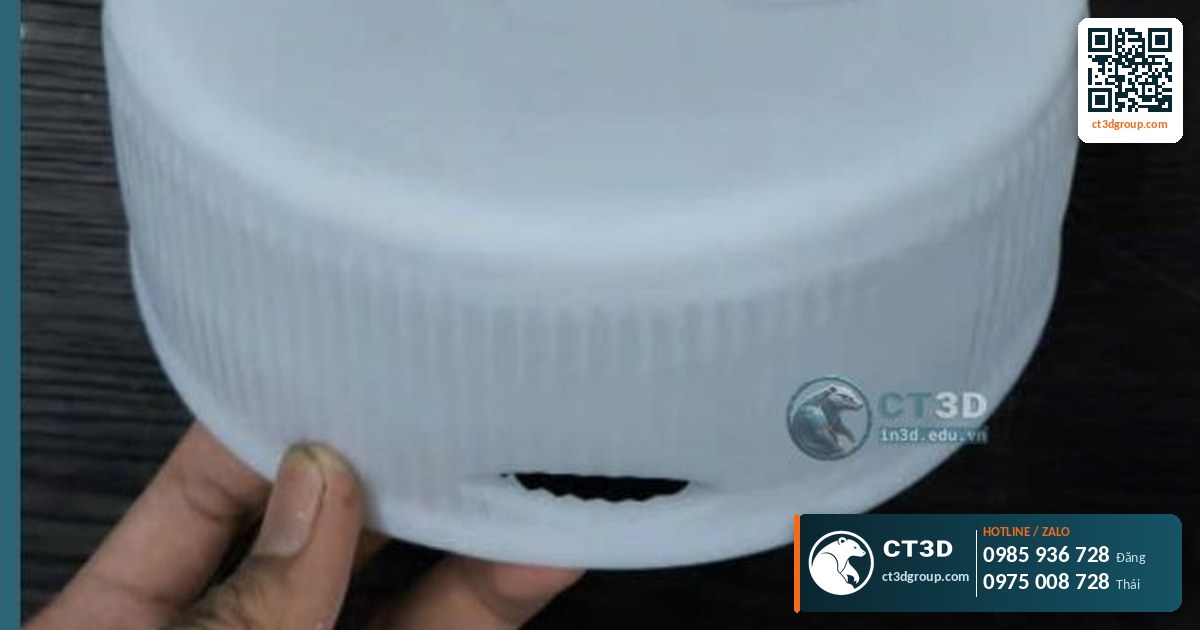
FDM Material Properties Compared
| Material | Print temperature (typical) | Softening temperature | Stiffness | Impact toughness | Printing difficulty | Key strengths |
|---|---|---|---|---|---|---|
| PLA | 190–220 °C | Approx. 55–60 °C | High | Low, brittle | Easy | Accurate, good surface finish, little warping |
| PETG | 230–250 °C | Approx. 75–80 °C | Medium | Good | Easy – medium | Tough, chemical-resistant, good layer adhesion |
| ABS | 230–250 °C | Approx. 95–105 °C | Medium | Good | Medium – hard | Heat-resistant, easy to machine, acetone vapor smoothing |
| ASA | 240–260 °C | Approx. 95–105 °C | Medium | Good | Medium – hard | Like ABS, plus UV resistance |
| TPU | 210–230 °C | Elastic | Soft (typically around 95A) | Excellent | Medium | Flexible, vibration damping, anti-slip |
| Nylon (PA) | 240–270 °C | Higher than ABS (grade-dependent) | Medium | Excellent | Hard | Tough, wear-resistant, low friction |
| Carbon fiber (CF) | Depends on base polymer | Depends on base polymer, usually higher | Very high | Medium | Medium | Stiff, light, low warping, matte surface |
Source: typical reference values from filament manufacturers; actual figures vary by brand and formulation. Printing experience at the CT3D workshop.
Material by Material: When to Use It, When to Avoid It
PLA – appearance models, display models, indoor parts
PLA is made from plant-based sources such as corn starch. Its low shrinkage makes it accurate, with little warping and crisp detail. It suits display models, dimensional check samples, student projects and figures for painting. Its big drawback: it softens at around 55–60 °C. A PLA part left in a car parked in the sun can deform. PLA is also brittle, so it is a poor choice for snap-fits that need to flex. For pricing and how it is calculated, see PLA 3D printing cost per gram.
PETG – general-purpose functional parts
PETG belongs to the same family as water-bottle plastic (PET), with glycol added to make it easier to print. It has good layer adhesion, is tough and flexible, and resists many common chemicals and moisture. It suits enclosures, brackets, jigs and parts that need to flex slightly. Drawbacks: it strings easily, has a glossier surface, and is harder to bridge long spans cleanly than PLA. A more detailed comparison with PLA and ABS is in our article on PETG 3D printing cost.
ABS – heat-resistant indoor parts that need post-machining
ABS is a familiar engineering plastic used in electronics and toys. It handles heat better than PLA and PETG and is easy to drill, sand, tap and glue. Its surface can be smoothed with acetone vapor. Drawbacks: high shrinkage, so it needs an enclosed printer to avoid layer cracking and corner lifting; it also gives off fumes while printing, so ventilation is required. ABS is not UV-stable; left outdoors for long periods it becomes brittle and yellows.
ASA – outdoor parts
ASA has mechanical properties and heat resistance similar to ABS but far better UV and weather resistance. It suits lamp housings, outdoor electrical box covers, exterior automotive parts and signage. It is about as difficult to print as ABS. For an ABS vs. ASA cost analysis, see ABS and ASA 3D printing cost.
TPU – flexible parts
TPU is a thermoplastic elastomer with a rubber-like feel. Its hardness is usually measured on the Shore A scale; the most common FDM grade is around 95A (flexible but not too soft). It is used for gaskets, anti-vibration pads, small wheels, protective covers and anti-slip feet. It must be printed slowly because the soft filament jams easily. TPU also absorbs a moderate amount of moisture, so it should be dried before printing.
Nylon (PA) – wear-resistant mechanical parts
Nylon is very tough, impact-resistant and low-friction, making it a good fit for gears, bushings, hinges and moving assemblies. Its biggest weakness: it is highly hygroscopic. Nylon filament left in open air for a few days absorbs water, then bubbles during printing, leaving a fuzzy surface and reduced mechanical properties. Printed nylon parts also absorb moisture, which slightly changes their dimensions and stiffness depending on the environment. Nylon also shrinks a lot and needs an enclosed printer.
Carbon-fiber filaments – when you need stiffness and dimensional stability
Chopped carbon fibers blended into a base polymer (PLA, PETG, ABS or nylon) make parts noticeably stiffer and reduce shrinkage, so they warp less, while the matte surface hides layer lines. Note: stiffness goes up but impact toughness can go down, and carbon fiber is abrasive, so the printer must use a hardened steel nozzle. Nylon-CF parts are a strong choice for jigs, robot grippers and lightweight metal replacements. See carbon fiber and nylon 3D printing cost and applications in 3D printed jigs and fixtures.
Choosing an FDM Material for Your Operating Conditions
| Operating condition | Recommended | Avoid |
|---|---|---|
| Indoor display, needs to look good and be accurate | PLA | Nylon (hard to print, unnecessary) |
| Ambient temperature above 50 °C (inside vehicles, near engines or machines) | ABS, ASA, nylon, CF on a heat-resistant base | PLA |
| Outdoors, exposed to sun and rain | ASA, PETG (moderate exposure) | ABS, PLA |
| Impact, drops, snap-fits | PETG, nylon, ABS | PLA |
| Flexibility, vibration damping, gaskets | TPU | Rigid materials |
| Friction and wear (gears, bushings) | Nylon, nylon-CF | PLA, PETG |
| Stiff, light, low warping (jigs, robot grippers) | Carbon-fiber filaments | TPU, PLA |
| Contact with chemicals or light oils | PETG, nylon | ABS (dissolves in acetone) |
Source: typical material properties and CT3D’s consulting experience. For harsh conditions, print a test part and verify it in real use.
Example: a hose clip mounted in an engine bay
A hose clip sits near an engine where temperatures sometimes exceed 60 °C, and it has to snap onto the hose repeatedly. PLA is ruled out immediately: it softens at this temperature and is brittle when snapped. PETG is right at its heat limit, with a risk of creep over long-term use. ABS handles the heat well and is tough enough. If oil is present, nylon is better. Conclusion: ABS as the economical option, nylon or nylon-CF for long-term durability.
Example: an outdoor sensor housing
The housing is exposed to sun and rain, and its surface gets hot in strong sunlight. ASA is the first choice thanks to its UV and heat resistance. The waterproof seal is printed in TPU. Screw holes use threaded inserts so the housing can be opened and closed many times.
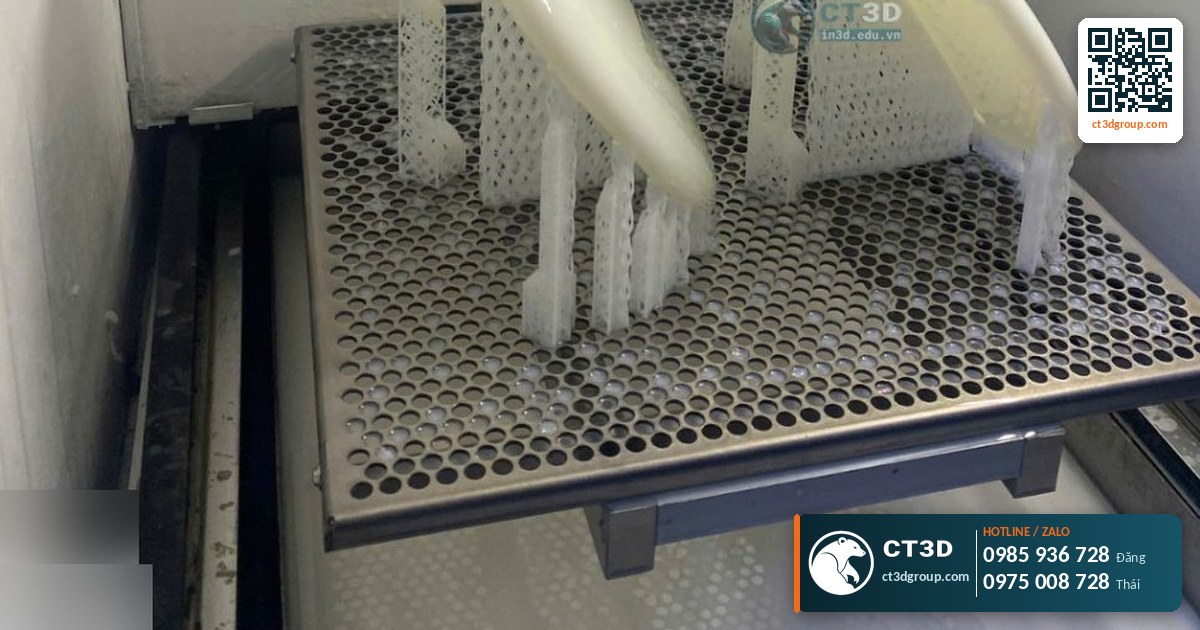
How Print Settings Affect Material Properties
A good material is not enough; how the part is printed determines half of its strength:
- Print orientation: orient the part so the main load runs parallel to the layers rather than pulling them apart.
- Infill density and wall count: for load-bearing parts, increase the number of walls before increasing infill. See what infill is.
- Layer height: FDM layers are 100–300 microns. Thinner layers look better but take longer; thicker layers bond better with some materials.
- Print temperature: printing slightly hot within the recommended range improves layer adhesion, but too hot causes sagging and stringing.
- Drying filament: nylon, TPU and PETG should be dried before printing to avoid bubbles.
Common Problems Caused by the Wrong Material, and How to Fix Them
- Part deforms after a few days in use: the material’s softening temperature is lower than the environment. Switch to ABS, ASA or nylon.
- Snap-fit breaks on first use: brittle PLA was used. Switch to PETG or nylon and increase the fillet radius.
- Fading and brittleness outdoors: ABS or PLA is not UV-stable. Switch to ASA or apply a UV-protective coating.
- Layer cracking on large ABS parts: shrinkage when printing without an enclosure. Print in a heated enclosure or switch to low-shrink ABS-CF.
- Rough, bubbly surface: wet filament. Dry the filament before printing.
- Gears wear quickly: PLA or PETG was used. Switch to nylon with suitable lubrication.
Checklist: What to Send CT3D for a Material Recommendation
- Your 3D file (STL, STEP, OBJ, 3MF) via our website, Zalo or email.
- Operating environment: maximum temperature, indoors or outdoors, any oils or chemicals.
- Load type: compression, bending, impact, vibration, friction.
- Surface requirements: cosmetic, painted, or purely functional.
- Quantity and deadline.
CT3D engineers will recommend the material, print orientation and infill, and quote the price with a lead time. If FDM can’t meet the requirements, we switch to resin, MJF PA12 or metal. You can compare further in our article MJF vs. SLS, or see our industrial 3D printing service in black ABS. For the big picture, return to our article on 3D printing technologies.
Frequently Asked Questions
Which FDM 3D printing material is the strongest?
It depends on the load. For toughness and wear resistance, nylon and nylon-CF are usually the strongest. For stiffness, carbon-fiber filaments. For heat and outdoor use, ASA.
Is PLA heat-resistant?
PLA starts to soften at around 55–60 °C, so it is not suitable for parts inside cars, near hot machinery or in strong direct sunlight.
When should I use PETG instead of PLA?
When the part needs to be tough, withstand impact, moisture or common chemicals, or work at temperatures higher than PLA can handle.
What is the difference between ABS and ASA?
Their mechanical properties and heat resistance are similar. ASA is UV- and weather-resistant, so it suits outdoor use; ABS tends to yellow and become brittle after prolonged sun exposure.
What is TPU used for?
TPU is a flexible plastic used for gaskets, anti-vibration pads, protective covers, small wheels and anti-slip feet.
Real Footage from the CT3D Workshop
Watch Affordable SLA 3D printing, filmed by CT3D, to get a clearer picture of the process and the finished quality. More videos are on our YouTube channel Chế Tạo Vlog – CT3D.
Contact CT3D – Send Your File, Get a Fast Quote
Whether you have a 3D file, a 2D drawing, photos or just an idea, you can send it to CT3D. Our engineers will check the file, recommend the right technology and material, and send you a quote with a lead time.
- Email: [email protected] – [email protected]
- Hotline / Zalo: +84 975 008 728 (Mr. Thai) – +84 985 936 728 (Mr. Dang), or use our contact form
- Head office: Binh Duong.
- Workshops in Ho Chi Minh City: Linh Trung (Thu Duc), Tam Binh (Thu Duc), District 6 (former).
- Other workshops and drop-off points: Can Tho, Da Nang, Bien Hoa, Ba Ria – Vung Tau, Hanoi, Hai Duong, Hai Phong. Nationwide delivery across Vietnam.
- Website: ct3dgroup.com – in3d.edu.vn
CT3D – 3D design & prototyping: 3D printing, 3D scanning, reverse engineering, silicone mold making, painting and finishing, CNC machining, composite fabrication, plus 3D printers and 3D printing materials.
Danh sách cửa hàng:
CT3D là đơn vị cung cấp trọn gói các dịch vụ thiết kế và sản xuất theo yêu cầu tại TP.HCM và khu vực lân cận (Bình Dương, Đồng Nai, Long An…). Với năng lực khép kín từ thiết kế 3D, in 3D (FDM, resin/SLA, SLS, in 3D kim loại), scan 3D – thiết kế ngược, làm khuôn, đúc composite – poly resin – poly stone đến gia công CNC và sơn màu hoàn thiện, CT3D đồng hành cùng khách hàng qua toàn bộ quy trình – từ ý tưởng, bản vẽ hay sản phẩm mẫu đến thành phẩm hoàn chỉnh. Dù bạn cần tạo mẫu nhanh, sản xuất số lượng, chế tác tượng – mô hình – quà tặng hay linh kiện kỹ thuật, đội ngũ CT3D sẽ tư vấn công nghệ và vật liệu phù hợp, đảm bảo sản phẩm sắc nét, đúng yêu cầu và tối ưu chi phí. Khách hàng tại TP.HCM và vùng lân cận có thể trao đổi trực tiếp, gửi file online và nhận sản phẩm thuận tiện, hỗ trợ cả đơn gấp lẫn dự án số lượng.
CT3D cung cấp trọn gói các dịch vụ thiết kế và sản xuất theo yêu cầu, phục vụ khách hàng tại Hà Nội và các tỉnh lân cận (Bắc Ninh, Hưng Yên, Hải Phòng, Vĩnh Phúc…). Với năng lực khép kín từ thiết kế 3D, in 3D (FDM, resin/SLA, SLS, in 3D kim loại), scan 3D – thiết kế ngược, làm khuôn, đúc composite – poly resin – poly stone đến gia công CNC và sơn màu hoàn thiện, CT3D đồng hành cùng khách hàng qua toàn bộ quy trình – từ ý tưởng, bản vẽ hay sản phẩm mẫu đến thành phẩm hoàn chỉnh. Quy trình làm việc thuận tiện: bạn gửi file 3D hoặc mô tả ý tưởng qua online, đội ngũ CT3D tư vấn công nghệ – vật liệu, báo giá nhanh và giao hàng tận nơi tại Hà Nội. Dù bạn cần tạo mẫu nhanh, sản xuất số lượng, chế tác tượng – mô hình – quà tặng hay linh kiện kỹ thuật, CT3D đều đáp ứng với sản phẩm sắc nét, đúng yêu cầu và tối ưu chi phí.

