
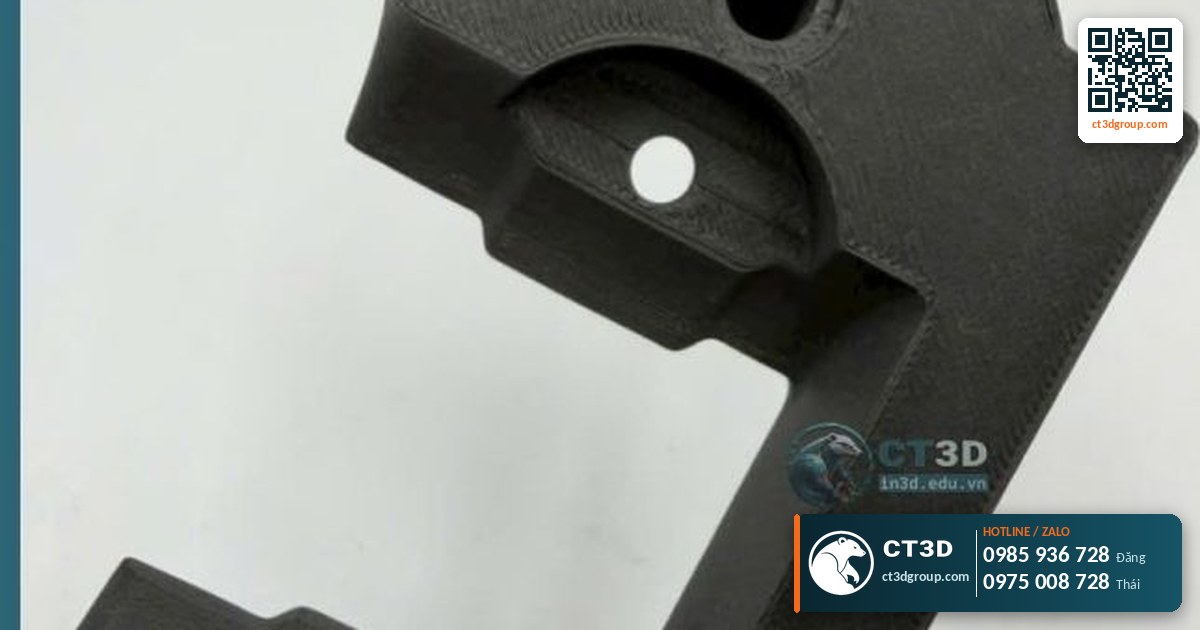
Quick answer: SLS 3D printing (Selective Laser Sintering) is a technology that uses a laser to melt and fuse plastic powder, most commonly PA12 nylon, layer by layer. According to CT3D’s technical data, SLS prints layers of about 80–120 microns with tolerances of ±0.05–0.15 mm. Its standout feature: the unsintered powder supports the part, so almost no support structures are needed. SLS produces strong, consistent parts that suit assemblies and low-volume production. Pricing is quoted per file.
This article is for readers new to SLS. I explain it with easy-to-picture examples and skip the detailed machine specifications. If you want to dig into the sintering mechanism, materials and design for SLS, read our in-depth article What is SLS 3D printing. If you are torn between the two nylon powder technologies, MJF vs SLS will help you choose correctly.
What Is SLS 3D Printing? A Quick Analogy with a Tray of Sugar
Imagine you have a tray of fine white sugar. You hold a magnifying glass to focus sunlight and draw a shape on the surface. Where the sunlight hits, the sugar melts and fuses into a thin sheet. Sprinkle a fresh layer of sugar on top and draw again. After many layers, you dig through the sugar and pull out a single, fused object.
An SLS machine does exactly that. The “sugar” is fine plastic powder, usually PA12 nylon. The “magnifying glass” is a high-power laser. The laser only scans the areas that belong to the part. The rest of the powder stays loose, and that loose powder becomes the cushion that supports the part throughout the print.
What Is Sintering?
Sintering means heating powder particles until their surfaces soften and bond together, forming a solid mass. With nylon in SLS, the powder is usually preheated close to its melting point, so the laser only needs to add a little extra energy for the particles to fuse.
Terms Beginners Often Come Across
- PA12 (Nylon 12): the most common nylon for SLS and MJF; stiff, tough and with low moisture absorption.
- Build chamber: the space holding the powder where parts are printed.
- Nesting: arranging many parts interlocked within the build chamber to make the most of the volume.
- Powder cake: the block of powder containing the parts after printing, which must cool before the parts are removed.
- Recycled powder: unsintered powder that is recovered and blended with fresh powder for the next build.
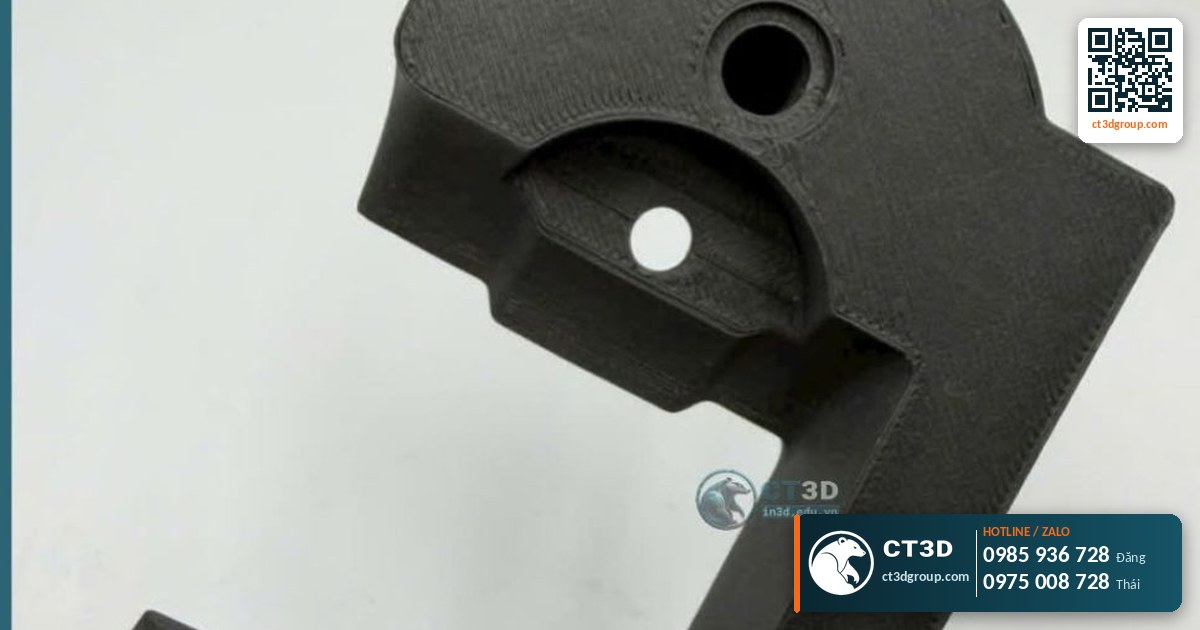
How Does an SLS Printer Work?
- File preparation and nesting: the engineer arranges the parts in the build chamber, which can be stacked in several tiers.
- Heating the build chamber: the powder is preheated to reduce temperature differences and limit warping.
- Spreading the powder: a blade or roller spreads a thin, even layer of powder.
- Laser scanning: the laser traces the cross-sections of the parts on that layer, and the scanned powder fuses.
- Lower the platform and repeat: the platform drops by one layer height, fresh powder is spread, and the laser scans again.
- Cooling: the entire powder cake is cooled slowly so the parts do not distort.
- Part removal and cleaning: the parts are dug out, then air-blasted and bead-blasted to remove clinging powder. They can also be dyed or given further surface treatment.
An easy example: a factory needs 200 small clips. With SLS, the clips are stacked to fill the build chamber and printed in a single batch instead of one by one. That is why SLS is such a good fit for low-volume production.
How Is SLS Different from FDM and Resin Printing?
Beginners often confuse SLS with other plastic printing technologies. The table below summarizes the most obvious differences. The full picture of all technologies is in 3D printing technologies compared: FDM, SLA, MJF, SLM.
| Criterion | SLS | FDM | SLA (resin) |
|---|---|---|---|
| Feedstock | PA12 nylon powder | Plastic filament | Liquid resin |
| Layer height (CT3D data) | 80–120 microns | 100–300 microns | 25–100 microns |
| Typical tolerance | ±0.05–0.15 mm | ±0.1–0.3 mm | ±0.05–0.1 mm |
| Supports | Almost none needed; the powder is self-supporting | Needed for overhangs | Support pillars needed |
| Surface | Slightly grainy, matte, uniform | Visible layer lines | Smooth, glossy |
| Strengths | Functional, load-bearing parts, low volumes | Low cost, large parts | Great looks, fine detail |
Source: CT3D technical documentation.
Are SLS and MJF the Same?
Both technologies print PA12 nylon powder and neither needs supports. The main difference is how the heat is delivered:
- SLS uses a laser beam that scans line by line across the powder bed.
- MJF (Multi Jet Fusion) jets a fusing agent onto the areas to be printed, then uses a heat lamp to expose the whole layer. According to CT3D data, MJF PA12 achieves tolerances of about ±0.05 mm.
For beginners, the results of the two are quite similar: strong, durable nylon parts with a matte surface. Differences in speed, surface finish, color and cost at different quantities are analyzed in MJF vs SLS. CT3D offers MJF/SLS PA12 printing services; see also MJF PA12 3D printing.
Advantages and Limitations of SLS 3D Printing
Advantages
- Design freedom: no supports means you can print print-in-place hinges, interlocking parts and internal hollow channels.
- Strong, consistent parts: PA12 nylon is tough and impact resistant, suitable for real-world use.
- Economical at volume: fill the build chamber and many parts come out of a single batch.
- No pronounced layer lines like FDM.
Limitations
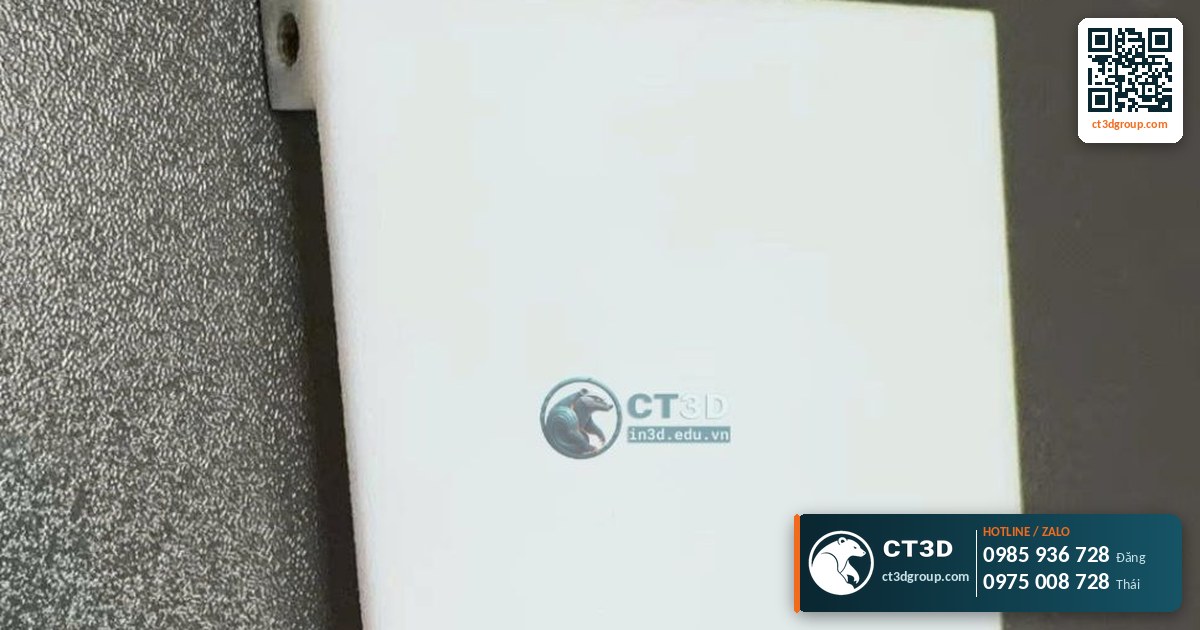
- Slightly grainy surface, not as glossy as resin. Extra finishing is needed for a premium look.
- Default color is usually white or gray; other colors require dyeing or painting.
- Not economical for a single small part compared with FDM, because the entire chamber has to go through a heating and cooling cycle.
- Cooling time after printing is fairly long and must be factored into the schedule.
What Is SLS 3D Printing Used For?
Functional Parts and Assemblies
Equipment housings, clips, swivel joints, print-in-place hinges and air ducts. Parts for real use, not just for looks.
Factory Jigs and Fixtures
Inspection fixtures, gauges and robot grippers. See also 3D printed jigs and fixtures.
Low-Volume Production
A few dozen to a few hundred parts when you do not yet want to invest in an injection mold. The break-even point between 3D printing and injection molding is explained in 3D printing vs injection molding.
Engineering Prototypes
Testing fit, strength and load capacity before mass production.
Designing Files for SLS: A Few Tips for Beginners
- Avoid walls that are too thin: very thin walls warp easily and can break during cleaning.
- Leave clearance for moving parts: print-in-place hinges and joints need gaps so the powder can escape.
- Add powder escape holes if the part has a fully enclosed hollow interior.
- Plan for fit tolerances: see 3D printing accuracy and tolerances.
Not sure your file is ready? Just send it to CT3D, and our engineers will review it and give feedback before printing.
How Much Does SLS 3D Printing Cost? How to Order from CT3D
SLS/MJF printing has no fixed public price list, because the price depends on part volume, bounding-box size, quantity and how the parts are nested in the build chamber. CT3D quotes per file. General pricing information for all technologies is in How much does 3D printing cost? 2026 price guide.
Ordering takes 6 steps: send your STL/STEP/OBJ/3MF file via our website, Zalo, email or our contact form; share your technical requirements; our engineers analyze the file and calculate the volume; you receive a quote with a lead time; you confirm and we produce; then door-to-door delivery or pickup at the workshop. Nationwide delivery takes 1–3 days after completion. To learn more before ordering, read What is SLS 3D printing.
Frequently Asked Questions
What does SLS stand for?
SLS stands for Selective Laser Sintering: the laser only fuses powder in the areas that belong to the part.
Why doesn’t SLS printing need supports?
Because the unsintered powder surrounds and supports the part throughout the print.
What is the most common SLS material?
The most common is PA12 nylon: stiff, tough, low in moisture absorption and well suited to functional parts.
Should I choose SLS or MJF?
Both produce strong PA12 parts. The choice depends on quantity, surface finish and desired color; see our MJF vs SLS comparison.
How much does SLS printing cost?
CT3D quotes per file, because the price depends on the volume, size and quantity of parts.
Real Footage from the CT3D Workshop
Watch Metal, SLA, MJP castable wax and PA12 3D printing, produced by CT3D, to get a clearer picture of the process and the quality of the finished parts. More videos are available on our YouTube channel Che Tao Vlog – CT3D.
Contact CT3D – Send Your File, Get a Fast Quote
Whether you have a 3D file, a 2D drawing, photos or just an idea, you can send it to CT3D. Our engineers will check the file, recommend the right technology and material, and send you a quote with a delivery lead time.
- Email: [email protected] – [email protected]
- Hotline / Zalo: +84 975 008 728 (Mr. Thai) – +84 985 936 728 (Mr. Dang), or use our contact form
- Head office: Binh Duong.
- Workshops in Ho Chi Minh City: Linh Trung (Thu Duc), Tam Binh (Thu Duc), former District 6.
- Other workshops and drop-off points: Can Tho, Da Nang, Bien Hoa, Ba Ria – Vung Tau, Hanoi, Hai Duong, Hai Phong. Nationwide delivery.
- Website: ct3dgroup.com – in3d.edu.vn
CT3D – 3D design & prototyping: 3D printing, 3D scanning, reverse engineering, silicone mold making, paint finishing, CNC machining, composite fabrication, and supply of 3D printers and 3D printing resins and filaments.
Danh sách cửa hàng:
CT3D là đơn vị cung cấp trọn gói các dịch vụ thiết kế và sản xuất theo yêu cầu tại TP.HCM và khu vực lân cận (Bình Dương, Đồng Nai, Long An…). Với năng lực khép kín từ thiết kế 3D, in 3D (FDM, resin/SLA, SLS, in 3D kim loại), scan 3D – thiết kế ngược, làm khuôn, đúc composite – poly resin – poly stone đến gia công CNC và sơn màu hoàn thiện, CT3D đồng hành cùng khách hàng qua toàn bộ quy trình – từ ý tưởng, bản vẽ hay sản phẩm mẫu đến thành phẩm hoàn chỉnh. Dù bạn cần tạo mẫu nhanh, sản xuất số lượng, chế tác tượng – mô hình – quà tặng hay linh kiện kỹ thuật, đội ngũ CT3D sẽ tư vấn công nghệ và vật liệu phù hợp, đảm bảo sản phẩm sắc nét, đúng yêu cầu và tối ưu chi phí. Khách hàng tại TP.HCM và vùng lân cận có thể trao đổi trực tiếp, gửi file online và nhận sản phẩm thuận tiện, hỗ trợ cả đơn gấp lẫn dự án số lượng.
CT3D cung cấp trọn gói các dịch vụ thiết kế và sản xuất theo yêu cầu, phục vụ khách hàng tại Hà Nội và các tỉnh lân cận (Bắc Ninh, Hưng Yên, Hải Phòng, Vĩnh Phúc…). Với năng lực khép kín từ thiết kế 3D, in 3D (FDM, resin/SLA, SLS, in 3D kim loại), scan 3D – thiết kế ngược, làm khuôn, đúc composite – poly resin – poly stone đến gia công CNC và sơn màu hoàn thiện, CT3D đồng hành cùng khách hàng qua toàn bộ quy trình – từ ý tưởng, bản vẽ hay sản phẩm mẫu đến thành phẩm hoàn chỉnh. Quy trình làm việc thuận tiện: bạn gửi file 3D hoặc mô tả ý tưởng qua online, đội ngũ CT3D tư vấn công nghệ – vật liệu, báo giá nhanh và giao hàng tận nơi tại Hà Nội. Dù bạn cần tạo mẫu nhanh, sản xuất số lượng, chế tác tượng – mô hình – quà tặng hay linh kiện kỹ thuật, CT3D đều đáp ứng với sản phẩm sắc nét, đúng yêu cầu và tối ưu chi phí.

